What Are Marine Aluminum Structural Pipe Fittings
Ships are complex maritime vessels integrating power, fluid transport, stability control, and safety protection. The piping system, distributed throughout the hull, is the "blood vessel" ensuring the ship's power operation, material transport, and stable operating conditions. Pipe fittings, as the core connectors of the piping system, directly determine the sealing performance, stability, and service life of the ship's pipelines.
Among various marine piping fittings, aluminum structural pipe fittings, with their comprehensive advantages of lightweight, strong corrosion resistance, and easy welding, are gradually replacing traditional steel fittings and have become the preferred solution in modern shipbuilding engineering.
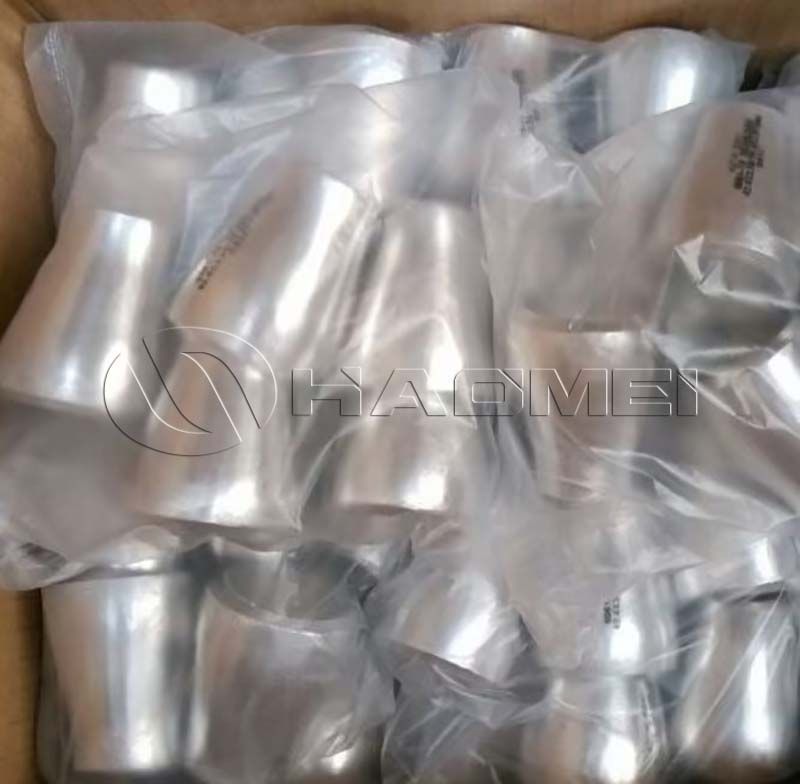
Among various marine aluminum fittings, 5083 series aluminum alloy fittings are recognized in the industry as high-end marine materials, and 5083 reducers, with their irreplaceable adaptability, have become a core component for optimizing marine piping systems.
5083 reducers are reducing pipe fittings processed from 5083 marine aluminum alloy, belonging to the 5-series aluminum-magnesium alloy category. The specific magnesium content gives them comprehensive performance far exceeding that of ordinary aluminum alloy fittings.
This material requires no additional protective coating; it forms a dense oxide protective layer even under seawater immersion and salt spray conditions, effectively resisting seawater corrosion and stress corrosion cracking. It exhibits exceptional resistance to spalling and intergranular corrosion, making it perfectly suited for all-weather marine operations.
Furthermore, 5083 aluminum alloy boasts excellent weldability, is resistant to cracking during welding, and offers high forming precision, perfectly matching the high-precision piping installation requirements of ships. This is the core reason why it has become a dedicated reducer for ships.
From a ship structural application perspective, the core functions of 5083 reducers are concentrated in three dimensions: pipe diameter changes, fluid pressure stabilization and transportation, and spatial layout optimization.
Firstly, various piping systems on ships do not have uniform pipe diameter specifications. In power cooling systems, ballast water systems, and fuel delivery systems, there are often inconsistencies in pipe diameter between main lines and branch lines, between new and old lines, and between equipment interface lines.
The aluminium 5083 reducer enables a smooth transition between pipes of different diameters, completely resolving the challenges of pipe connection due to diameter differences. It ensures the sealing and regularity of pipe connections, eliminating the risk of leakage from media such as seawater, fuel oil, and cooling water, and mitigating safety hazards such as equipment corrosion and pipe malfunctions.
Secondly, in terms of fluid transport, the smooth inner wall and uniform diameter transition of the 5083 reducer effectively mitigate turbulence and flow during media transport, reducing fluid transport resistance and pressure loss. In marine engine cooling systems, it ensures stable cooling water circulation, efficiently removing heat from equipment and maintaining constant temperature operation.
In ballast water systems, it facilitates rapid and stable ballast water intake and discharge, precisely adjusting the ship's draft and attitude to ensure navigational stability. In fuel delivery systems, stable delivery pressure prevents fuel supply fluctuations, ensuring balanced engine power output.
Furthermore, the compact interior space and dense equipment layout of ships necessitate a balance between functionality and space utilization in pipework installation. The 5083 reducer boasts a complete range of specifications, a standardized design, and strong installation adaptability. It can seamlessly connect pipes within confined spaces and with irregular piping layouts, optimizing the overall piping routing and avoiding issues such as pipe crossings, compression, and interference.
This simplifies the ship's internal structural layout, improves space utilization, and simultaneously ensures the structural strength and impact resistance of the piping system, mitigating pipe damage caused by turbulence and vibration during navigation.
From the perspective of overall ship structural lifespan and maintenance costs, aluminum piping fittings, including the 5083 reducer, are key details in enhancing the overall quality of the vessel. Traditional steel reducers are prone to corrosion and are heavy, leading to problems such as pipe blockage, leakage, and structural deformation over long-term use. This not only increases the ship's load but also requires frequent maintenance and replacement.
In contrast, the 5083 reducer combines lightweight, high strength, long lifespan, and low maintenance. It is corrosion-resistant, anti-aging, and vibration-resistant, allowing for long-term compatibility with the ship's main structure, significantly extending the service life of the piping system and even the entire ship, providing long-term assurance for safe navigation and stable operation.
Original Source:https://www.marinealu.com/a/what-are-marine-aluminum-structural-pipe-fittings.html
Tags: aluminum pipe fitting ,
Next:5356 Filler Rod