Top 10 Uses of Marine Aluminum Profiles in Boat Building
Shipbuilding is upgrading towards lightweighting, energy efficiency, high corrosion resistance, and long service life. Traditional steel is heavy, has poor corrosion resistance, and high maintenance costs, making it unsuitable for the construction requirements of high-speed, ocean-going, and special-purpose vessels. Marine aluminum profiles, improved through alloy modification and process optimization, are gradually replacing steel and becoming a core material in modern shipbuilding due to their advantages of light weight, high strength, corrosion resistance, and ease of welding.
1. Ship hull
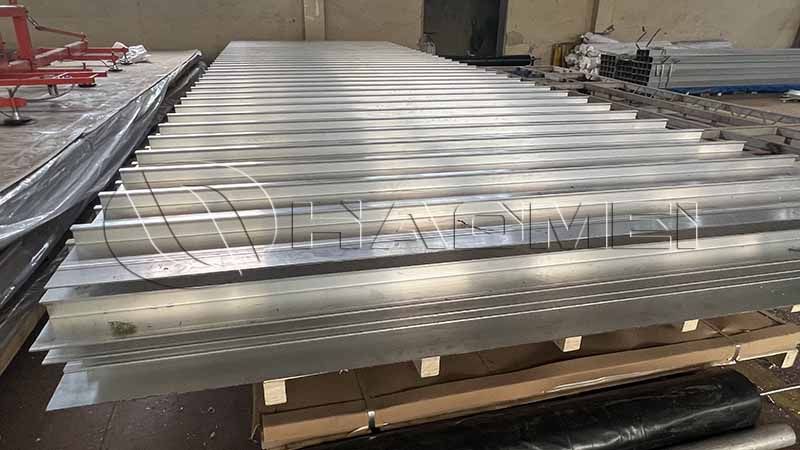
The hull is the core load-bearing structure of a ship and the primary application area for aluminum profiles. Aluminum T-profiles are rigid and have excellent bending resistance, and are widely used in load-bearing areas such as the hull frame, bottom supports, and hull reinforcements. They can disperse seawater impact stress and prevent hull deformation and cracking. Friction stir welded aluminum plates are used for the hull outer plating and bottom plating, solving the problems of reduced welding strength and easy corrosion associated with traditional aluminum plates. Aluminum hulls can reduce weight by more than 30% compared to steel hulls, effectively increasing speed, reducing fuel consumption, and making them suitable for the construction of various high-speed vessel types.
2. Ship's superstructure
Marine aluminum profiles are now widely used in the ship's superstructure, covering core areas such as the bridge and crew living quarters. The lightweight nature of aluminum profiles lowers the ship's center of gravity, improving navigational stability. Aluminum T-profiles are used as cabin frames and partition keels, providing a stable and lightweight structure. Aluminum friction stir welding plates, used as wall and roof panels, offer excellent sealing, salt spray resistance, and durability. Furthermore, aluminum finishes are easy to maintain, significantly reducing post-construction maintenance costs and procedures.
3. Pipe systems
Aluminum pipe flanges and elbows are extensively used in the ship's water supply, drainage, fuel, hydraulic, and ventilation piping systems. The high vibrations and strong salt spray corrosion at sea make traditional steel pipes prone to rust and leakage, while aluminum pipes offer greater adaptability. Aluminum flanges offer high precision and excellent sealing, preventing high-pressure pipeline leaks; aluminum elbows have smooth inner walls and precise turning, reducing fluid resistance and preventing pipe blockage, effectively ensuring the lightweight and stable operation of the piping system.
4. Ship deck
Ship decks are constantly subjected to wave erosion, equipment wear, and foot traffic, demanding extremely high structural strength and abrasion resistance. Thickened aluminum T-profiles are used for deck keel reinforcement and equipment bracket installation, significantly improving deck load-bearing capacity and impact resistance. Anti-slip treated friction stir welded aluminum plates are suitable for deck paving and operating platforms, offering wear resistance, corrosion resistance, and strong adaptability. Aluminum profiles are easy to assemble, allowing for rapid construction of railings, boarding ladders, and other facilities, effectively improving shipbuilding efficiency.
5. Ship interior decoration
In ship interior decoration, aluminum profiles avoid the defects of wood mold and steel weight-bearing corrosion, meeting maritime safety standards. Aluminum T-profiles are used to make partitions and ceiling keels, requiring minimal space and providing structural stability; aluminum decorative panels have a uniform texture, are easy to clean, and are compatible with various coating processes. Simultaneously, aluminum possesses excellent sound and heat insulation properties, blocking equipment noise, balancing cabin temperature differences, and effectively improving the living and working environment for crew members.
6. Ship's power equipment
Ship engines, generators, and other precision power equipment are prone to malfunction and displacement due to vibrations during navigation. Aluminum profiles, with their high strength, vibration resistance, and corrosion resistance, are the preferred material for equipment mounting supports. Thickened aluminum profile integrated load-bearing supports effectively buffer the vibrations from shipboard rocking, and when combined with aluminum flanges, achieve precise connection between equipment and pipelines, resulting in integrated fixing and connection, suitable for the equipment installation needs of both civilian and special-purpose vessels.
7. Marine ventilation and exhaust systems
Marine ventilation and exhaust systems have stringent requirements for sealing, temperature resistance, and corrosion resistance, and aluminum profiles are perfectly suited to these needs. Seamless connection of pipe interfaces with aluminum flanges and elbows eliminates safety hazards such as air leakage and exhaust leaks; the pipe frame and exhaust support constructed with aluminum T-profiles are high-temperature resistant and corrosion-resistant, suitable for long-term use in engine room exhaust and cabin ventilation conditions. Ship doors, windows, and hatches are constructed using aluminum profiles and high-strength aluminum plates, offering pressure resistance, leak prevention, and easy opening and closing, reducing the daily operational load on the ship.
8. Special ships
In the extreme operating conditions of special-purpose vessels such as LNG carriers and naval vessels, high-performance aluminum profiles have irreplaceable application value. Low-temperature resistant aluminum plates do not become brittle at low temperatures and have strong sealing properties, ensuring the safety of transporting low-temperature media. Thickened aluminum profiles and low-temperature resistant aluminum pipe fittings effectively avoid the risks of structural damage and media leakage in extreme environments. At the same time, aluminum profiles can be used to make various maintenance components, which are easy to assemble and disassemble, and have high repair reliability, which can continuously reduce ship operation and maintenance costs and extend the service life of the hull.
9. Door and Hatch Sealing
The openings and closing points of ship doors, hatches, and cargo hatches are the core of the hull's waterproofing. They must balance sealing, pressure resistance, and lightweight design to withstand seawater and wave corrosion. Marine-grade aluminum profiles are the core raw material.
FSW high-strength aluminum sheets are used for hatch doors and hatch covers, ensuring excellent welding and resistance to waves and pressure. Aluminum T-profiles are used for door and hatch reinforcement frames, combined with sealing strips to achieve a complete seal and prevent water leakage. Aluminum's light weight makes opening and closing easier, reducing the load on the ship.
10. Corrosion-Resistant Maintenance Components
Seawater corrosion and wave abrasion can damage the hull. Aluminum profiles have inherent corrosion resistance, reducing maintenance costs and allowing for the fabrication of various maintenance components.
Aluminum T-profiles are used to assemble maintenance platforms and protective supports, offering convenient assembly and disassembly and reliable load-bearing capacity. Standardized aluminum flanges and elbows are universal, facilitating efficient pipe repair and replacement. FSW aluminum sheets can repair hull damage; their high weld strength and corrosion resistance extend the ship's lifespan.
Original Source:https://www.marinealu.com/a/top-10-uses-of-marine-aluminum-profiles-in-boat-building.html
Tags: aluminum pipe fitting ,