Aluminum Boat Gunnel Extrusions
Fit First
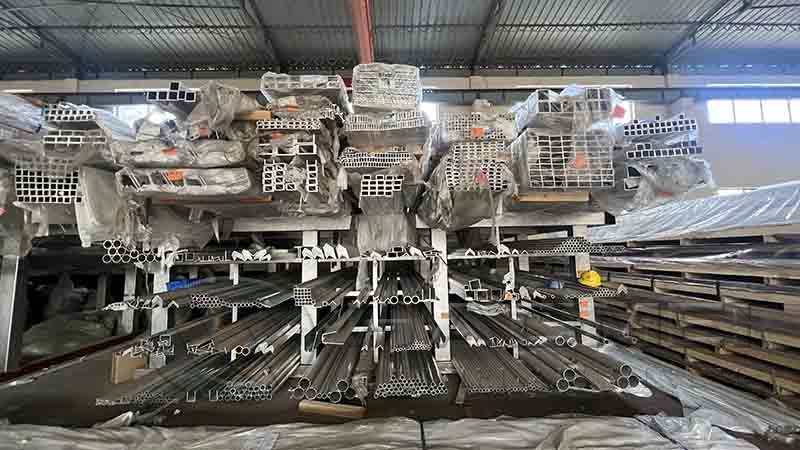
Aluminum boat gunnel extrusions protect the hull edge, carry rub-rail loads, improve stiffness, and create a clean mounting line for cleats, fenders, covers, rails, and wiring channels. In commercial and recreational builds, the most expensive problem is usually not the profile price. It is poor fit: gaps at the sheer line, uneven bend radius, finish damage during forming, or weld rework after installation.
This article focuses on one top concern: dimensional fit tolerance. A well-specified gunnel profile reduces installation time, improves sealing, and prevents avoidable corrosion traps.
Name Check
Gunnel is the common spelling used in boatyards. Gunwale is the traditional naval term. In purchasing documents, use both once, then define the part by drawing number, alloy, temper, finish, length, and inspection method.
Typical functions include:
Hull-edge cap and impact protection.
Rub-rail or fender base.
Deck-to-hull joint cover.
Drainage or cable groove.
Mounting rail for accessories.
For integrated rail systems, Boat Extrusions should be matched to the hull material, welding plan, and forming radius before tooling is released.
Alloy Choice
The most common marine profile alloys are 6063, 6061, and 6082. Selection depends on extrusion complexity, strength, welding, corrosion resistance, and bend requirements.
| Alloy | Common temper | Strength trend | Extrudability | Typical use |
|---|---|---|---|---|
| 6063 | T5, T6 | Moderate | Excellent | Decorative gunwale caps, grooves, rub-rail bases |
| 6061 | T6 | Higher | Good | Structural rails, brackets, heavier-duty caps |
| 6082 | T6 | Higher | Moderate | Stronger profiles in European projects |
| 5052 or 5083 | Not typical for complex extrusion | Good marine corrosion behavior | Limited for extrusion | More common in formed hull components |
ASTM B221/B221M covers aluminum and aluminum-alloy extruded bars, rods, wire, profiles, and tubes. EN 755 covers similar extruded aluminum products in European supply chains. These standards do not design the boat for you; they define product requirements that help make inspection measurable.
For fine visible surfaces and complex hollow or semi-hollow shapes, Alu 6082 is often preferred because it extrudes cleanly and accepts anodizing well.
Tolerance Plan
Do not approve a gunnel extrusion using only a catalog cross-section. Create a tolerance plan that reflects installation reality.
| Check point | Why it matters | Practical control |
|---|---|---|
| Overall width | Controls deck-edge coverage | Confirm with go/no-go gauge |
| Leg angle | Affects hull contact and sealant gap | Measure after stretch straightening |
| Wall thickness | Influences stiffness and weld heat input | Verify against ASTM or EN tolerance class |
| Twist | Causes uneven rub-rail alignment | Inspect on flat datum over full length |
| Bow | Creates gaps during fastening | Define maximum bow per length |
| Corner radius | Prevents coating cracks and stress risers | Match die design to bend plan |
| Slot width | Controls insert, rope, or fender fit | Test with mating component |
A useful production approval package includes a 2D drawing, 3D model, alloy certificate, temper certificate, inspection report, finish sample, packing method, and one trial length installed on the actual hull edge.
Finish Options
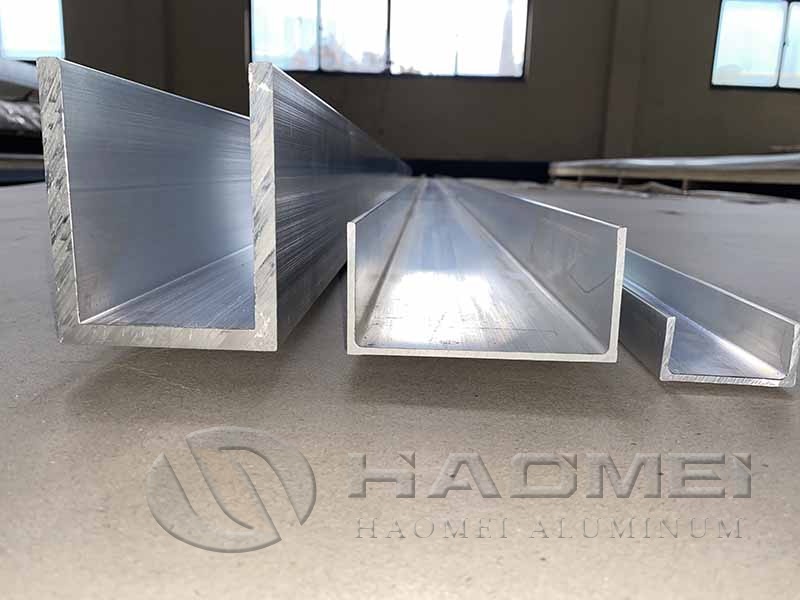
Marine gunnel profiles face salt spray, abrasion, UV exposure, and galvanic contact with stainless fasteners. Finish selection must match the operating environment.
| Finish | Advantage | Watch item |
|---|---|---|
| Mill finish | Lowest processing cost, easy to weld | Needs cleaning and protection in harsh service |
| Anodized | Hard surface, good appearance | Welded areas lose anodic layer and need post-treatment |
| Powder coated | Color control, durable appearance | Edge damage must be repaired quickly |
| Brushed plus clear coat | Premium look | Coating system must be marine suitable |
For anodizing, ISO 7599 specifies general requirements for anodic oxidation coatings on aluminum. For architectural coatings, AAMA 2603, 2604, and 2605 are often referenced, but marine exposure can be more severe than building exposure. Always confirm the coating supplier's salt-spray and UV data for the intended service.
Welding Notes
If the gunnel profile is welded to the hull, the welding plan should be reviewed before the die is finalized. Thick-to-thin transitions, enclosed cavities, and narrow grooves can trap heat, distort, or become difficult to clean.
Use this checklist before production:
Confirm whether the profile will be welded, riveted, bolted, bonded, or combined.
If welded, define filler metal, joint type, pre-cleaning, and distortion control.
Separate stainless fasteners from aluminum with compatible isolation washers or sealants where galvanic risk exists.
Avoid unsealed crevices that hold seawater.
Do not place drain grooves where sealant will block water flow.
Confirm post-weld surface repair for anodized or coated parts.
AWS D1.2/D1.2M is the Structural Welding Code for Aluminum. ISO 10042 defines quality levels for imperfections in arc-welded aluminum joints. These references help fabricators align acceptance criteria instead of relying on visual opinion only.
Cost Drivers
The price of a custom gunwale extrusion is shaped by more than metal weight. Public aluminum pricing is commonly referenced against London Metal Exchange aluminum settlement data, while final delivered cost also reflects die complexity, wall thickness, scrap rate, finishing, packaging, and freight.
| Cost factor | Impact on quote | How to control it |
|---|---|---|
| Hollow die | Higher tooling and slower output | Simplify cavities where possible |
| Tight tolerance | Higher inspection and rejection risk | Tighten only functional dimensions |
| Long length | Higher handling and freight cost | Match length to container and hull plan |
| Anodizing | Added process and racking marks | Define visible surfaces on drawings |
| Small run | Higher unit cost | Standardize profiles across models |
| Heavy wall | Higher metal cost | Use ribs instead of excess thickness when feasible |
Trending project requirements now include lighter patrol craft, electric workboats, modular refits, and lower-carbon aluminum sourcing. If carbon reporting is required, ask suppliers for recycled-content policy, energy source disclosure, and any Environmental Product Declaration. Verify documents directly; do not treat verbal claims as compliance evidence.
Installation Checks
Before full installation, run a controlled trial on a representative hull section.
Use this site checklist:
Dry-fit the extrusion before sealant is applied.
Mark high spots along the sheer line.
Check that the bend radius does not flatten decorative grooves.
Confirm fender insert fit after coating, not before coating.
Drill pilot holes with consistent edge distance.
Deburr all holes before fastening.
Apply marine-compatible sealant continuously where water entry is possible.
Isolate dissimilar metals.
Record torque values for mechanical fasteners.
Photograph the first installation for repeatability.
Standards Scope
Regulations depend on vessel type, region, passenger capacity, and classification requirements. Recreational craft in the EU fall under Directive 2013/53/EU, with harmonized standards often used to show conformity. ISO 12215 addresses hull construction and scantlings for small craft. Workboats, passenger vessels, and defense craft may require class society or flag-state review.
A gunnel extrusion should therefore be treated as a designed component, not a decorative trim. It may influence edge stiffness, boarding safety, impact resistance, water sealing, and accessory loads. When loads are structural, have a naval architect or qualified engineer validate the section modulus, fastening pattern, weld size, and corrosion protection.
Order Checklist
Send this minimum specification with each inquiry:
Drawing with cross-section, length, tolerances, and visible surfaces.
Alloy and temper, such as 6063-T5 or 6061-T6.
Reference standard, such as ASTM B221/B221M or EN 755.
Finish requirement and sample approval process.
Straightness, twist, bow, and slot tolerance requirements.
Welding or fastening method.
Packing method to prevent abrasion and water staining.
Required certificates and inspection records.
Trial-piece approval before serial production.
Delivery length matched to fabrication workflow.
A precise specification makes aluminum gunnel profiles easier to quote, inspect, install, and maintain across repeated marine projects.
Original Source:https://www.marinealu.com/a/aluminum-boat-gunnel-extrusions.html
Tags: aluminum boat gunnel extrusions , marine aluminum profiles , boat gunwale extrusion , aluminum rail extrusion , 6063 aluminum marine profile ,
Prev:Top 10 Uses of Marine Aluminum Profiles in Boat Building