Marine Grade Aluminum Alloy 5083 H116 H111 Used For Boat Hulls
In modern shipbuilding, lightweight design, corrosion resistance, and high strength are the primary requirements for selecting hull structural materials. Thanks to its excellent overall performance, the 5083 aluminum-magnesium alloy has become a core structural material for commercial vessels, yachts, engineering ships, and offshore platforms.
I. Key Attributes of 5083 Marine-Grade Aluminum Alloy
The 5083 alloy belongs to the aluminum-magnesium series of corrosion-resistant alloys and is recognized within the shipbuilding industry as a primary lightweight structural material. It does not possess quench-hardening characteristics; instead, it relies entirely on work hardening to enhance its properties. It offers excellent weldability, low-temperature toughness, and resistance to seawater corrosion, making it perfectly suited for harsh marine environments characterized by high salinity, high humidity, and significant temperature fluctuations. It is widely used as a substitute for traditional steel, effectively reducing hull weight and lowering energy consumption during operation.
H111 and H116 represent two mainstream tempers for 5083 alloy plates. The key differences stem from the specific cold-rolling and heat-treatment processes employed; these processes directly determine the plate's strength, ductility, and resistance to exfoliation corrosion, and serve as critical criteria for classification society certification.
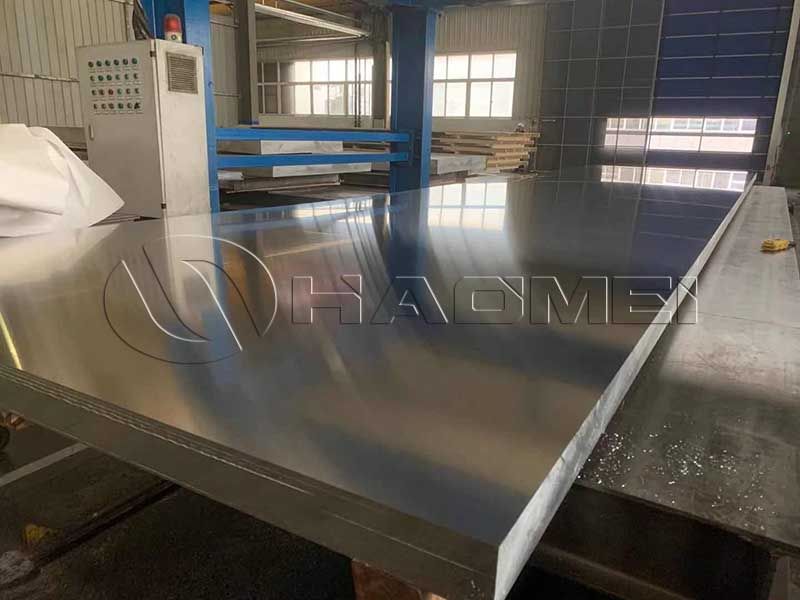
II. Detailed Comparison of Key Characteristics: 5083 H111 vs. H116
1. 5083 H111
The aluminium 5083 h111 is achieved through annealing followed by slight strain hardening. The processing method is relatively mild, avoiding aggressive high-strength hardening treatments; consequently, its primary advantages lie in formability and processing versatility.
In terms of mechanical properties, H111 exhibits moderate strength levels—with relatively modest yield and tensile strengths—but offers exceptional ductility and toughness. It is resistant to cracking during bending, rolling, stamping, and the fabrication of complex shapes, and is less prone to deformation or embrittlement after welding, offering a high degree of processing tolerance.
In terms of corrosion resistance, H111 offers basic marine-grade protection suitable for standard marine atmospheres and environments with light seawater spray. However, as it lacks specialized marine anti-corrosion treatment, it cannot pass the rigorous ASTM G66 (ASSET) exfoliation corrosion test; prolonged exposure to high-concentration seawater or tidal action makes it prone to surface peeling and exfoliation.
Overall, H111 is a general-purpose marine aluminum alloy that prioritizes formability over high strength. It offers excellent cost-effectiveness and ease of fabrication, making it suitable for various non-critical hull structures that are not subject to continuous seawater immersion.
2. 5083 H116
5083 h116 is a temper specifically designed for marine applications. It utilizes a precisely controlled process combining cold-rolling strain hardening and stabilizing heat treatment to lock in the internal grain structure. It is a classification society-certified grade of aluminum suitable for load-bearing hull structures and continuous seawater immersion.
Regarding mechanical properties, H116 exhibits significantly higher yield and tensile strengths than H111. It offers superior structural rigidity and resistance to deformation and impact, enabling it to withstand the forces of wind and waves, structural loads, and the weight of heavy equipment during operation, thereby ensuring greatly enhanced structural stability.
Corrosion resistance is the standout feature of H116: optimized through specialized marine anti-corrosion processes, it successfully passes the ASTM G66 exfoliation corrosion test. It completely eliminates issues such as surface peeling, delamination, and exfoliation caused by long-term seawater immersion or tidal action. Additionally, it offers superior resistance to stress corrosion, making it suitable for harsh, high-salinity operating environments in both deep-sea and near-shore waters.
Its drawback lies in relatively lower ductility, making it more difficult to form than H111. Complex bending operations require strict control of process parameters to prevent cracking; consequently, it is best suited for load-bearing components with flat or regular geometries.
III. Precise Classification of Dedicated Marine Application Scenarios
1. Dedicated Application Scenarios for 5083 H111
Leveraging its advantages of high formability, ease of welding, and low cost, H111 is primarily used for auxiliary ship structures—such as non-load-bearing components, parts not subject to prolonged seawater immersion, and elements requiring complex shaping—making it the preferred material for lightweight marine fittings.
Specific applications include: cabin wall panels and ceiling panels for ship superstructures, interior structures, walkway treads, safety railings, and stair brackets; complex-shaped hulls and curved components for small yachts and recreational vessels; freshwater tanks, ventilation ducts, and brackets for general electrical equipment; and non-load-bearing enclosure structures for living modules on offshore platforms.
These scenarios require moderate structural strength but place higher demands on forming precision, welding compatibility, and ease of construction; H111’s performance fully meets these needs while effectively controlling construction costs.
2. Dedicated Application Scenarios for 5083 H116
Characterized by high strength, superior seawater corrosion resistance, and structural stability, H116 is targeted at critical load-bearing hull components and applications involving prolonged seawater exposure, high loads, and highly corrosive environments, serving as a primary structural material for commercial and engineering vessels.
Specific applications include: critical load-bearing structures such as hull side plating, bottom plating, main decks, and bulkheads; primary load-bearing plating for ocean-going cargo ships, fishing vessels, dredgers, and high-speed government service vessels; components subject to long-term seawater contact, such as seawater tanks, fuel tanks, and subsea pipeline support structures; and structures operating under harsh conditions, such as lightweight load-bearing hulls for polar vessels and offshore platforms.
These applications are directly linked to navigational safety and demand exceptional material strength, seawater corrosion resistance, and fatigue resistance; the use of classification society-certified H116 material is mandatory to eliminate potential structural risks associated with long-term service.
Original Source:https://www.marinealu.com/a/marine-grade-aluminum-alloy-5083-h116-h111-used-for-boat-hulls.html
Tags: 5083 aluminum plate ,