Marine Aluminum Plate VS Stainless Steel
Marine Aluminum Plates
Marine grade aluminum sheets are mostly aluminum-magnesium alloys, emphasizing lightweight, seawater corrosion resistance, and ease of processing. They are the preferred choice for ships prioritizing speed, energy efficiency, and long lifespan. Commonly used grades in the industry have all undergone marine standard verification, ensuring stable and reliable performance.
- 5083 Aluminum Plate: The "gold standard" for marine aluminum plates, an Al-Mg alloy with a magnesium content of 4.0%-4.9%. It boasts excellent corrosion resistance, weldability, and moderate strength, making it a mainstream material for ship hull structures.
- 5086 Aluminum Plate: An optimized alloy ratio based on 5083, offering slightly improved strength and corrosion resistance. Suitable for high-requirement hull components and superstructures.
- 5052 Aluminum Plate: A cost-effective option with moderate magnesium content and excellent formability. Primarily used in freshwater vessels, cabin interiors, and non-load-bearing structures.
Core Advantages
- Extreme Lightweight: With a density only 1/3 that of steel, it significantly reduces hull weight, increases speed, reduces fuel consumption, and achieves green shipping.
- Excellent seawater corrosion resistance: The aluminum-magnesium alloy has a built-in passivation protective film, eliminating the need for frequent anti-corrosion coatings. It has strong resistance to salt spray and seawater immersion, resulting in extremely low maintenance costs.
- Welding-friendly: Excellent weldability and crack resistance, suitable for complex hull structures. It is non-magnetic and does not interfere with marine electronic equipment.
- Good low-temperature toughness: It does not become brittle during voyages in extremely cold waters, making it suitable for auxiliary structures of ocean-going research vessels and icebreakers.
Suitable vessel types
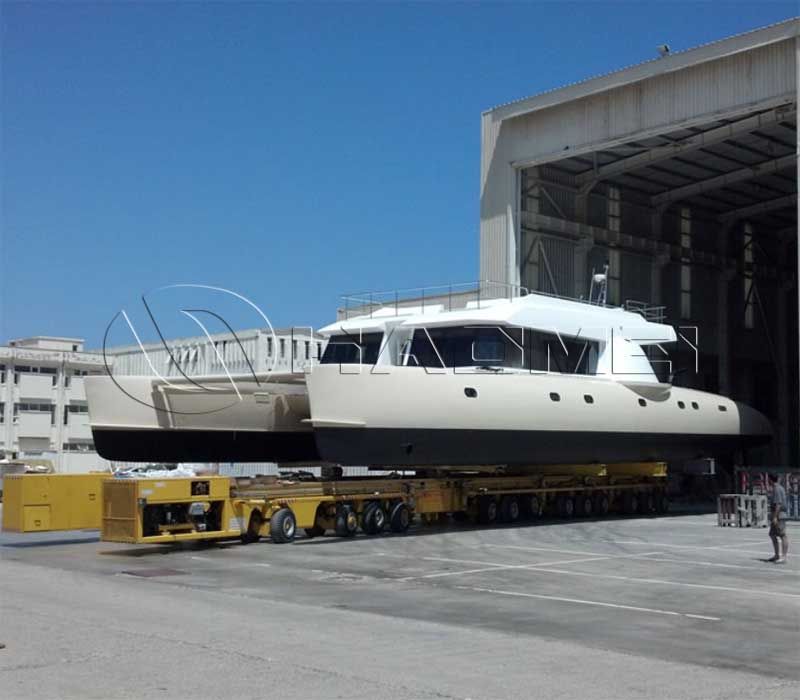
High-speed yachts, speedboats, government vessels, fishing boats, ocean-going research vessels, military speedboats, superstructures of luxury cruise ships, and small and medium-sized vessels with stringent requirements for weight and speed, where aluminum plates are extensively used throughout or in specific areas.
Marine Stainless Steel Plate
Marine stainless steel plates are characterized by high strength, wear resistance, and strong corrosion resistance, especially resistant to seawater pitting and crevice corrosion. Suitable for heavy-duty, high-temperature, and high-wear marine environments, with clearly distinguishable grades for specific applications.
Commonly Used Core Grades
- 304 Stainless Steel Plate: General-purpose, resistant to atmospheric and freshwater corrosion, high cost-performance ratio, mostly used for marine interiors and non-seawater immersion components.
- 316/316L Stainless Steel Plate: Marine-grade, with added molybdenum, its resistance to seawater pitting and intergranular corrosion surpasses that of 304, making it the standard for seawater environments.
- 2205 Duplex Stainless Steel Plate: High-strength, combining austenitic and ferritic properties, excellent resistance to stress corrosion and compressive strength, suitable for heavy-duty vessels and deep-sea equipment.
Core Advantages
- Exceptional Structural Strength: Load-bearing capacity and impact resistance far superior to aluminum plates, suitable for main load-bearing structures and deck load-bearing areas of ships.
- Extreme Corrosion and Wear Resistance: Resistant to seawater, oil, and chemical corrosion, with a smooth, easy-to-clean surface and an extremely long service life.
- High Temperature Resistance and Deformation Resistance: Suitable for high-temperature areas such as marine power systems, engine rooms, and exhaust pipes, with excellent stability.
- Balancing Aesthetics and Practicality: Excellent surface texture, suitable for luxury ship interiors and public area decoration, combining beauty and durability.
Suitable Ship Types
Large cargo ships, tankers, container ships, warships, deep-sea work vessels, luxury cruise ship interiors, ship piping systems, ballast tanks, and heavy-duty ships with extreme requirements for structural strength and corrosion resistance.
Essential for Steel-Aluminum Hybrid Use(Steel-Aluminum Transition Solutions)
Many mid-to-high-end ships adopt a hybrid design of "steel hull + aluminum superstructure" to balance strength and lightweight. However, direct connection between steel and aluminum can cause electrochemical corrosion, leading to joint failure. In this case, the aluminum clad steel sheets (steel-aluminum transition joints) are the optimal solution and an industry-standard solution.
Actual Construction Application
1. Positioning and Laying: Pre-install steel-aluminum composite plates at the junction of the steel hull and the aluminum superstructure. The steel side is welded to the hull steel structure, and the aluminum side is welded to the aluminum structure.
2. Process Adaptability: Conventional marine welding processes can be used. Steel structure welding rods are used on the steel side, and aluminum alloy welding wire is used on the aluminum side. No special equipment is required, making construction convenient.
3. Protection and Reinforcement: Anti-corrosion sealing treatment is applied to the joint to further prevent seawater infiltration and extend the service life of the transition area.
Original Source:https://www.marinealu.com/a/marine-aluminum-plate-vs-stainless-steel.html
Tags: marine grade aluminum sheet ,