Aluminum Welding Wire
Marine fabrication failures are often traced to filler-metal mismatch rather than base-plate quality. The primary concern is weld-zone corrosion and cracking performance after the vessel enters chloride service. Selecting the correct aluminum welding wire requires matching the filler to the parent alloy, welding process, operating temperature, and coating plan.
For marine hulls, decks, tanks, gangways, and offshore structures, the most frequently specified base materials are 5xxx-series Al-Mg alloys, including 5083, 5086, 5454, 5754, and 5456. These alloys need fillers that preserve corrosion resistance while providing acceptable weld strength and crack resistance.
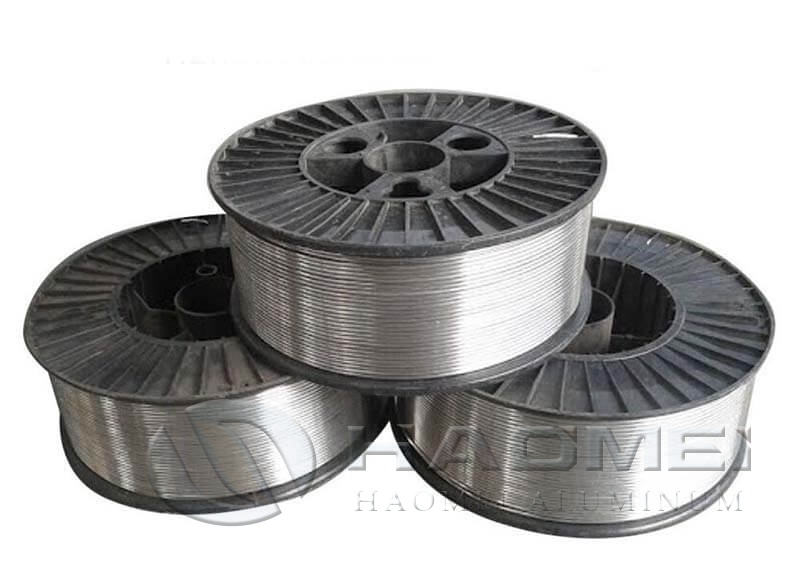
Filler Selection
The three common Al-Mg consumables for marine work are ER5356, ER5183, and ER5556. Their suitability differs materially, especially for high-strength 5083 structures and elevated-temperature service.
| Filler classification | Typical marine use | Main advantage | Main limitation |
|---|---|---|---|
| ER5356 | 5083, 5086, 5052, 5454 general fabrication | Widely available, stable feeding, good corrosion performance | Not normally preferred for sustained elevated-temperature service |
| ER5183 | 5083 hull plating, structural panels, high-strength welds | Higher weld-metal strength than ER5356 in many 5083 applications | Requires disciplined storage and surface preparation |
| ER5556 | High-strength 5xxx joints, demanding structural welds | High tensile-strength potential in as-welded condition | Higher Mg content can increase sensitivity to service-temperature limits |
AWS A5.10/A5.10M covers bare aluminum and aluminum-alloy welding electrodes and rods. ISO 18273 provides an international classification system for aluminum and aluminum-alloy welding consumables. Purchase orders should state the required standard, alloy designation, wire diameter, spool type, lot traceability, and certificate requirements rather than relying only on a trade name.
For 5083 plate, ER5183 is often selected where weld strength is important. ER5356 remains a practical choice for general marine fabrication because of broad availability and reliable welding behavior. Final selection must follow the approved welding procedure specification, project rules, and design code requirements.
A qualified Alu Wire supplier should provide mill test documentation identifying chemical composition, heat or lot number, product designation, and applicable specification. For critical hull or pressure-containing work, align consumable certificates with the requirements of the shipyard, class society, or project inspector.
Temperature Risk
High-magnesium 5xxx alloys and matching high-Mg fillers deserve special attention when equipment will remain at elevated temperature. Sensitization can occur in certain Al-Mg alloys after prolonged exposure in an intermediate temperature range, potentially reducing resistance to intergranular corrosion.
This issue is especially relevant for engine-room structures, heated tanks, exhaust-adjacent assemblies, and industrial marine equipment. It is not solved simply by choosing the highest-strength filler.
Use this decision sequence:
- Confirm the base alloy and temper from material certificates.
- Identify the maximum continuous service temperature.
- Check whether the applicable design code restricts Al-Mg alloy use at that temperature.
- Select the filler in the approved WPS/PQR range.
- Evaluate corrosion protection, drainage, crevice design, and post-weld cleaning together.
American Bureau of Shipping, DNV, Lloyd's Register, and other classification organizations may impose project-specific approval and documentation conditions. Their current rules and the contract specification take precedence over general filler-selection charts.
Wire Condition
Wire cleanliness is the product feature that most directly affects marine weld consistency. Aluminum rapidly forms an oxide film, and moisture or hydrocarbon contamination can introduce porosity. This is particularly damaging in MIG welds on hull plating, where repair costs rise sharply after radiographic testing or leak testing.
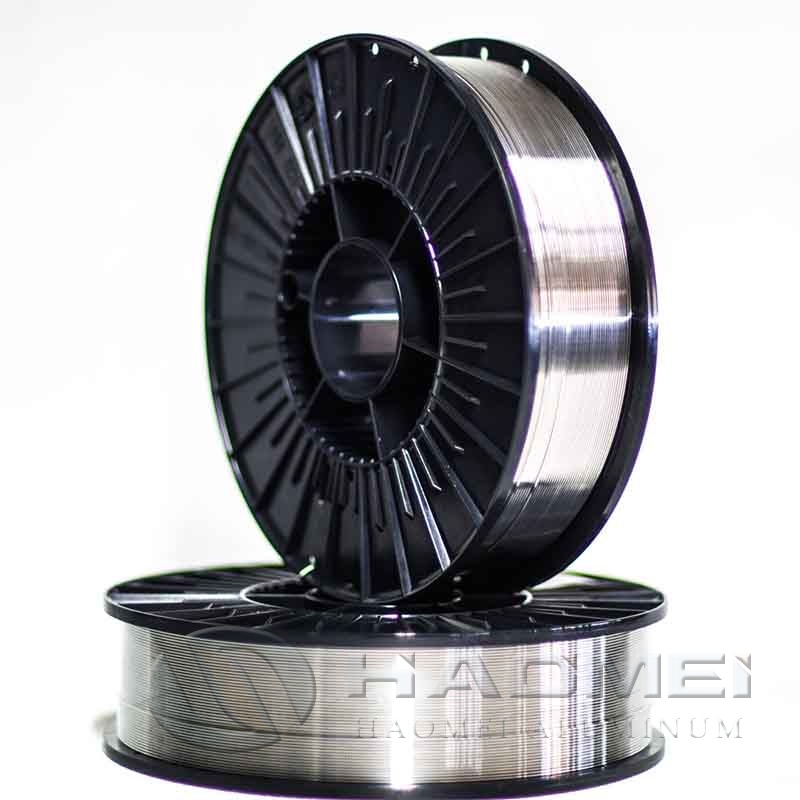
Use the following receiving and storage controls:
| Control point | Acceptance action | Failure prevented |
|---|---|---|
| Packaging | Confirm sealed, undamaged moisture barrier and readable labels | Moisture pickup and mixed lots |
| Spool surface | Reject wire with visible oxidation, oil, dust, or handling damage | Porosity and unstable arc behavior |
| Traceability | Record alloy, diameter, lot number, and certificate reference | Unverifiable repairs and certification delays |
| Storage | Keep in a clean, dry, temperature-stable consumable area | Condensation and surface contamination |
| Feeding path | Clean liners, drive rolls, contact tips, and guide tubes regularly | Bird-nesting, feeding variation, arc instability |
Do not use carbon-steel wire brushes or contaminated grinding tools on aluminum joints. Use dedicated stainless-steel brushes intended for aluminum work, followed by solvent cleaning where permitted by the welding procedure. Remove oxide immediately before welding because the oxide layer reforms quickly in air.
Process Setup
For gas metal arc welding, wire diameter must suit plate thickness, position, and equipment capacity. Common marine diameters include 1.0 mm, 1.2 mm, and 1.6 mm, but the qualified WPS controls the permitted range.
Shielding gas is usually argon for conventional MIG welding of marine aluminum. Helium or argon-helium mixtures may be specified for thicker sections where greater heat input and penetration are needed. Gas purity, flow stability, nozzle condition, and wind protection matter as much as nominal gas selection.
Poor weld appearance should not be corrected by increasing voltage without investigation. Check, in order:
- Base-metal cleanliness.
- Wire surface condition.
- Contact-tip wear and wire feed tension.
- Gas leaks and draft exposure.
- Torch angle and travel speed.
- Actual parameter compliance with the WPS.
Cost Control
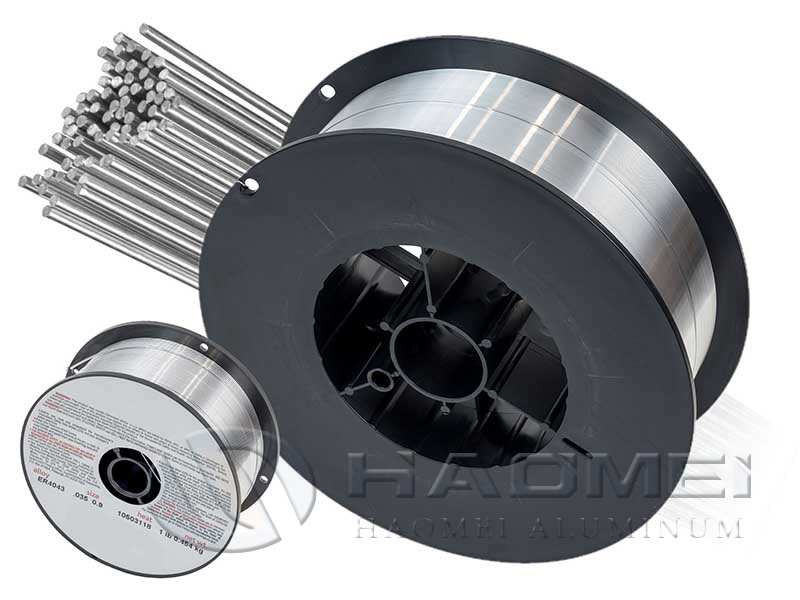
The wire price is only one part of fabrication cost. Lower-priced material can become expensive if its winding quality, packaging, cleanliness, or certification causes downtime, porosity repairs, or rejected weld documentation.
Compare quotations on a delivered and documented basis:
| Commercial factor | What to compare |
|---|---|
| Net wire weight | Actual net mass per spool, not gross packaged weight |
| Classification | ER5356, ER5183, ER5556, and the cited AWS or ISO standard |
| Documentation | Certificate scope, chemical analysis, traceability, and retention period |
| Packaging | Spool material, vacuum or barrier protection, carton strength, pallet protection |
| Supply continuity | Lead time, production location, port routing, and emergency replacement capability |
| Quality cost | Historical feeding stability, defect claims process, and inspection support |
Aluminum consumable pricing generally follows primary aluminum movements, magnesium-alloying costs, energy charges, conversion capacity, freight rates, and regional inventory cycles. Supply can tighten when rolling-product demand, energy constraints, shipping disruption, or certification requirements limit available conversion capacity. Establishing approved equivalent classifications before a shortage occurs reduces production interruption.
Receiving Checklist
Before releasing wire to production, verify the following items against the purchase order and WPS:
- Correct filler classification and wire diameter.
- Valid AWS A5.10/A5.10M or ISO 18273 designation, where specified.
- Matching lot number on spool, carton, and certificate.
- Intact packaging with no moisture, corrosion, or crushed spools.
- Clean, smooth wire surface and consistent spool winding.
- Documented compatibility with the base alloy and intended service temperature.
- Approved welding procedure coverage for process, gas, position, and thickness range.
These controls keep filler selection aligned with marine corrosion performance, class documentation, and predictable welding productivity.
Original Source:https://www.marinealu.com/a/aluminum-welding-wire.html
Tags: Aluminum Welding Wire , Marine Aluminum Filler Metal ,