Aluminum Friction Stir Welding Sheet
The English Q&A searches around aluminum friction stir welding sheet have focused less on theory and more on practical marine use: strength, alloy selection, inspection, panel size, and how to specify material for shipyards. Let's have a look.
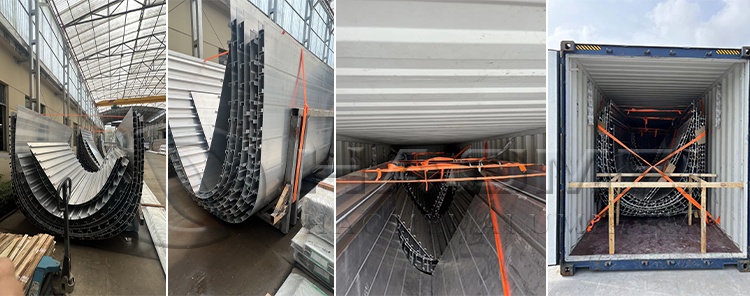
| Hot question from recent Q&A searches | What the question usually means in a marine project |
|---|---|
| Is aluminum friction stir welding sheet stronger than MIG welded aluminum sheet? | The user wants to reduce distortion and improve joint consistency. |
| What alloy is best for friction stir welded aluminum sheet in boats? | The user is comparing 5083, 5059, 5086, 6061, and 6082. |
| Can FSW aluminum sheet replace one large marine plate? | The user needs wider panels, fewer seams, and better flatness. |
| What defects happen in friction stir welded aluminum sheet? | The user is preparing inspection and acceptance standards. |
| How should I specify aluminum FSW sheet when ordering? | The user needs a clear RFQ for marine sheet, profile, and welding consumables. |
1. Is aluminum friction stir welding sheet stronger than MIG welded aluminum sheet?
In many marine aluminum applications, friction stir welding can provide better joint consistency than conventional fusion welding. It is a solid-state process, so the metal is softened and stirred without fully melting. That matters for aluminum because melting can create porosity, hot cracking, excess reinforcement, and wider heat-affected zones.
For 5xxx marine alloys such as 5083, 5086, and 5059, friction stir welding often delivers high fatigue performance and lower distortion than MIG or TIG welding. For 6xxx alloys such as 6061 or 6082, the strength around the weld still depends on temper loss, post-weld treatment, and design loading. A well-made FSW joint may look simple from the surface, but the tool design, travel speed, plunge depth, and clamping condition all affect the final result.
For a workboat deck, ferry floor, patrol vessel panel, or offshore access platform, the advantage is not only tensile strength. The more practical value is repeatability across long seams. A factory-produced FSW Plate can reduce rework where long, straight seams must stay flat after welding.
2. What aluminum grade is best for friction stir welded sheet in marine use?
There is no single alloy that fits every vessel structure. The right grade depends on seawater exposure, load, bending, anodizing or coating plans, classification society rules, and whether the part is a hull plate, deck plate, stiffened panel, cabin wall, or machined component.
| Alloy | Common marine role | FSW suitability note |
|---|---|---|
| 5083 | Hulls, decks, tanks, offshore panels | Very common for seawater resistance and welded structures. |
| 5086 | Vessel sheet, superstructure, general marine fabrication | Good corrosion resistance and formability. |
| 5059 | High-strength marine structures | Used where stronger 5xxx performance is needed. |
| 6061 | Profiles, frames, machined parts, ladders | Weldable, but temper reduction must be considered. |
| 6082 | Structural profiles and extrusions | Popular for load-bearing profiles in many regions. |
For shipbuilding sheet, 5083-H111, 5083-H116, 5083-H321, and related marine tempers are frequent choices. If a project uses aluminum profiles together with FSW panels, check both alloy compatibility and galvanic contact with stainless parts. Seamless stainless steel pipe, stainless pipe fittings, and aluminum structures can coexist in marine systems, but insulation, drainage, and coating design are part of the material decision.
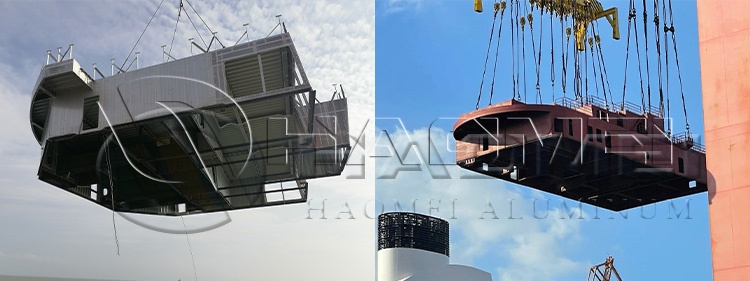
3. Can friction stir welded aluminum sheet replace one large marine plate?
Often, yes. FSW is widely used to join narrower sheets or plates into wider panels with a flat, low-distortion seam. This is useful when a yard wants large deck panels, floor plates, bulkhead panels, or superstructure sheets but does not want to rely only on oversized mill plate.
Compared with manual welding, the FSW seam normally has a smoother profile and less angular distortion. This helps downstream cutting, CNC routing, forming, and assembly. It also helps when anti-slip tread, coating uniformity, or tight dimensional control is required.
However, replacement is not automatic. Engineers should confirm plate thickness, minimum bend radius near the weld, fatigue loading, seam orientation, and classification requirements. If the panel is part of a load path, the weld position should be coordinated with stiffeners, profiles, openings, and support points. For modular deck and floor assemblies, a customized FSW Plate can be considered when a flat joined panel is more efficient than multiple small sheets welded in the yard.
4. What defects should be checked in aluminum friction stir welding sheet?
FSW defects are different from typical MIG defects. You are less likely to see gas porosity from filler wire, but you still need to inspect the weld for internal and surface issues. Many problems come from poor tool engagement, unsuitable parameters, worn tooling, weak clamping, or contamination.
| Defect or concern | Why it matters | Practical inspection method |
|---|---|---|
| Lack of bonding | Reduces joint strength and fatigue life | Ultrasonic testing, macro etch, bend test |
| Tunnel defect | Internal void along the weld line | Ultrasonic testing or sectioning |
| Excessive flash | Indicates material displacement or wrong parameter balance | Visual and dimensional inspection |
| Root flaw | Weakness at the bottom of the weld | Macro test, bend test, ultrasonic test |
| Surface galling or tool marks | May affect coating or fatigue-sensitive areas | Visual inspection and surface roughness check |
| Distortion | Affects fit-up during panel installation | Flatness measurement |
A good inspection plan should match the service condition. For a cabin panel, surface appearance and flatness may be central. For a deck panel under cyclic load, fatigue behavior and root quality deserve closer attention. For a fuel tank or wet compartment, corrosion performance and leak testing should be included.
5. How should I specify aluminum friction stir welding sheet when requesting a quotation?
A vague request such as aluminum FSW sheet price usually creates delays because the supplier must ask for missing technical details. A clearer request helps control cost, delivery time, and inspection expectations.
Include the alloy and temper, thickness, width, length, weld seam direction, number of seams, flatness tolerance, surface finish, edge trimming requirement, testing standard, certificate requirement, and packing method. If the same project also needs aluminum profiles, aluminum welding wire for secondary fabrication, stainless pipe fittings, or seamless stainless steel pipe, list those items separately with grades and dimensions.
A practical RFQ line might read: Aluminum friction stir welded sheet, 5083-H116, thickness 6 mm, finished panel 2400 x 6000 mm, one longitudinal FSW seam, trimmed edges, marine certificate required, ultrasonic test for seam, mill finish, seaworthy packing.
For secondary welding in the shipyard, remember that FSW sheet may still be joined to other parts by MIG or TIG. In that case, welding wire selection remains important. ER5183 and ER5356 are common for many 5xxx marine aluminum assemblies, but the final choice should match the base alloy, service temperature, strength requirement, and corrosion exposure.
When comparing quotations, do not evaluate only price per kilogram. Review finished panel size, weld testing, dimensional tolerance, certification, packaging, and whether the supplier understands marine assembly conditions. In real fabrication, a flatter and better inspected FSW sheet can save labor during fitting, coating, and installation.
Original Source:https://www.marinealu.com/a/aluminum-friction-stir-welding-sheet.html
Tags: Aluminum Friction Stir Welding Sheet , FSW Plate , Marine Aluminum Sheet , Friction Stir Welding ,