Aluminum Clad Steel
Aluminum-to-Steel Joints: Control Bond Integrity Before Price
Marine structures often combine aluminum superstructures with steel hulls. The interface is not a conventional weld. Direct fusion welding of aluminum to steel can form brittle iron-aluminum intermetallic compounds, so marine fabricators commonly use a metallurgically bonded transition material.
Aluminum Clad Steel is a bonded composite with an aluminum layer and a steel layer. In marine work, it is normally supplied as a transition strip, bar, or plate. The aluminum side is welded to an aluminum structure, and the steel side is welded to steel. The bonded interface must remain outside the weld fusion zones.
The primary purchasing concern is not nominal thickness. It is whether every supplied piece has a sound, traceable bond that will tolerate fabrication, coating, and service exposure without delamination or galvanic-corrosion damage.
Select the Bonding Method for the Actual Joint
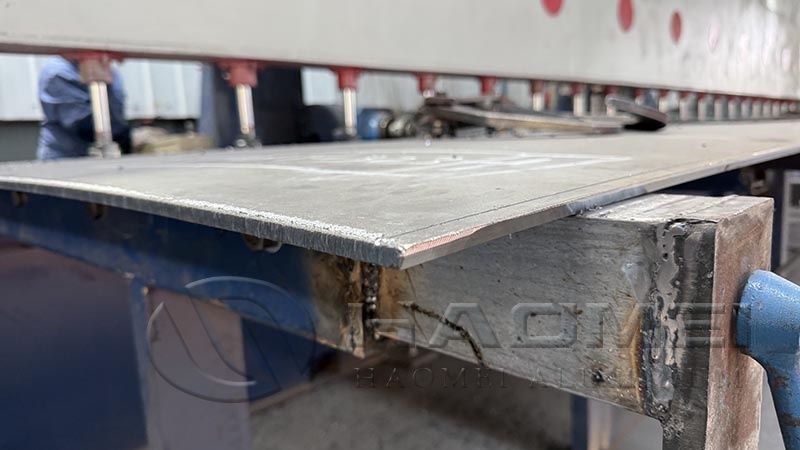
Explosion bonding is widely used for aluminum-steel transition materials because it produces a solid-state metallurgical bond without melting the full interface. Roll bonding can be suitable for certain flat composite products, but it requires a process qualification that demonstrates bond continuity and forming performance for the intended application.
| Comparison point | Explosion-bonded transition material | Roll-bonded composite sheet or plate |
|---|---|---|
| Typical marine use | Structural transition strips, bars, and custom shapes | Flat panels and applications with controlled forming |
| Interface formation | High-energy solid-state bonding | Pressure and deformation under controlled rolling |
| Shape flexibility | Can accommodate sections and fabricated transition geometries | Primarily flat product |
| Main verification need | Bond continuity, interface location, bend behavior | Bond continuity after rolling and any required forming |
| Contract risk if unspecified | Variable interface profile and unapproved dimensions | Unclear forming limit or bond performance after bending |
Specify the required configuration in the purchase document: aluminum alloy and temper, steel grade, individual-layer thickness, overall thickness, width, length, bonding method, machining allowance, permitted interface location, and marking location.
For marine aluminum, common parent-material references include ASTM B928/B928M for 5xxx-series aluminum-alloy plate for marine service and ASTM B209/B209M for aluminum sheet and plate products. The steel side must be specified to the vessel or project steel grade, such as a class-approved shipbuilding grade where required. These standards identify product requirements for the individual metals; they do not, by themselves, establish acceptance criteria for an aluminum-steel bonded interface.
Use Class and Project Requirements Correctly
Classification-society approval requirements depend on vessel class, location of the joint, structural function, and flag or contract requirements. ABS and DNV rules address material certification, welding, and approval of materials and procedures used in classified vessels. Confirm with the vessel's class plan-approval team whether the transition material manufacturer, bonding procedure, and welding procedure require specific approval.
Do not cite an unrelated clad-plate standard as proof that a marine aluminum-steel transition is acceptable. ASTM B898, for example, covers reactive and refractory metal clad plate and is not a general acceptance standard for aluminum-steel marine transitions. Where no single governing product specification applies, the purchase order needs a documented technical specification and agreed inspection plan.
Inspection Plan: What to Require Per Delivery
A material test certificate should identify both parent metals, heats or cast numbers where available, dimensions, bonding route, and traceability to each supplied piece. Require the certificate format required by the contract, such as EN 10204 type 3.1 when independent material certification is specified.
| Inspection item | Practical requirement | Why it matters |
|---|---|---|
| Visual examination | Check exposed edges for voids, cracks, lifting, contamination, and incomplete bond areas | Edge defects can propagate during welding or service |
| Dimensional inspection | Measure overall thickness, each cladding thickness, width, flatness, and interface offset | Weld preparation depends on reliable layer geometry |
| Ultrasonic examination | Use a documented procedure, calibration blocks, scan coverage, and recorded indications | Detects unbonded areas not visible at edges |
| Bend test | Define bend direction, mandrel diameter, angle, specimen orientation, and acceptance criteria | Demonstrates resistance to interface separation during fabrication |
| Destructive bond test | State specimen location, test method, minimum result, and failure reporting | Confirms bond performance for the production batch |
| Positive material identification | Verify aluminum alloy and steel grade when mix-up risk exists | Prevents welding and corrosion-control errors |
Use qualified personnel for nondestructive testing. ISO 9712 establishes qualification and certification requirements for NDT personnel. Tensile testing and bend-test methods may be referenced to ISO 6892-1 and ISO 7438 where applicable, but the acceptance level, sampling frequency, and specimen geometry must be written into the project specification.
Avoid a generic bond-strength value copied from another project. Bond performance depends on layer thickness, joint geometry, fabrication loads, and class requirements. Ask the manufacturer to provide its qualified test method and production sampling plan, then have the project engineer approve the specified threshold.
Prevent Galvanic Corrosion at the Transition
Aluminum and steel are dissimilar metals. In the presence of an electrolyte such as seawater, poor coating continuity or water traps can accelerate corrosion of the less noble aluminum. The bonded transition does not eliminate this risk; it relocates the joining problem into a controlled material interface.
Use this fabrication checklist:
Keep the bond line outside both weld heat-affected zones, according to the approved welding procedure.
Do not grind through the aluminum layer or steel layer near the interface.
Seal crevices and prevent standing water at terminations, laps, and insulation boundaries.
Apply the approved coating system after surface preparation suitable for each exposed metal.
Maintain electrical isolation where required by the vessel corrosion-control design.
Inspect coating edges and damaged areas after installation and before commissioning.
The welding procedure specification should identify the aluminum filler metal, steel consumable, preheat limits where applicable, heat-input restrictions, joint preparation, and the minimum distance between weld toe and bond interface. A fabricator should qualify the procedure on representative transition material, not only on separate aluminum and steel coupons.
Sourcing Controls for High-Volume Marine Supply
Place orders against a controlled technical schedule rather than a simple alloy-and-size description. Start with a first-article sample or trial length when changing manufacturer, interface design, or bonding route. Confirm cut lengths and nesting plans early because transition material is often supplied in nonstandard geometry and may have directional inspection requirements.
For recurring supply, use batch-based release controls:
Define a maximum production batch and traceability unit.
Require certificates and NDT records before shipment release.
Retain one reference sample or destructive-test record per agreed batch.
State whether repair welding, edge build-up, or interface repair is prohibited.
Identify packaging requirements that prevent chloride contamination, edge damage, and moisture retention.
Define nonconformance handling, including notification before substitution of alloy, steel grade, thickness, or bonding facility.
When comparing quotations, normalize the comparison by finished usable dimensions, certified inspection scope, destructive-test sampling, class documentation, packaging, and delivery condition. A lower unit price can omit ultrasonic coverage, machining allowance, or traceable certification that is needed to install the material safely.
For projects requiring custom dimensions, specify explosion-bonded aluminum-steel transition plates with a drawing that shows weld zones, no-weld areas, bond-line position, coating boundaries, and required test-coupon locations. This reduces fabrication rework and makes incoming inspection measurable.
Original Source:https://www.marinealu.com/a/aluminum-clad-steel.html
Tags: Aluminum Clad Steel , Marine Transition Joint ,