Aluminium 6082 VS 6061 in Shipbuilding
6082 and 6061 aluminum plates and profiles both belong to the aluminum-magnesium-silicon series of heat-treatable alloys, with magnesium and silicon as their main alloying elements. However, due to differences in the proportion of trace elements, their properties differ significantly, especially in strength, corrosion resistance, and machinability, directly determining their application boundaries in shipbuilding.
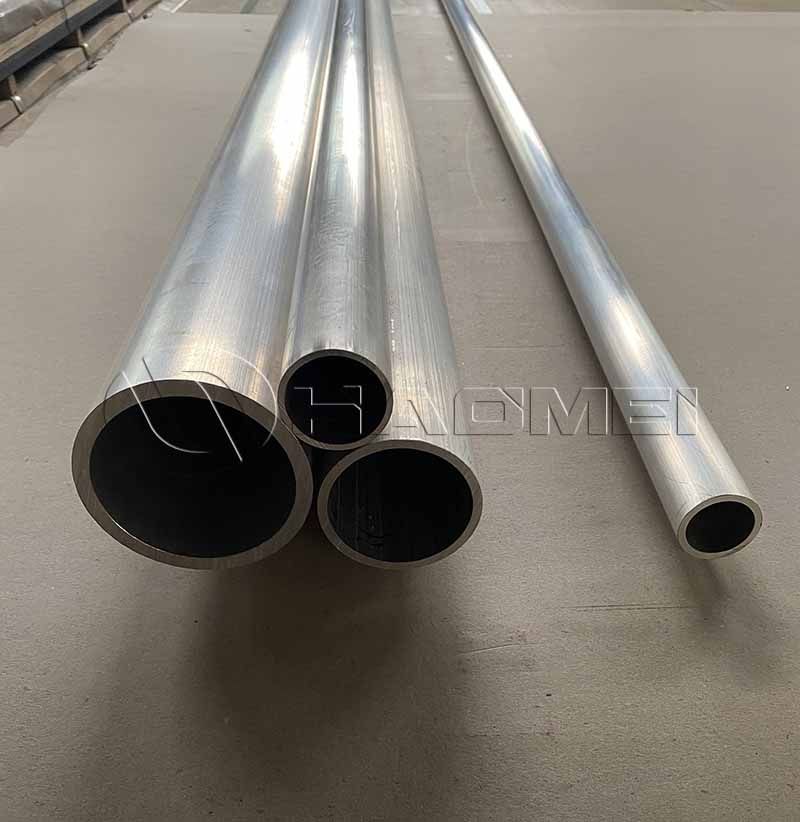
6082 and 6061 Properties
6082 Aluminum Alloy
Aluminium aw 6082 is characterized by its "high strength + high corrosion resistance," making it one of the stronger grades in the 6-series alloys. In the T6 heat-treated state, its tensile strength can reach 310-420 MPa, yield strength ≥260 MPa, Brinell hardness ≥95 HBW, and elongation ≥8%. It possesses excellent static load-bearing capacity and fatigue deformation resistance, capable of withstanding the combined effects of cargo weight, ship weight, and seawater buoyancy over long periods.
In terms of corrosion resistance, 6082 aluminum alloy has an extremely low copper content (≤0.1%) and adds a suitable amount of manganese, effectively improving its resistance to marine corrosion and stress corrosion cracking. In humid, high-salt-spray marine environments, its corrosion resistance is superior to 6061 aluminum alloy, allowing for long-term service without complex surface protection treatments, significantly reducing maintenance costs.
Furthermore, it possesses good weldability, machinability, and formability, maintaining good operational performance even after annealing, making it suitable for processing into various structural profiles and plates.
6061 Aluminum Alloy
6061 aluminum alloy is hailed as the "all-rounder" among 6-series alloys, with more balanced performance and no obvious weaknesses. In the T6/T651 heat-treated state, its tensile strength can reach 290-320MPa, yield strength 240-270MPa, elongation 8%-12%, and hardness 95-110HB. Although its strength is slightly lower than 6082, its plasticity and impact toughness are superior, better able to withstand the dynamic load impacts of ship navigation, such as vibrations caused by wind and waves.
Machinability is a core advantage of 6061 aluminum alloy. Its excellent extrusion properties allow it to be easily processed into complex profiles such as I-beams, channel steel, round tubes, and square tubes. It also boasts strong weld compatibility, adapting to various conventional welding processes without requiring special welding materials, resulting in lower processing costs.
Regarding corrosion resistance, 6061 contains a small amount of copper (0.15%-0.4%), which, while enhancing strength, slightly reduces its resistance to marine corrosion. Surface treatments such as anodizing are needed to further enhance its salt spray resistance. Even so, its corrosion resistance still meets the requirements of most non-core ship structures.
Applications
6082 Aluminum Profiles
Due to its high strength and excellent corrosion resistance, 6082 aluminum alloy is mainly used in the core load-bearing structures of ships and critical components exposed to the marine environment for extended periods. It is one of the preferred materials for large and high-requirement vessels.
In large cargo ships and container ships, 6082 aluminum profiles are widely used in core structures such as deck load-bearing beams, midship bulkhead frames, and ribs. These components need to withstand heavy loads and seawater corrosion for extended periods. Its high strength ensures structural stability and prevents fatigue deformation during long-term service.
Simultaneously, its lightweight properties reduce hull weight, increase load-bearing capacity by 8%-12%, and reduce fuel consumption by approximately 3.2%, aligning with the trend of energy conservation and emission reduction in the marine industry. In high-speed passenger ships, the application of 6082 plates can increase the ship's top speed by 12%, further highlighting its lightweight advantages.
In recreational and special-purpose vessels, 6082 aluminum also plays a crucial role: in the deck load-bearing beams of fishing boats and the keel reinforcements of yachts, its "high strength + easy welding" advantages replace steel, reducing hull weight while extending service life. In the composite structures of survey vessels and fisheries management vessels, 6082 alloy is used in combination with 5083 aluminum alloys to meet the strength and corrosion resistance requirements under complex sea conditions.
6061 boat extrusions
6061 aluminum alloy, with its balanced performance and excellent machinability, has a wider range of applications, primarily in non-core load-bearing structures, functional components, and the main structure of small vessels. It is one of the most widely used aluminum alloy grades in shipbuilding.
In the superstructure of various ships, 6061 profiles are used for door and window frames, railings, ventilation ducts, and other components. Its good formability allows it to accommodate complex curved surface designs. Anodizing not only enhances its aesthetics but also improves surface hardness and corrosion resistance, resulting in a service life of over 20 years.
In small vessels (such as patrol boats, small yachts, and fishing boats), 6061 profiles are directly used for hull frames and outer shells. Its good impact toughness allows it to withstand complex waters such as reefs and shallows, and its ease of processing and cost-effectiveness make it suitable for mass production.
Furthermore, 6061 checkered plates are standard on ship decks, particularly suitable for passenger ships and ferries in densely populated areas. Their textured surface increases the coefficient of friction to 0.6-0.8, effectively preventing slips in wet environments and distributing loads to reduce fatigue cracks caused by prolonged foot traffic.
In catamaran mast manufacturing, 6061 round tubes are 60% lighter than traditional steel, lowering the ship's center of gravity, enhancing wind resistance, and ensuring navigational stability.
Which is more popular?
From an overall industry application perspective, 6061 aluminum alloy is widely used in the general structures of various conventional ships due to its balanced performance, ease of processing, and controllable cost, resulting in a relatively considerable overall usage. Haomei Aluminum, 6082 and 6061 aluminium supplier, will give you a practical answer based on our actual customer feedback: 6082 aluminum alloy is the more favored choice.
For our customers, the structural safety and long-term stability of the ship are far more important than short-term processing costs. The high strength of 6082 ensures that the core load-bearing structure of a ship does not experience fatigue deformation under long-term heavy loads and complex sea conditions. Its excellent resistance to marine corrosion can significantly reduce maintenance costs during the ship's service life, reduce downtime for maintenance, and indirectly improve operational efficiency.
In contrast, although 6061 has a lower processing cost, its shortcomings in core performance make it difficult to meet our customers' high requirements for ship safety levels. Therefore, among our customers, 6082 is chosen far more often than 6061.
Original Source:https://www.marinealu.com/a/aluminium-6082-vs-6061-in-shipbuilding.html
Tags: 6082 aluminum plate ,