90/10 Copper Nickel Flanges VS Flange Aluminum
In engineering sectors such as marine operations, seawater desalination, chemical heat exchange, and municipal fluid piping, flanges serve as critical connecting components in piping systems; the choice of material directly determines equipment service life, operational stability, and maintenance costs. 90/10 copper-nickel alloy flanges (C70600) and aluminum flanges are commonly used components for lightweight and corrosion-resistant applications. However, they differ significantly in performance and suitability for specific scenarios. The following section compares these differences and offers selection recommendations.
I. Basic Material Composition
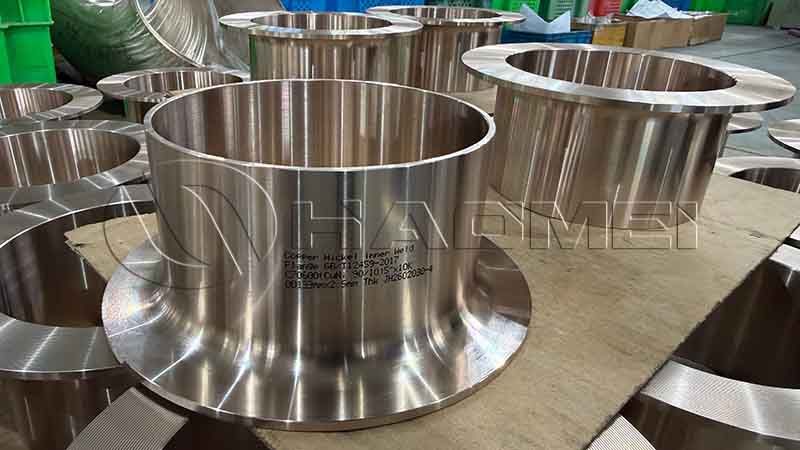
The base materials of these two types of flanges differ fundamentally, which dictates their performance limits and application ranges. 90/10 Copper nickel flanges (also known as cupronickel flanges) are composed of a 90% pure copper matrix alloyed with 10% nickel and trace amounts of iron and manganese. This alloy features a dense structure and exceptional metallic stability. Characterized by high corrosion resistance and high toughness, it is a premium material designed for harsh, corrosive environments in marine and chemical industries; it can spontaneously form a protective oxide film, significantly enhancing environmental adaptability and service life.
Aluminum flanges are typically forged from industrial aluminum alloys such as 6061 and 5083. Their core advantages include low weight, cost-effectiveness, and ease of processing. However, due to high metal reactivity and limited protective capabilities, they are suitable only for dry or mildly corrosive standard operating conditions, making them an economical, general-purpose flange material.
II. In-depth Comparison of Core Performance
1. Corrosion Resistance
Corrosion is the primary cause of failure in flange piping systems; in complex operating conditions, corrosion resistance directly determines the equipment's service life. 90/10 copper-nickel alloy flanges exhibit excellent resistance to seawater, salt spray, chloride-containing media, and mild acids or alkalis. They withstand high-velocity seawater impingement and cavitation, effectively resist marine biofouling, and eliminate stress corrosion cracking. They remain free from rust or leakage during long-term exposure to humid, salt-laden, or circulating seawater environments and are suitable for seawater flow rates of 4.5 m/s, making them the standard material for offshore equipment piping.
Aluminum flanges have significant limitations regarding corrosion resistance, relying on a surface oxide film for only basic protection in environments with dry air or pure fresh water. In environments involving seawater, salt spray, or acidic/alkaline humidity, electrochemical corrosion readily occurs; the oxide film quickly breaks down and detaches, leading to peeling, perforation, and leakage, rendering the material unsuitable for harsh, corrosive operating conditions.
2. Mechanical and Pressure-Bearing Performance
90/10 Cu-Ni alloy flanges exhibit excellent strength, toughness, and resistance to impact and deformation. They offer balanced high- and low-temperature performance and high pressure ratings, making them suitable for medium- to high-pressure piping systems. They maintain a stable seal under complex conditions—such as equipment vibration, pipeline displacement, and temperature fluctuations—without easily deforming or cracking. Additionally, their good weldability and formability accommodate various precision piping connection techniques.
Aluminum flanges have a density only one-third that of Cu-Ni alloys, offering a distinct lightweight advantage; however, they possess lower strength, hardness, and pressure-bearing capacity, as well as poorer resistance to impact and deformation. They are suitable only for low-pressure, ambient-temperature piping systems free from severe vibration; under conditions involving high pressure, vibration, or temperature fluctuations, issues such as seal failure and interface leakage are likely to occur.
3. Thermal Conductivity and Compatibility
90/10 Cu-Ni alloys inherit the excellent thermal conductivity of copper and feature a stable alloy structure. They are ideal for connecting piping in heat-exchange equipment—such as heat exchangers and condensers—ensuring consistent heat-transfer efficiency. They are a preferred material for thermal and heat-exchange systems and offer excellent compatibility with Cu-Ni piping of the same series, ensuring uniform overall system performance.
The flange aluminum offers outstanding thermal conductivity but lack sufficient heat resistance, making them prone to softening and deformation in high-temperature environments. Furthermore, when paired with steel or Cu-Ni piping, they can generate a potential difference that triggers electrochemical corrosion; due to this poor compatibility with dissimilar materials, they are typically used only in conjunction with aluminum alloy piping.
III. Precise Differentiation of Application Scenarios
1. 90/10 Copper-Nickel Alloy Flanges
- Marine Engineering: Shipboard seawater piping, offshore oil and gas platforms, coastal wind power piping systems
- Environmental & Chemical: Seawater desalination equipment, brine circulation systems, piping for mildly corrosive chemical fluids
- Thermal Equipment: Heat exchangers, condensers, generator cooling water piping
- High-Reliability Applications: Core piping connections subject to long-term outdoor salt-spray environments, medium-to-high pressure, and vibration
2. Aluminum Flanges
- General Civil Use: Municipal potable water piping, standard ventilation ducts, low-pressure water supply and drainage systems
- Lightweight Equipment: Piping for vehicle-mounted or small-scale equipment; scenarios requiring strict limits on equipment weight
- Dry Indoor Environments: Indoor piping systems with non-corrosive conditions, ambient temperatures, low pressure, and favorable maintenance access
- Short-term/temporary piping, low-cost general fluid transport projects
IV. Comparison of Costs and Long-Term Maintenance
Regarding procurement costs, aluminum flanges benefit from inexpensive raw materials, mature manufacturing processes, ample stock, and rapid delivery, resulting in lower initial investment. In contrast, 90/10 copper-nickel alloy flanges entail higher raw material and forging costs, longer lead times for custom orders, and a higher initial purchase price.
Significant differences exist regarding long-term operation and maintenance: aluminum flanges have a short service life under complex operating conditions, requiring frequent inspection and replacement, leading to substantial losses from downtime and poor overall cost-effectiveness. Conversely, 90/10 copper-nickel alloy flanges are corrosion-resistant and maintenance-free; they offer a service life of decades with virtually no subsequent maintenance or replacement costs, making them more cost-effective overall for critical, long-term operational projects.
V. Selection Summary
If the project involves exposure to seawater, salt spray, chemical corrosion, or harsh outdoor environments—or if the piping operates under medium-to-high pressure or continuous long-term conditions requiring high stability and longevity—90/10 copper-nickel alloy flanges are the preferred choice, offering a "one-time investment for long-term peace of mind."
If the application involves standard indoor conditions (ambient temperature, low pressure, dry, and non-corrosive environments) and the project requires lightweight components, short-term use, or operates within a limited budget, aluminum flanges offer superior cost-effectiveness.
Original Source:https://www.marinealu.com/a/9010-copper-nickel-flanges-vs-flange-aluminum.html
Tags: copper nickel pipe fittings ,