Aluminium 5083 vs 6082
Aluminium alloys have become indispensable core materials in modern shipbuilding, valued for their lightweight properties, high structural stability and superior marine corrosion resistance. Among numerous marine-grade aluminium grades, 5083 and 6082 stand out as the most widely adopted options, each with unique mechanical characteristics, processing adaptability and application scenarios. In the marine aluminium profile industry, the two alloys differ significantly in market popularity and mainstream application forms, matching diverse structural and functional demands of ship hulls, superstructures and auxiliary marine facilities.
5083 aluminium alloy, a classic non-heat-treatable Al-Mg series alloy, has long maintained a dominant popular position in the global marine shipbuilding field, earning the reputation of the “universal marine aluminium alloy”. Its core advantages lie in exceptional seawater corrosion resistance, excellent low-temperature toughness and stable welding performance, with no obvious strength attenuation after welding—an irreplaceable merit for marine structural materials exposed to long-term humid and saline environments.
For decades, 5083 has been the preferred grade for medium and large ship hull structures, small and medium yachts, and offshore platform components, enjoying far higher universal popularity than 6082 in mainstream marine engineering projects worldwide.
In terms of application forms, 5083 alloy is mainly applied in plate, sheet and tubular forms for core load-bearing and anti-corrosion marine structures. It is widely used for ship hull bottom plates, side shells, bulkheads, superstructure panels and marine storage tanks.
To meet the high-precision fluid transmission and pressure-resistant pipeline demands of offshore vessels and marine equipment, seamless 5083 alloy pipe is extensively adopted in marine hydraulic systems, cooling pipeline systems and offshore engineering fluid conveying structures, delivering reliable sealing performance and long-term corrosion resistance under complex marine working conditions. Its stable mechanical properties after welding make it ideal for integral welded marine structural modules.
6082 aluminium alloy, a heat-treatable Al-Mg-Si series alloy, is a high-strength structural aluminium grade that has gained rising popularity in the marine auxiliary structure field in recent years. Though less universally prevalent than 5083 in overall shipbuilding applications, it dominates the market for high-stiffness, lightweight marine auxiliary structural parts, especially in European standard-compliant shipbuilding projects.
After T6 heat treatment, 6082 features high tensile strength, strong surface hardness and outstanding machining performance, making it suitable for precision processing and bolted assembly structures that 5083 cannot perfectly adapt to.
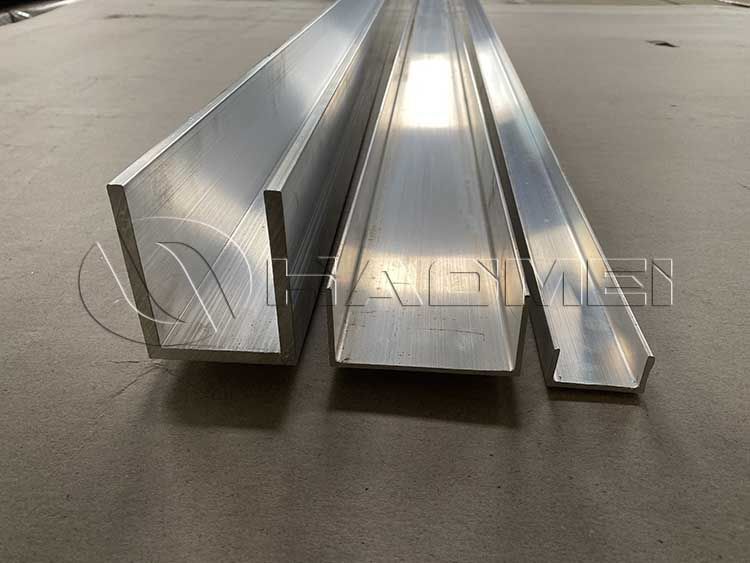
The mainstream application form of 6082 in shipbuilding is aluminium extrusion profile, which can be customized into various complex cross-sectional structures such as I-beams, square tubes, special-shaped frames and strip profiles through precise extrusion processes.
These extruded profiles are mainly used for ship internal cabin frames, walking gangways, deck guardrails, support brackets, offshore operation platforms and precision deck accessories. Compared with 5083’s focus on anti-corrosion main structures, 6082 extruded profiles prioritize structural stiffness and assembly convenience, effectively reducing the overall dead weight of ships while ensuring the stability of auxiliary structures.
In summary, the market popularity and application positioning of the two alloys are highly differentiated in the marine field. 5083 is the most popular universal marine aluminium alloy, focusing on anti-corrosion and welded main hull structures with tubular and plate forms. 6082 is a specialized high-strength structural material, popular in lightweight auxiliary marine structures with customized extruded profiles. Reasonable selection of the two alloys based on ship functional requirements can effectively balance marine equipment safety, durability and lightweight design.
Original Source:https://www.marinealu.com/a/aluminium-5083-vs-6082.html
Tags: aluminum tube ,
Prev:90/10 Copper Nickel Flanges VS Flange Aluminum
Next:Where To Buy Marine Aluminum Sheets And Extrusions For Boat Building