What Is Bass Boat Decking Material
For bass fishing enthusiasts, a fishing boat is not just a means of transportation, but a "mobile battlefield" for battling the water and enjoying tranquility. The deck, as the core activity area during fishing, is directly affected by its material selection, impacting load-bearing safety, anti-slip performance, maintenance costs, and even operational efficiency when fishing.
A high-quality bass fishing boat deck inevitably demands the ultimate in both durability and practicality. This brings us to the inherent advantages of aluminum alloys—a perfect balance of lightweight and high strength, and aluminum naval 5083 takes this advantage to its extreme.
As a typical representative of aluminum-magnesium alloys, 5083 aluminum sheet contains approximately 4% magnesium, giving it far superior corrosion resistance compared to ordinary aluminum. Bass fishing boats are constantly exposed to lake and seawater, where salt and moisture easily corrode metals. The seawater corrosion resistance of 5083 aluminum plate has been proven through long-term practical use, effectively preventing rust even in brackish water areas.
More importantly, the strength of 5083 aluminum plate is sufficient to support various fishing scenarios. Whether anglers are moving their full gear across the deck or using the deck to pull on a large fish weighing tens of kilograms, the 5083 aluminum plate remains rock-solid, showing no significant deformation. At the same time, its density is only one-third that of steel.
Using it as a deck material reduces the boat's weight while maintaining structural strength, thus improving fuel economy and maneuverability. This is undoubtedly a major advantage for bass-heavy fishing, which requires frequent adjustments to track fish.
If the 5083 aluminum plate solves the core issues of "safety and durability," then the marine grade aluminum diamond plate upgrades the "practical experience." When bass-heavy fishing, the deck inevitably gets wet and has bait residue, especially in rough seas where the boat rocks, greatly increasing the risk of slipping.
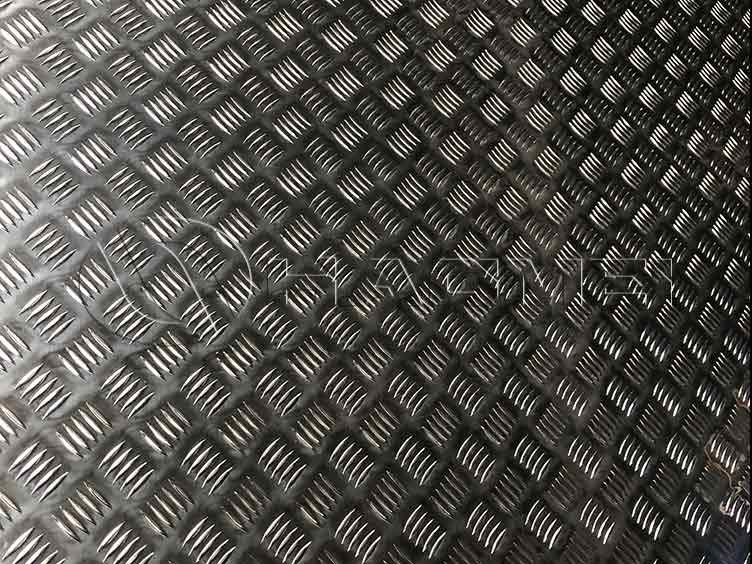
The patterned aluminum plate has regular diamond, lentil, or willow leaf patterns. These raised textures significantly increase the friction between the sole and the deck, providing stable support even in wet conditions, allowing anglers to cast and play fish with more confidence.
Of course, some anglers might consider wooden or fiberglass decks. While wooden decks have a warm, smooth feel, they are prone to mold and warping after prolonged immersion, requiring significant time for sanding and repainting annually, resulting in extremely high maintenance costs.
Fiberglass decks, while corrosion-resistant, are heavier, affecting the yacht's maneuverability, and their surface anti-slip performance is inferior to patterned aluminum plates, making them slightly less safe. In contrast, aluminum alloy decks (especially the combination of 5083 aluminum plates and patterned aluminum plates) almost perfectly avoid these shortcomings.
In practical applications, many high-end bass-heavy fishing boats use a composite structure of "5083 aluminum plate as the base material + patterned aluminum plate as the surface layer." The base material ensures overall strength and corrosion resistance, while the surface layer enhances anti-slip performance.
Furthermore, the thermal conductivity of aluminum alloy materials can be mitigated through special treatment, preventing the deck from becoming too hot to walk on after prolonged exposure to the summer sun. In addition, aluminum alloy decks have a high recyclability rate, aligning with environmental trends, and even after replacement after many years, resource waste is reduced.
Original Source:https://www.marinealu.com/a/what-is-bass-boat-decking-material.html
Tags: 5083 aluminum sheet ,