Aluminium Tube And Fittings in Shipbuilding
In the complex systems of ships, aluminium tube and fittings silently bear crucial responsibilities. From fuel delivery to cooling circulation, from hydraulic control to ventilation and exhaust, these "metallic veins" crafted from aluminum alloys, with their core advantages of lightweight, corrosion resistance, and high strength, have become indispensable core components in modern shipbuilding and maintenance.
Marine aluminum tubing
Ships face multiple challenges in the marine environment, including high salt spray, strong corrosion, and vibration and impact, which places extremely high demands on the material and performance of aluminum tubing. Besides material differences, the shape design of aluminum tubing directly affects its applicable scenarios, with round and square aluminum tubing being the two mainstream types in the marine field.
1. Round aluminum tube
Round aluminum tubing, with its streamlined structure, has become the preferred choice for ship fluid transport systems. Its smooth and uniform inner wall results in low fluid resistance, effectively improving the transport efficiency of media such as fuel, coolant, and seawater. These types of aluminum tubes are typically made of high-strength, corrosion-resistant aluminum alloys such as 6061-T6 and 5083-H112. After precision forming, the tubes have uniform wall thickness, stable pressure resistance, and tensile strength exceeding 300 MPa.
In the hydraulic steering gear systems of ocean-going cargo ships and the seawater cooling systems of fishing vessels, round aluminum tubes can withstand high-pressure working environments and resist salt spray corrosion, ensuring precise fuel delivery and efficient coolant circulation, providing reliable protection for the operation of core ship equipment.
Furthermore, the symmetry of the round structure makes the stress distribution more even, reducing stress concentration in the vibration environment of ship navigation and significantly extending service life.
2. Square aluminum tubes
Unlike the "efficient delivery" characteristics of round aluminum tubes, square aluminum tubes play a core role in ship support systems due to their superior structural stability. Their cross-section is rectangular or square, possessing a large moment of inertia and bending section modulus. For the same material and weight, their bending and torsional resistance are far superior to round aluminum tubes, making them ideal as load-bearing and support components.
In the design of the cockpit frame for small yachts, square aluminum tubes not only provide stable support, but their regular shape also perfectly matches the ship's interior, reducing space occupation and enhancing the aesthetics and practicality of the cabin layout. Furthermore, the flat sidewalls of square aluminum tubes facilitate welding and bolting to other components, making installation convenient and efficient, significantly reducing the difficulty of ship assembly.
Marine aluminum fittings
If aluminum tubes are the "veins" of a ship, then aluminum fittings are the "joints" connecting these veins, directly affecting the sealing and stability of the entire piping system. Among these, aluminum tees, aluminum elbows, and aluminum joints are the most widely used fittings, each with its irreplaceable role.
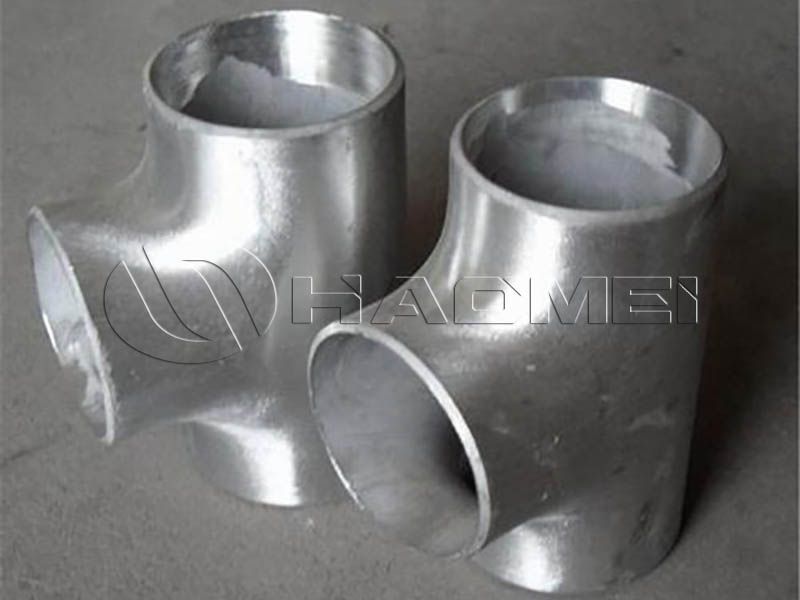
Aluminum tees
In scenarios where ship piping systems need to branch or merge, aluminum tees are undoubtedly the "core hubs." Depending on the pipe connection requirements, aluminum tees can be divided into various types, including equal diameter tees, reducing tees, straight tees, and oblique tees.
For example, in a ship's cooling circulation system, the main cooling water pipe is divided into two paths via equal-diameter aluminum tees, one for cooling the engine and the other for cooling the generator. The water then rejoins at another tee and returns to the cooling water tank, ensuring efficient operation of the heat dissipation system.
Marine aluminum tees are typically made of the same aluminum alloy as the aluminum pipe, processed through forging or casting. The high precision of the joints allows for a tight seal when welded to the aluminum pipe, effectively preventing coolant leakage.
Other key components
Besides aluminum tees, the marine aluminum fitting family includes many other valuable members. Aluminum elbows are used to change the direction of pipelines; common 90° and 45° elbows allow for flexible pipeline layout within the confined space of a ship.
Aluminum fittings are divided into quick-connect fittings and welded fittings. Quick-connect fittings facilitate pipeline disassembly and maintenance and are commonly used in fuel lines requiring regular maintenance. Welded fittings are suitable for high-pressure pipelines that are fixed for long periods, ensuring connection strength.
Aluminum flanges are used to connect large-diameter aluminum pipes, achieving a reliable seal through bolt tightening. They are widely used in the main steam pipelines of ships. These fittings work together with the aluminum tubing to form a complete marine piping system.
Original Source:https://www.marinealu.com/a/aluminium-tube-and-fittings-in-shipbuilding.html
Tags: aluminum pipe fitting ,