What Is Aluminum Steel Transition Joint in Shipbuilding
In modern shipbuilding, "lightweight" and "high strength" have always been core pursuits. Steel hulls, with their excellent load-bearing capacity and corrosion resistance, have become the preferred material for main hulls. Marine grade aluminum sheets, due to their low density and good thermal conductivity, are widely used in superstructures, decks, and bulkheads, reducing hull weight, lowering the center of gravity, and improving ship speed and fuel economy.
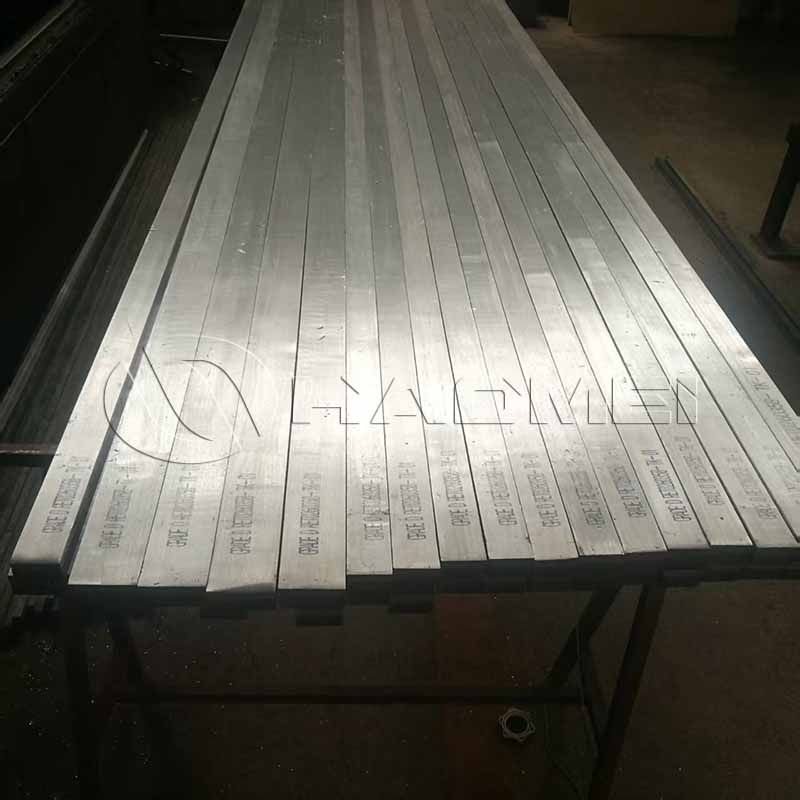
However, aluminum and steel have extremely poor metallurgical compatibility. Direct welding easily produces defects such as porosity and cracks, failing to meet the requirements for long-term use in marine environments. Aluminum steel transition joints have become a key component in solving this problem, building a "seamless bridge" for connecting dissimilar metals.
To understand the core value of aluminum-steel transition joints, it's essential to understand their unique structural design—they are not simply aluminum and steel splices, but composite structures manufactured through special processes. Their core function is to mitigate the performance differences between aluminum and steel, achieving a reliable connection. Currently, commonly used aluminum-steel transition joints in the shipbuilding industry are mainly divided into two categories, each with its own structural emphasis, adapting to different application scenarios.
The most mainstream design is a triply aluminium steel transition joint, consisting of an aluminum alloy layer, an intermediate transition layer, and a steel layer. This is currently the most widely used structural form in shipbuilding. The steel layer connects to the ship's steel hull and deck structures, the aluminum alloy layer connects to the aluminum superstructure and bulkheads, and the intermediate transition layer is the "core link" of the entire joint.
The intermediate transition layer is typically made of pure aluminum (such as 1060 and 1050 grades) or pure titanium (such as TA1 and TA2 grades). A pure aluminum transition layer effectively mitigates the difference in thermal expansion coefficients between aluminum and steel, reducing welding stress; a pure titanium transition layer further enhances the joint's corrosion resistance and mechanical properties, making it suitable for ship components with higher strength requirements, although it is relatively more expensive.
This type of three-layer structure is fabricated using processes such as vacuum explosion welding and weld overlay-friction stir welding. The interface forms a periodic wavy or "onion ring" shaped mechanical interlocking structure, effectively improving the bonding strength. Its tensile strength can reach 100% of the aluminum alloy base material, fully meeting the mechanical requirements of ship navigation.
Besides the three-layer structure, there are also two-layer composite structures (direct aluminum-steel composite) and lap joint structures. The lap joint structure, through optimized design, can effectively reduce joint weight and adapt to ship components with higher lightweight requirements. However, due to manufacturing limitations, when the thickness of the intermediate aluminum layer is less than 2mm, it is difficult to achieve standard strength.
Regardless of the structure, the core design logic is consistent: through layered transition, the differences in physical and chemical properties between aluminum and steel are eliminated, avoiding defects caused by direct connection, while ensuring the joint's strength, corrosion resistance, and watertightness, adapting to the marine service environment of the ship.
In shipbuilding, aluminum-steel transition joints are widely used. They are indispensable in any part involving the connection of dissimilar metals like aluminum and steel, and their application directly affects the structural stability, service life, and navigational safety of the ship.
The most crucial application scenario is the connection between the aluminum superstructure and the steel hull. This is the most common scenario for aluminum-steel connections in ships. Traditional riveting processes are not only complex and inefficient but also suffer from poor watertightness, susceptibility to corrosion, and a large amount of subsequent maintenance work.
Aluminum-steel transition joints, achieved through welding, allow for seamless connection between the superstructure's aluminum alloy and the main hull's steel, ensuring connection strength while providing excellent watertightness and corrosion resistance, thus simplifying the construction process.
Secondly, aluminum-steel transition joints also play a crucial role in connecting deck and cabin structures. While some areas of the ship's deck utilize aluminum alloy to reduce weight, cabin bulkheads and supports are primarily steel structures. When connecting these, transition joints ensure a reliable connection between the aluminum deck and the steel bulkheads and supports, guaranteeing cabin airtightness and structural stability, while preventing electrochemical corrosion and adapting to the harsh, high-salt, and high-humidity marine environment.
Furthermore, they are used for installing windproof decks on steel vessels, connecting aluminum walkways to the steel hull, and for steel-aluminum connections in special areas such as engine ports on high-speed catamarans.
In specialized and high-end vessels, the application of aluminum-steel transition joints faces even more stringent requirements. For example, naval vessels, luxury cruise ships, and coast guard patrol boats, which have extremely high requirements for structural strength and corrosion resistance, typically use aluminum-titanium-steel three-layer composite transition joints.
These aluminum-steel joints offer superior overall performance compared to aluminum-aluminum-steel transition joints, capable of withstanding various external forces such as wind and waves during navigation, as well as inertial forces, while also meeting the requirement of long-term maintenance-free operation. In the helicopter deck connections of offshore drilling platforms, transition joints must balance lightweight design with high strength to ensure structural safety during helicopter takeoff and landing.
Original Source:https://www.marinealu.com/a/what-is-aluminum-steel-transition-joint-in-shipbuilding.html
Tags: marine grade aluminum sheet ,