What Are Types of Aluminum Pipe Fittings
Compared to traditional steel pipes, aluminum alloy pipes offer numerous advantages, including light weight, corrosion resistance, ease of processing, and high cost-effectiveness. They are now widely used in various small and medium-sized ships, cruise ships, and yachts, covering core systems such as freshwater supply, ventilation and exhaust, and low-pressure oil and gas transportation.
Unlike steel pipes, aluminum pipes have unique material properties and cannot be fitted with steel pipe fittings. Specialized aluminum pipe fittings are required to build a stable and complete pipeline system, avoid material compatibility issues, and extend the overall service life of the pipeline. What are the main types?
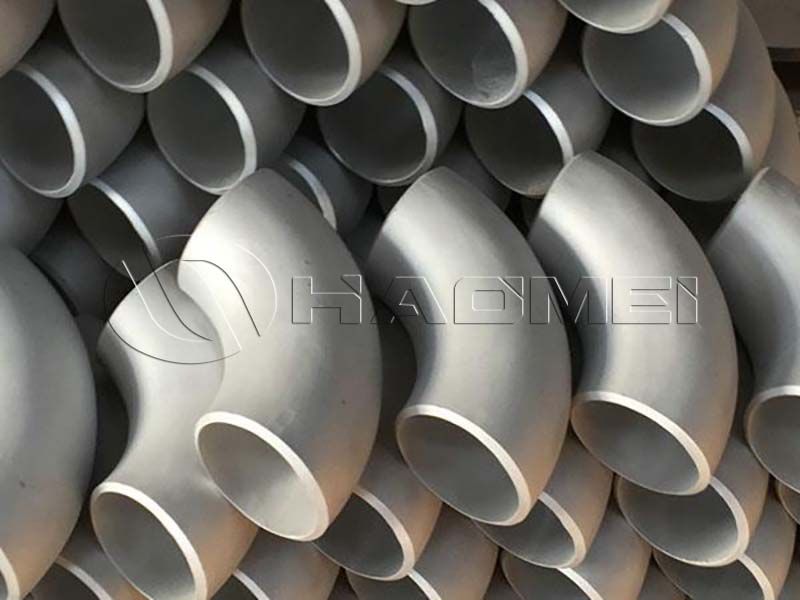
1. Aluminum Elbows
As the most widely used basic fitting in pipelines, the aluminum elbow pipe is mainly used to connect aluminum pipes and change the direction of media transportation, solving the problem of complex ship cabin structures and the inability to lay pipelines in a straight line.
Marine-specific elbows are made of 5052 and 6061 special aluminum alloys, forged and seamlessly stamped, with excellent shock resistance and corrosion resistance, making them suitable for complex marine operating environments.
Based on angle, they can be divided into three types: 45°, 90°, and 180°, used for fine-tuning pipeline routing, right-angle laying in cabins, and pipeline reversal in confined spaces, respectively, adaptable to different systems such as water supply and ventilation.
II. Aluminum Tees
These fittings mainly meet the needs of pipeline branching and merging, solving the problem of branching transport in main pipelines. They are mostly used in scenarios such as freshwater supply and fire-fighting fuel supply.
Aluminum tees are divided into two types: equal diameter and reducing tees. Equal diameter tees have the same pipe diameter at the interface, adaptable to the branching of pipelines of the same specification, and are commonly used in crew living water supply systems.
Reducing tees have different diameters for the main pipe and branch pipes, which can match different transport flow rates, and are often used in ventilation and low-pressure fuel oil transport pipelines.
III. Aluminum Reducers
The aluminum reducer is specifically used to connect aluminum pipes of different diameters. In ship piping, main pipes are mostly large-diameter to ensure flow, while branch pipes use small-diameter pipes to adapt to confined spaces.
Aluminum reducers can complete the connection between the two types of pipes. Concentric reducers are suitable for vertically laid pipelines and are often used in vertical water supply and ventilation systems. Eccentric reducers are suitable for horizontal pipelines, effectively avoiding liquid and gas accumulation problems, and are commonly used in low-level sewage and fuel oil transportation pipelines.
IV. Aluminum Flanges
Aluminum flanges are detachable pipe connection fittings used with bolts and gaskets to replace traditional welding methods. Their core advantage is ease of later pipeline maintenance, disassembly, and replacement, making them the preferred fitting for high-pressure critical pipelines.
Main types include plate-type flat-welded flanges and necked weld neck flanges. The former is inexpensive and suitable for low-pressure pipelines such as freshwater and ventilation; the latter has stronger sealing and pressure resistance performance and is often used in high-safety scenarios such as oil and gas transportation and fire-fighting water supply.
V. Aluminum Pipe Caps and Plugs
Aluminum caps and plugs are mainly used to seal unused or reserved pipe openings to prevent seawater moisture, dust, and impurities from entering the pipeline, avoiding internal corrosion and pipeline blockage. The two types of plugs have different applications.
The pipe cap has a socket structure, which is easy to install and remove. It is often used to temporarily seal backup pipelines and facilitates future expansion. The threaded plug has better sealing performance and is suitable for permanently abandoned pipe openings. It is often used to seal sewage and fuel pipelines to prevent the infiltration of foreign matter and leakage of media from the source.
Original Source:https://www.marinealu.com/a/what-are-types-of-aluminum-pipe-fittings.html
Tags: aluminum pipe fitting ,
Prev:Marine Aluminium 6082 Properties Strength, Corrosion Resistance, and Uses