What Are Main Types Of Copper Nickel Fittings
90/10 copper-nickel alloy (UNS C70600) is the most widely used copper-nickel alloy in industry. With its optimal composition of 90% copper and 10% nickel, it offers a combination of excellent resistance to seawater corrosion and biofouling, along with superior low-temperature toughness and weldability. It is well-suited for demanding applications such as marine shipping, offshore oil and gas, seawater desalination, and the transport of corrosive chemical fluids.
Compared to standard carbon steel or stainless steel fittings, 90-10 copper nickel pipe and fittings offer a significantly longer service life in environments characterized by high salinity, humidity, and corrosive media, making them a primary choice for piping systems in marine engineering. A complete copper-nickel piping system comprises the pipe itself, flanges, and various complementary fittings; here, we provide a detailed breakdown of the main types and key characteristics of 90/10 copper-nickel alloy fittings.
I. 90/10 Copper-Nickel Pipe
The copper-nickel pipe serves as the fundamental component of the piping system, with all accessories—such as flanges, elbows, and tees—designed to match its specifications. 90/10 copper-nickel pipes strictly adhere to international standards such as ASTM B111 and ASTM B466. They are categorized into two main types based on manufacturing processes and structural forms to meet diverse engineering installation requirements.
1. Seamless Copper-Nickel Pipe
Seamless 90/10 copper-nickel pipes are formed through an integrated process involving extrusion, piercing, and cold rolling. They feature a seamless wall with a dense, uniform structure, offering exceptional pressure resistance and sealing capabilities. Available in sizes ranging from DN15 to DN600 and wall thickness schedules such as Sch10, Sch20, Sch40, and Sch80, these pipes are ideal for critical applications like high-pressure seawater transport, marine ballast water systems, and the transport of corrosive chemical fluids. They are currently the most widely used type in industrial projects. Their smooth inner walls minimize fluid resistance and inhibit scaling and marine biofouling, ensuring consistent transport efficiency over the long term.
2. Welded Copper-Nickel Pipe
Welded 90/10 copper-nickel pipes are manufactured by rolling and welding metal plates; they offer a more cost-effective solution and greater flexibility for custom large-diameter specifications. Its overall performance meets the requirements for low-to-medium pressure applications. It is primarily used in scenarios such as auxiliary piping for seawater desalination, plant water supply and drainage, and low-pressure circulating fluid transport, effectively controlling project costs while ensuring essential corrosion resistance.
II. 90/10 Copper-Nickel Flanges
Flanges are key detachable components in copper-nickel piping systems, facilitating sealed connections between pipes, equipment, and valves, and allowing for easy inspection, disassembly, and maintenance.
Manufactured using a forging process, these c70600 flanges are made of material that perfectly matches the piping, thereby avoiding electrochemical corrosion issues associated with dissimilar metal connections. They comply with the ASME B16.5 standard and come in the following four main types:
1. Weld-Neck Copper-Nickel Flanges
Also known as tapered-hub weld-neck flanges, they feature a conical neck structure that allows for seamless butt-welding to the pipe. They offer high structural strength and excellent sealing performance after welding, effectively buffering against pressure surges. Suitable for demanding conditions involving high pressure, high temperature, and severe corrosion, they are the preferred flange type for main piping on offshore oil and gas platforms and large vessels.
2. Slip-On (Hubbed) Copper-Nickel Flanges
Featuring a simple structure and easy installation, these flanges do not require precise pipe-end alignment. The welding process is straightforward, resulting in high construction efficiency. They are suitable for conventional low-to-medium pressure piping systems—such as auxiliary lines for seawater desalination and commercial vessels—offering significant cost-effectiveness.
3. Blind Copper-Nickel Flanges
These are closed flanges without a central bore, used primarily to seal pipe ends or isolate branch lines, serving both sealing and pressure-bearing functions. They are commonly used for pipeline pressure testing, sealing standby lines, and system partitioning; they offer robust pressure resistance and sealing capabilities, making them suitable for long-term use in corrosive environments.
4. Slip-On (Socket-Style) Copper-Nickel Flanges
Designed for socket-style installation, the pipe slides directly into the flange for welding and fixation. Offering high installation flexibility, they are ideal for complex piping layouts and confined spaces, and are frequently used for intricate piping within ship compartments and auxiliary connections for equipment.
III. Matching Formed Pipe Fittings
In addition to pipes and flanges, matching 90/10 copper-nickel alloy fittings enable functions such as directional changes, flow splitting, diameter transitions, and sealing. All fittings match the base material in composition and specifications, ensuring consistent corrosion resistance and structural stability across the entire piping system. Key categories include:
1. Copper-Nickel Elbows: Available in 45° and 90° configurations (long and short radius), these are essential for changing pipeline direction. Formed via a seamless stamping process, they feature smooth internal flow paths that effectively reduce fluid resistance and prevent turbulent flow from eroding the pipe walls, making them suitable for various operating conditions.
2. Copper-Nickel Tees and Crosses: These include equal-diameter and reducing types used for flow splitting, merging, and branching. They meet multi-channel transport requirements, offering uniform structural strength and stable flow distribution without dead zones.
3. Copper-Nickel Reducers: Available in concentric and eccentric designs. Concentric reducers are used for diameter transitions in vertical piping, while eccentric reducers suit horizontal piping. They allow for smooth diameter adjustments, accommodating connections between pipeline sections with varying flow rates and pressures.
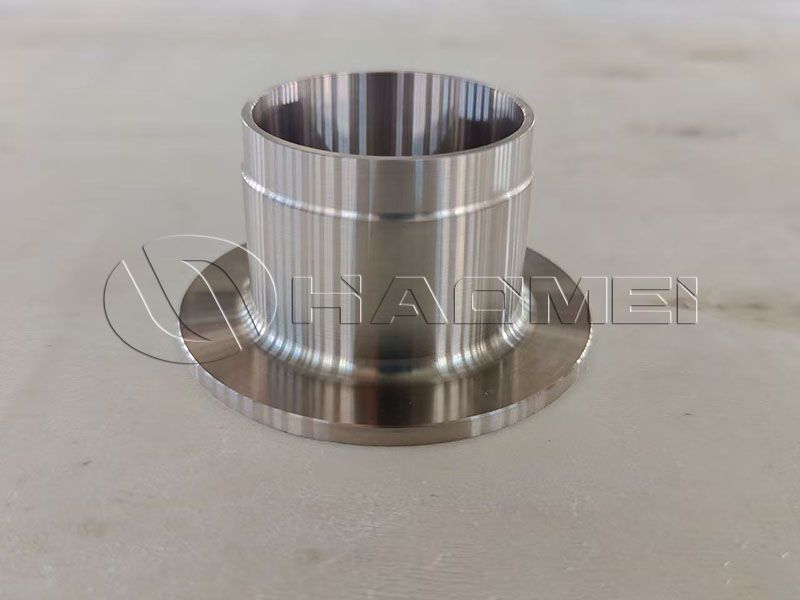
4. Pipe Caps, Nipples, and Stub Ends: Pipe caps provide permanent sealing for pipeline ends; nipples are used for fine-tuned connections; and stub ends are paired with flanges to create lap-joint connections, ideal for pipeline junctions requiring frequent disassembly or superior corrosion resistance.
Original Source:https://www.marinealu.com/a/what-are-main-types-of-copper-nickel-fittings.html
Tags: copper nickel pipe fittings ,