The Market Forecast of Aluminum T Section and Bulb Bar
With the deepening of global "dual carbon" goals, the green transformation of the shipping industry has shifted from an option to a necessity. Under this trend, the upgrading and iteration of ship materials has become a key breakthrough.
Marine aluminum bulb bar and T-sections, possessing advantages such as lightweight, high strength, and corrosion resistance, are becoming highly sought-after in the global ship materials market due to their core applications in new energy ships and high-end special-purpose vessels.
Demand Trends
The global demand growth for aluminum ball bar and T profile in 2026 is primarily driven by two core engines: policy guidance and market orders, both providing solid support for their growth.
From a policy perspective, the tightening of global environmental regulations is forcing the upgrading of ship materials. The International Maritime Organization (IMO) is increasingly stringent in its requirements for ship CII ratings. As a core lightweight component, ball flat aluminum and a key supporting structure, are naturally experiencing rising demand.
Data shows that global consumption of marine aluminum reached 423,000 tons in 2025, a year-on-year increase of 28.6%, with high-end alloys accounting for 41%. Bulb bar aluminum and T-shaped profiles, as core categories of high-end aluminum, saw growth rates far exceeding the industry average.
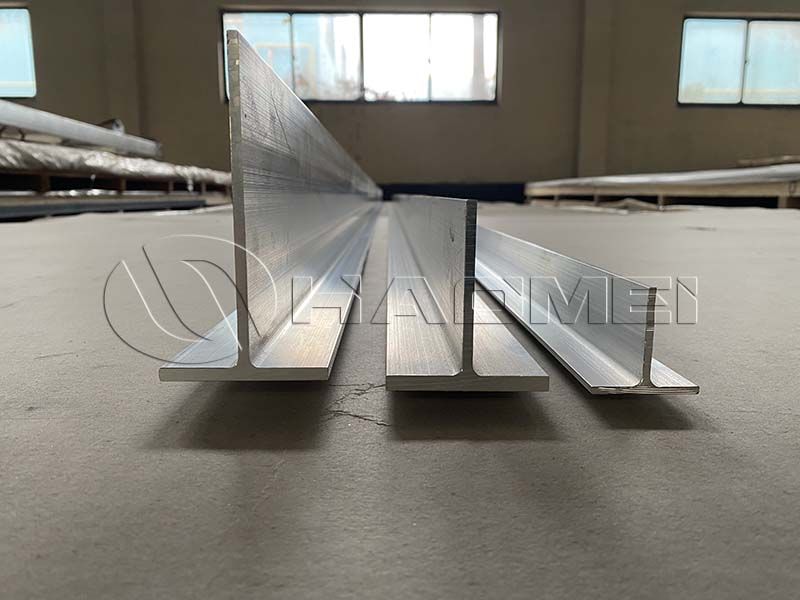
From an order perspective, the recovery of the global shipbuilding industry has injected strong momentum into demand growth. Currently, global shipbuilders have ample order backlogs, with some domestic companies having delivery schedules extended to 2028. 2026-2028 will be the peak period for concentrated ship deliveries.
More importantly, the order share for high-end ship types such as LNG carriers, hydrogen-powered ships, high-speed ro-ro passenger ships, and research vessels has increased significantly. These types of ships have higher requirements for the low-temperature performance and corrosion resistance of aluminum oblate, as well as the structural strength and processing precision of T-shaped profiles, directly driving demand for high-end products.
According to industry forecasts, the annual growth rate of demand for cryogenic aluminum bulb bar for LNG-powered and hydrogen-powered ships will exceed 35% in 2026. The application demand for the aluminium t section in the hull frame, compartment partitioning, and other parts of these ships will also increase accordingly.
Price Fluctuations
Regarding the price trend that the market is focused on, marine aluminum oblate and T-sections are expected to show a "steady upward" trend in 2026. The core driving force comes from the support of raw material costs, while the market supply and demand relationship will balance price fluctuations.
The pressure on the raw material side is particularly evident. The core raw material for aluminum bulb bar and T-sections is aluminum ingots. Since 2025, affected by factors such as tight power supply and a surge in demand for aluminum materials in the new energy sector, aluminum ingot prices have continued to rise.
As of January 6, 2026, the average price of aluminum ingots in China has reached US$3,437-3,451 per ton, an increase of US$114 per ton from the previous day. The average price over the past 30 days is significantly higher than the same period last year.
Affected by this, many aluminum companies have issued price adjustment notices, increasing aluminum prices by US$286 per ton from January 6, 2026. This cost pressure will be directly transmitted to the end-user prices of marine aluminum profiles.
However, the risk of excessively rapid price increases will be effectively mitigated. With the gradual release of domestic aluminum production capacity and the commissioning of low-carbon production capacity such as hydropower-based aluminum smelting, the tight supply and demand situation will be alleviated to some extent.
Overall, the price of marine aluminum oblate is expected to remain in the range of $4,000-$4,571 per ton in 2026, while the price of T-section aluminum is expected to range from $3,714 to $4,286 per ton depending on the specifications, with overall fluctuations being relatively controllable.
Original Source:https://www.marinealu.com/a/the-market-forecast-of-aluminum-t-section-and-bulb-bar.html
Tags: ball flat aluminum ,
Prev:Which Kind Of Marine Aluminum Is for High-Speed Patrol Boat