The Main International Vessel Classification Society List
Classification societies are independent third-party technical organizations whose core function is to ensure the safety and environmental protection of ships and offshore facilities by developing standards and conducting inspections and certifications. Their certifications are the core basis for ship classification, navigation, and insurance. Currently, most of the world's mainstream classification societies are members of the International Association of Classification Societies (IACS), covering the vast majority of merchant ships and offshore facilities worldwide. Below are some of the most influential core organizations:
1. Det Norske Veritas (DNV) – A leading global classification society
Founded in 1864, it merged with Germanischer Lloyd (GL) in 2013 and officially changed its name to DNV in 2021. In 2024, it ranked first in Lloyd's Register for nine consecutive years, with a market share of 21%, making it the world's largest classification society. Its business covers multiple fields including maritime, oil and gas, and renewable energy, serving more than 14,000 ships worldwide. It is particularly leading in green shipping and decarbonization technology innovation, and its ship material inspection standards are widely referenced globally.
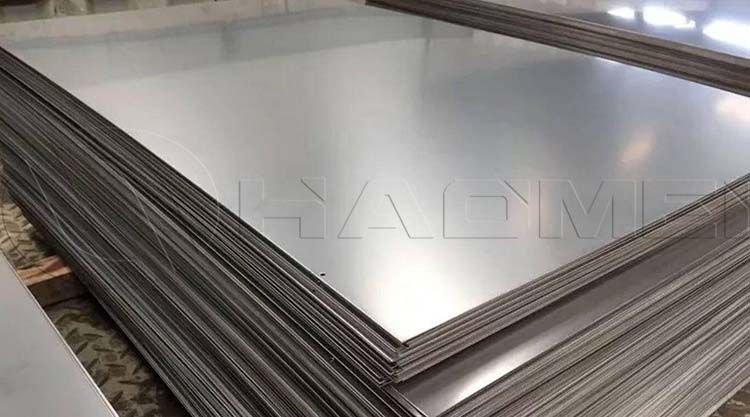
In terms of marine material certification, DNV has stringent requirements for the corrosion resistance and mechanical properties of marine aluminum plates. Marine grade aluminum 5052 and 5083 aluminum plates, due to their outstanding performance, have become key marine aluminum materials for its certification.
5052 aluminum plate is an Al-Mg series rust-resistant aluminum alloy with a magnesium content of 2.2%-2.8%. It exhibits excellent seawater corrosion resistance, with an annual corrosion rate of only 0.02-0.05 mm/year, far lower than ordinary steel.
It is often recommended by DNV specifications for non-load-bearing structures such as hulls of small speedboats, superstructures of yachts, and bulkheads, balancing lightweight and corrosion resistance. 5083 aluminum plate has an even higher magnesium content (4.0%-4.9%), a tensile strength of 275-305 MPa, and excellent weldability. It is recognized by DNV for use in load-bearing parts such as ship decks, side structures, and offshore platform walkways, meeting the structural requirements of medium and large ships.
2. American Bureau of Shipping (ABS) – A Benchmark in Marine Engineering
Founded in 1862 and headquartered in the United States, the American Bureau of Shipping (ABS) is a non-governmental organization. As the world's second-largest classification society, it manages over 12,000 vessels in 2020 and aims to become the world's leading classification society in both gross tonnage and deadweight tonnage by 2025. ABS is particularly authoritative in setting technical standards for marine engineering and oil and gas vessels. ABS's inspection standards emphasize the reliability and durability of materials, with extremely stringent selection criteria for marine aluminum.
Given the highly corrosive nature of the marine environment, ABS explicitly recommends 5052 and 5083 aluminum plates for critical ship components. 5052 aluminum plate, due to its good formability and moderate strength, is widely used in ship piping systems, outboard motor supports, and other components. It can be adapted to complex shapes through bending and punching processes. Its non-toxic and easy-to-clean properties also make it suitable for protective components in ship food processing areas.
5083 aluminum plate, with its higher strength and impact resistance, has become the preferred material for decks and hull side plates of large ships in ABS certification, especially in offshore platforms and container ships, effectively improving structural stability and extending ship service life.
3. China Classification Society (CCS) – The Core Guarantee for Domestic Ships
Founded in 1956 and headquartered in Beijing, CCS is China's only ship classification and inspection organization. Authorized by 58 countries, it has branches in 129 countries. Its business covers ship classification, statutory inspections, and material certification. In recent years, its ranking has continuously improved, aiming to become the 5th largest classed tonnage ship in 2025, becoming an indispensable force in the global shipping industry. The CCS (China Shipbuilding Industry Corporation) has established the "Rules for Classification of Steel Seagoing Ships" and the "Materials and Welding Rules," which clearly define the technical requirements for marine materials, including detailed certification standards for 5052 and 5083 aluminum plates.
As a core certification body for domestically produced ships, CCS highly recognizes the performance of 5052 and 5083 aluminum plates, promoting their widespread application in domestically built vessels. 5052 aluminum plate, with its cost-effectiveness, has become the main material for small and medium-sized ships and leisure yachts in China, used in the manufacture of hull skins and interior cabin panels. Compared to traditional steel, it can reduce weight by 40%, increasing speed while reducing fuel consumption.
5083 aluminum plate is used in the structural components of large domestically produced bulk carriers and oil tankers. Its excellent weldability and seawater corrosion resistance meet CCS's safety requirements for long-term ship navigation, while also meeting the lightweighting upgrade needs of the domestic shipbuilding industry, helping domestically produced ships enter the international market.
4. Lloyd's Register (LR) – The Oldest and Most Authoritative Authority
Founded in 1760, Lloyd's Register is the world's oldest classification society and a leading international certification body. With branches in 182 countries, its business covers multiple fields including shipbuilding, military, and engineering, and it emphasizes the implementation of maritime safety and environmental regulations. LR's material certification standards balance tradition and innovation, providing comprehensive performance requirements for marine aluminum materials. Both 5052 and 5083 aluminum plates have passed its stringent certification and are widely used in various types of vessels.
In LR's specifications, 5052 aluminum plates are primarily used for corrosion protection of non-load-bearing structures in ships, such as deck skid plates and cabin ventilation ducts. Their excellent weather resistance and workability allow them to withstand the high temperatures, high salinity, and high humidity of the marine environment, reducing maintenance costs. 5083 aluminum plates, due to their high strength and resistance to stress corrosion, are used in critical components such as load-bearing structures and anchor winch supports. Especially in military vessels and high-end yachts, LR requires the use of compliant 5083 aluminum plates to ensure the safety of the vessel in extreme environments.
5. Introduction to Other Major Classification Societies
Besides the four mentioned above, several other influential classification societies worldwide play important roles in their respective fields and generally recognize the marine value of 5052 and 5083 aluminum plates:
- Japan Maritime Association (ClassNK/NK): Founded in 1899, a non-profit organization, with 9,124 registered vessels in 2021, totaling 267 million tons, accounting for 20% of global merchant ships. It holds a dominant position in the East Asian shipping market and recommends 5052 aluminum plates for ship interiors and 5083 aluminum plates for hull structures;
- Bureau Veritas (BV): Founded in 1828, a founding member of IACS, with 550 offices in 140 countries and a fleet of over 11,500 vessels. It emphasizes sustainable technology development and includes 5052 and 5083 aluminum plates in its list of recommended low-carbon shipbuilding materials;
- Korean Delegation Society (KR): Founded in 1960, focusing on green shipbuilding technology, managing 2,840 vessels, and recommending 5083 aluminum plate for lightweight ship structures to help reduce carbon emissions.
- Italian Detachment of Shipping (RINA): Founded in 1861, a founding member of IACS, emphasizing sustainable technology development, with 200 offices in 70 countries, and recognizing the application of 5052 and 5083 aluminum plates in ship corrosion protection and lightweighting.
Original Source:https://www.marinealu.com/a/the-main-international-vessel-classification-society-list.html
Tags: