Aluminum Clad Steel Sheet
Many projects need the conductivity, strength, or magnetic properties of steel, but fail early when corrosion protection is weak. That is where aluminum clad steel sheet is specified. It combines a steel core with an aluminum outer layer, aiming to deliver the mechanical benefit of steel and the corrosion resistance of aluminum.
For marine fabricators, offshore equipment contractors, and industrial stockists, the practical question is not just material selection. It is whether this composite can reduce life-cycle cost without creating welding, forming, or galvanic problems.
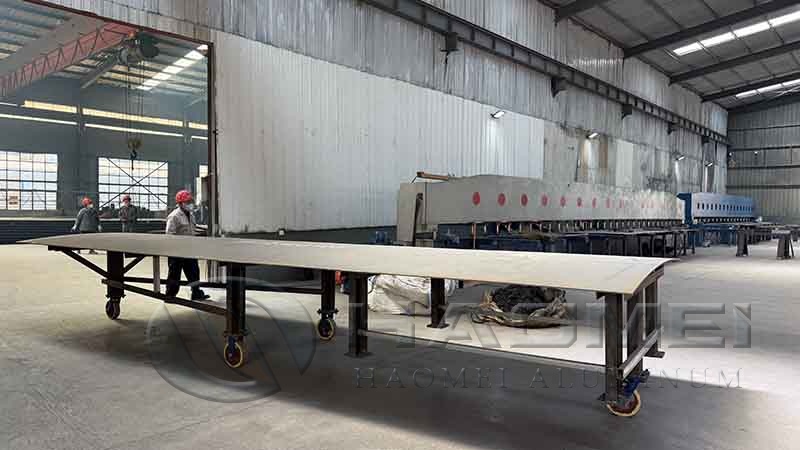
What it is
Aluminum-clad steel is a metallurgically bonded composite made by joining aluminum to steel. Depending on the process, the bond may be formed by roll bonding, explosive bonding, or other industrial cladding routes. The result is not a painted steel product and not a simple laminated assembly. It is a bonded material intended to keep adhesion under fabrication and service conditions.
In practical use, this product is chosen when plain carbon steel lacks corrosion resistance and full aluminum does not provide the required stiffness, wear behavior, or cost position.
If your application already uses Aluminum Clad Steel in bars or transition components, sheet-form products are often evaluated for covers, panels, enclosures, grounding parts, and transport equipment.
Why used
The main advantage is selective performance.
| Property need | Steel alone | Aluminum alone | Aluminum-clad steel |
|---|---|---|---|
| Atmospheric corrosion resistance | Fair to poor without coating | Good | Good to very good, depending on clad thickness |
| Structural stiffness | High | Lower | High core stiffness |
| Density | High | Lower | Intermediate |
| Surface conductivity | Moderate | Good | Good on aluminum side |
| Raw material cost stability | Often volatile | Often volatile | Depends on both metals |
| Paint-free appearance | Limited | Good | Good on clad side |
For coastal or humid service, the aluminum surface forms a stable oxide film. According to the Aluminum Association, aluminum naturally develops a thin oxide layer that improves corrosion resistance in many environments. That is the core reason this material is considered for salt-laden air and wet exposure.
Where it fits
Common uses include:
Marine topside covers and equipment housings.
Busbar-related transition parts in some electrical systems.
Industrial enclosures exposed to weather.
Automotive and transport components where weight and corrosion both matter.
Grounding or shielding parts where a conductive outer layer is useful.
For structures directly exposed to seawater immersion, specifiers should verify chloride performance, edge sealing, and galvanic compatibility with fasteners. Service environment matters more than catalog language.
Standards
There is no single global rule that covers every version of clad steel in every end use, so sourcing teams should check the exact manufacturing and test basis.
Use this checklist before ordering:
Confirm base steel grade and mechanical properties.
Confirm aluminum alloy and temper on the clad side.
Confirm cladding method: roll bonded, explosive bonded, or other.
Confirm total thickness and clad-layer thickness tolerance.
Ask for bond integrity test method.
Review corrosion test data, if used for qualification.
Verify applicable ASTM, EN, ISO, or project specification references.
Confirm edge treatment, because exposed edges can become corrosion initiation points.
For many industrial metal products, relevant references may include ASTM material standards, mechanical testing standards, and corrosion testing standards such as salt spray under ASTM B117. Important note: ASTM B117 is widely used for comparative corrosion testing, but it does not directly predict real service life. It should be treated as one screening tool, not a life expectancy guarantee.
Cost view
Pricing depends on five variables more than market averages:
| Cost factor | Impact on price |
|---|---|
| Steel grade | Higher strength or specialty grades raise cost |
| Aluminum alloy | Marine-grade or specialty alloy surfaces cost more |
| Clad thickness | Thicker aluminum layer raises cost materially |
| Bonding process | More complex bonding usually costs more |
| Order size and finish | Custom finish, tight tolerance, and low volume increase cost |
In recent market practice, composite metals generally price above plain carbon steel and below some corrosion-resistant nickel alloys or premium stainless solutions, depending on thickness and process route. For current projects, sourcing teams should compare against stainless steel using delivered cost, fabrication hours, and expected maintenance interval rather than metal price alone.
Inspection
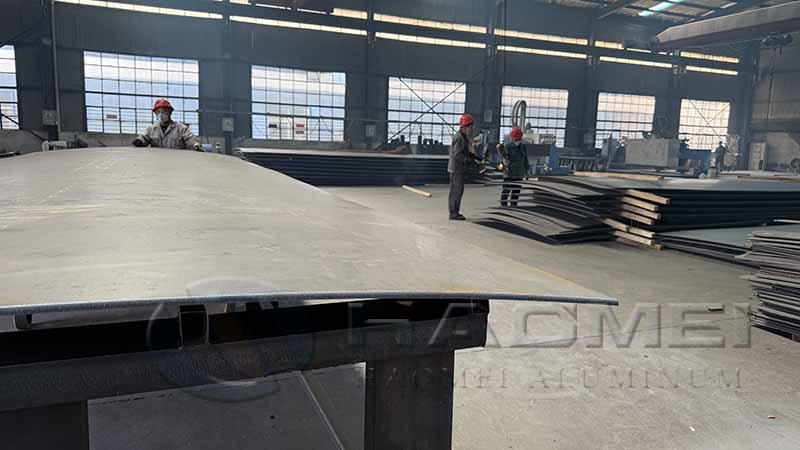
Before release to production, use a short receiving inspection routine.
Visual
Check for edge separation.
Check for blistering, waviness, dents, and surface contamination.
Confirm no visible mismatch between ordered and delivered finish.
Dimensional
Measure total thickness at multiple points.
Verify length, width, flatness, and squareness.
Record clad-side identification to avoid reversed installation.
Bond
Review mill certificate for bond test results.
If project critical, request ultrasonic or destructive bond verification.
Check whether post-forming bond performance was validated.
Corrosion
Confirm storage conditions are dry and ventilated.
Separate from copper-rich dust or incompatible metal contact.
Protect cut edges if the service environment is severe.
Fabrication
This is the area where many failures start.
Forming: minimum bend radius should be confirmed with the producer because the clad layer can crack if bend severity is excessive.
Welding: procedures depend on which side is joined and whether the bond line is near the weld zone. Heat input must be controlled to avoid local bond degradation.
Fasteners: avoid creating galvanic couples. In marine conditions, fastener selection and isolation washers matter.
Cut edges: exposed steel at edges may need sealing, especially in chloride exposure.
If your project also involves corrosion-resistant transitions to piping or stainless assemblies, it is often useful to align the material review with seamless stainless steel pipe specifications and joining plans, rather than checking flat products in isolation.
Comparison
When should this material be selected over alternatives?
| Option | Best for | Main limitation |
|---|---|---|
| Carbon steel with paint | Lowest initial cost | Coating maintenance burden |
| Full aluminum plate | Low weight and corrosion resistance | Lower stiffness and possible wear limits |
| Stainless steel | Broad corrosion performance | Higher material cost in many cases |
| Aluminum-clad steel | Balanced corrosion and stiffness | Edge protection and fabrication control required |
For projects balancing corrosion resistance and conductivity, Aluminum Clad Steel can be a practical middle route when the service side benefits from aluminum and the core still needs steel strength.
Sourcing steps
Use this short qualification process:
Define the service environment: splash zone, humidity, chemical exposure, or outdoor atmosphere.
Set minimum mechanical properties for the steel core.
Set minimum clad thickness based on corrosion allowance.
Review forming and welding steps before placing the order.
Ask for mill test certificates and bond verification.
Inspect edges, flatness, and surface on receipt.
Protect cut edges and dissimilar metal contacts during installation.
For marine and industrial applications, that sequence usually prevents the most expensive failures: edge corrosion, bond damage during fabrication, and wrong fastener pairing.
Original Source:https://www.marinealu.com/a/aluminum-clad-steel-sheet.html
Tags: aluminum clad steel sheet , aluminum clad steel , bimetal sheet , corrosion resistance ,
Prev:The Main International Vessel Classification Society List