Aluminum Corrosion Resistance: 6061 VS 5083
Aluminum is widely valued for its light weight, strength-to-weight ratio, machinability, and natural corrosion resistance. However, not all aluminum alloys perform the same in harsh environments. When corrosion resistance is a priority, two of the most commonly compared grades are 6061 and 5083.
Both alloys are used in demanding industries such as marine construction, transportation, aerospace support equipment, industrial fabrication, and structural engineering. Yet, their alloying elements, heat-treatment response, welding behavior, and long-term corrosion performance are significantly different. Understanding these distinctions helps engineers, fabricators, and buyers choose the right material for a project.
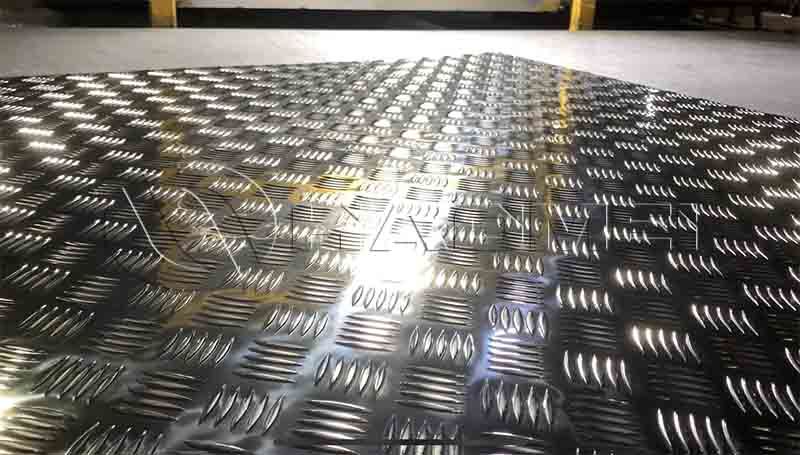
Why Aluminum Resists Corrosion
Aluminum naturally forms a thin oxide layer when exposed to air. This tightly bonded aluminum oxide film protects the metal beneath it from further oxidation. Unlike iron, which forms flaky rust that exposes new metal surfaces, aluminum’s oxide layer is generally stable and self-repairing.
Still, environmental factors can weaken this protection. Saltwater, chlorides, acidic chemicals, alkaline cleaners, high humidity, and galvanic contact with dissimilar metals can all accelerate corrosion. The specific alloy composition plays a major role in determining how well aluminum withstands these conditions.
6061 Aluminum: Versatile but Less Suitable for Marine Exposure
6061 is one of the most popular heat-treatable aluminum alloys. It contains magnesium and silicon, which provide a useful balance of strength, machinability, weldability, and general corrosion resistance. It is frequently used for structural frames, truck components, machine parts, bicycle frames, architectural applications, and aerospace fixtures.
The key advantage of 6061 is versatility. In the T6 temper, it offers relatively high strength and good hardness, making it suitable for applications where mechanical performance matters as much as corrosion resistance. Buyers often review 6061 t6 properties when selecting material for fabricated parts that require machining, forming, or load-bearing capability.
However, while 6061 performs well in normal outdoor and industrial environments, it is not the first choice for continuous saltwater exposure. Chloride-rich environments can cause pitting corrosion, particularly if the material is scratched, improperly coated, or connected to more noble metals such as stainless steel or copper. Crevice corrosion may also occur in areas where water becomes trapped between components.
6061 can be anodized to improve surface protection and appearance. Powder coating, painting, and proper isolation from dissimilar metals can further extend its service life. For many outdoor structures, trailers, railings, and industrial enclosures, 6061 remains a practical and cost-effective choice.
5083 Aluminum: Designed for Harsh and Marine Environments
5083 belongs to the 5xxx series of aluminum alloys and is primarily alloyed with magnesium. It is non-heat-treatable, meaning it gains strength through strain hardening rather than solution heat treatment and aging. Its most important advantage is exceptional resistance to seawater and corrosive industrial chemicals.
Because of this performance, 5083 is widely used in shipbuilding, offshore platforms, pressure vessels, marine tanks, cryogenic equipment, armored vehicles, and transportation components. Fabricators commonly source 5083 aluminum stock for projects where long-term exposure to salt spray, seawater, or high humidity is expected.
Compared with 6061, 5083 has better resistance to pitting and general corrosion in marine environments. It retains its corrosion-resistant characteristics even after welding, which is especially important for hull structures, fuel tanks, decks, and welded assemblies. In contrast, heat-treatable alloys such as 6061 may experience a reduction in strength in the heat-affected zone after welding.
5083 is also known for good weldability. It can be welded using common methods such as MIG and TIG welding, typically with suitable filler alloys such as 5183 or 5356. This makes it highly attractive for large fabricated structures where welded joints are unavoidable.
6061 vs. 5083: Corrosion Resistance Comparison
When comparing corrosion resistance directly, 5083 is generally the stronger option, particularly in saltwater or chloride-heavy environments. Its magnesium-rich composition gives it superior marine performance and makes it one of the preferred aluminum grades for long-term seawater service.
6061 still offers good atmospheric corrosion resistance, especially when anodized or coated. It is suitable for inland outdoor applications, dry industrial environments, and projects where high strength and machining performance are more important than maximum marine durability.
The choice often comes down to the operating environment:
Choose 6061 for structural components, machined parts, frames, fixtures, and general-purpose fabrication.
Choose 5083 for boats, marine panels, offshore structures, chemical tanks, and equipment exposed to seawater or salt spray.
Use protective coatings when either alloy will face aggressive chemicals, standing water, or galvanic corrosion risks.
Consider welding requirements before selecting an alloy, especially where post-weld strength and corrosion resistance are critical.
Additional Factors to Consider
Corrosion resistance should not be the only selection criterion. 6061 is easier to machine and generally offers better strength in common tempers such as T6. It is often preferred for precision components and structural applications that require drilling, milling, tapping, or tight dimensional tolerances.
5083 is less suitable for extensive machining but offers excellent forming and welding characteristics. It is also more likely to be selected in plate form for large welded structures. In certain high-temperature applications, however, 5083 may be susceptible to sensitization if exposed to elevated temperatures for prolonged periods. Proper temper selection and application design can help manage this concern.
Final Thoughts
For corrosion resistance alone, 5083 is the better performer, especially in marine, coastal, offshore, and chemical-processing environments. Its resistance to saltwater corrosion and strong welded-joint performance make it a reliable choice for demanding fabrication projects.
6061 remains an excellent all-around alloy with good corrosion resistance, high strength, and superior machinability. It is ideal when the environment is less aggressive and the project requires a balance of mechanical performance, cost efficiency, and fabrication flexibility.
Selecting between 6061 and 5083 ultimately depends on where the material will be used, how it will be fabricated, and how long it must withstand environmental exposure.
Original Source:https://www.marinealu.com/a/aluminum-corrosion-resistance-6061-vs-5083.html
Tags: 5083 aluminum plate ,