Marine Grade Aluminum 5083
Holiday shutdowns create a narrow window for vessel repair, refit, and fabrication work. A delayed plate, incorrect temper, or incomplete material certificate can keep a hull panel replacement or deck-extension project from starting on schedule.
For projects exposed to seawater, marine grade aluminum 5083 is commonly specified because it is a non-heat-treatable Al-Mg alloy with strong corrosion resistance and useful welded strength. The practical concern is not simply obtaining 5083 material. It is obtaining the correct temper, test documentation, dimensions, and packing condition before carriers and inspection offices operate on reduced holiday schedules.
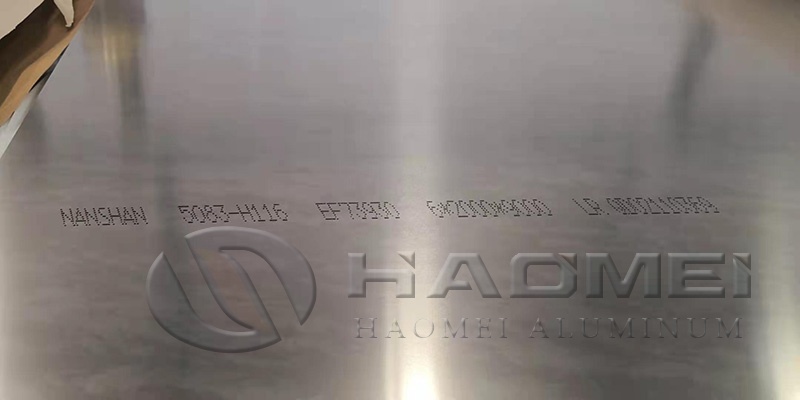
Solve the Main Risk: Corrosion Performance After Welding
The most important material-control point for 5083 is resistance to sensitization and exfoliation corrosion. Aluminum-magnesium alloys can become more susceptible to intergranular corrosion when exposed for extended periods to elevated temperatures. For marine structures, this matters near engine-room boundaries, welded assemblies, and components that will remain in saltwater service.
Specify H116 or H321 temper when the application requires improved resistance to exfoliation corrosion. These tempers are widely used for marine plate and sheet because they are intended for service where corrosion resistance is a critical consideration.
| Requirement to confirm | Why it matters | Evidence to request |
|---|---|---|
| Alloy designation: 5083 | Prevents substitution with a lower-strength or different-corrosion-performance alloy | Mill test certificate showing chemical composition |
| Temper: H116 or H321 | Supports marine corrosion-control requirements | Temper stated on certificate and product marking |
| Product standard | Defines dimensional tolerances and mechanical-property requirements | ASTM B928/B928M or EN 485-2, as specified by project documents |
| Corrosion testing | Verifies resistance for applicable marine tempers | ASTM G66 and ASTM G67 results, when required |
| Class approval | May be required for classed vessels | Valid approval scope from DNV, LR, ABS, BV, or another named society |
ASTM B928/B928M covers high-magnesium aluminum-alloy sheet and plate for marine service and similar environments. It includes requirements related to exfoliation-corrosion resistance for applicable products. ASTM G66 is the ASSET test for exfoliation corrosion, while ASTM G67 is the nitric acid mass-loss test used to assess susceptibility to intergranular corrosion.
Do not treat a class society logo as a blanket approval. Confirm that the approval covers the producing mill, alloy, temper, thickness range, and product form ordered. If the project specification calls for LR or DNV documentation, request it before material is cut or dispatched.
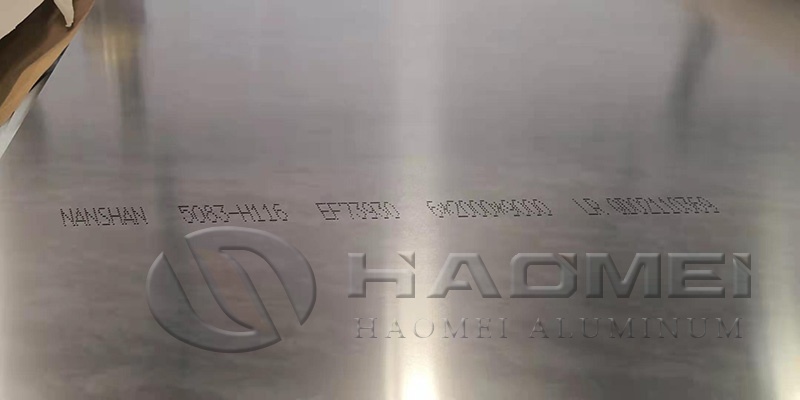
Holiday-Season Material Plan for 5083 Sheet and Plate
The holiday solution is a document-first release plan. Before ordering, align engineering, logistics, and receiving inspection around one material schedule. This reduces the risk of material arriving during a closure without the documents needed to release it to fabrication.
1. Freeze the technical schedule before carrier cut-off dates
Provide these details in the purchase specification:
Product form: sheet, plate, coil, profile, or welded component.
Alloy and temper: for example, 5083-H116 or 5083-H321.
Thickness, width, length, and permitted dimensional tolerance.
Required standard: ASTM B928/B928M, EN 485-2, or project-specific standard.
Surface condition: mill finish, PVC film, paper interleaf, or other protection.
Certification level: EN 10204 3.1, class certificate, corrosion-test records, or third-party inspection.
Packing requirement: seaworthy pallets, edge protection, moisture barrier, and clear bundle identification.
For hull plating and structural repairs, compare the offered dimensions with nesting plans before issuing the release. A wider or longer sheet may look commercially attractive but can raise handling cost, create excess scrap, or exceed workshop crane limits.
2. Match alloy selection to fabrication requirements
5083 is selected primarily for corrosion resistance and welded structural performance. It is not always the only option. For less demanding corrosion exposure or lighter fabricated parts, Alu 5086 may be evaluated against the drawing requirements. Where the project explicitly specifies 5083, use the approved Alu 5083 specification and confirm the temper rather than accepting an alloy-equivalent statement.
| Application | Typical concern | Practical specification action |
|---|---|---|
| Hull shell replacement | Seawater corrosion and welding | Specify 5083-H116/H321, corrosion-test evidence if required |
| Deck plate | Slip, traffic, and drainage | Confirm thickness, flatness, tread pattern if applicable, and edge condition |
| Superstructure panels | Weight and distortion during welding | Confirm temper, panel size, and fabrication sequence |
| Pipe supports and brackets | Galvanic contact with stainless components | Define isolation materials and coating boundaries |
| Marine repair kits | Limited holiday work window | Request labeled cut pieces, certificates, and packing list by assembly |
When 5083 is connected to seamless stainless steel pipe, pipe fittings, or stainless fasteners, identify galvanic-corrosion controls in the design. Electrical isolation, compatible sealants, coating systems, and drainage details should be set by the vessel designer or corrosion engineer. Material selection alone does not prevent galvanic attack in wet service.
3. Control price exposure without sacrificing traceability
Aluminum pricing changes with metal-market movements, conversion cost, thickness, width, temper, certification, testing, cutting, and freight. A quotation should separate these items where possible. This makes it easier to compare offers that appear similar but include different documentation or fabrication services.
Use this commercial checklist before confirming a holiday shipment:
Confirm the quotation validity period and metal-price basis.
State whether cutting, protective film, packing, and inspection are included.
Confirm the mill certificate format and whether certificates will travel with the shipment.
Set a document-release date before warehouse closure.
Verify carrier collection date, port gate-in deadline, and destination receiving hours.
Reserve a contingency period for inspection, claims review, or replacement material.
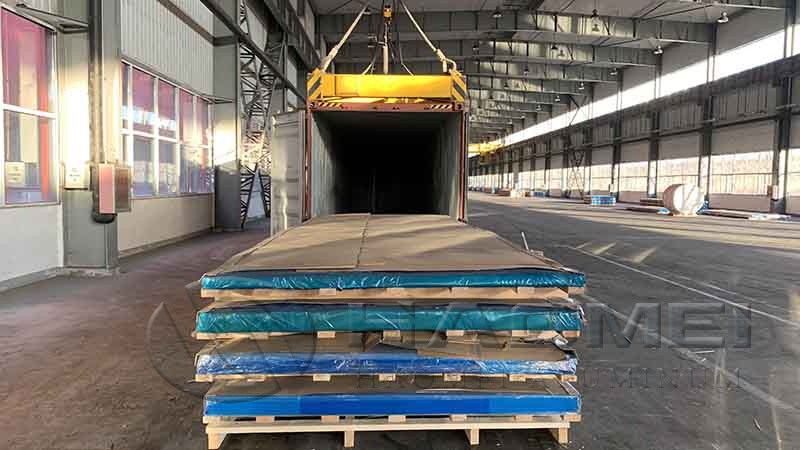
Receiving Inspection Checklist for Marine Fabrication Teams
Receiving inspection should begin before unloading. Compare bundle labels, packing lists, and certificates against the purchase specification. If a mismatch is found, isolate the affected bundle before it is issued to cutting or welding.
| Inspection point | Pass condition |
|---|---|
| Identification | Heat number, alloy, temper, dimensions, and quantity match documents |
| Certificate traceability | Mill test certificate references the supplied heat or batch |
| Surface condition | No deep dents, severe scratches, standing water, or packaging damage affecting use |
| Dimensions | Thickness, width, and length meet the stated tolerance standard |
| Edge and flatness | Suitable for planned cutting, forming, and welding operations |
| Documentation | Required corrosion tests, class approval, and EN 10204 certificate are present |
For welding wire used with 5083, confirm the qualified welding procedure specification and filler-metal selection with the fabricator. Common filler choices can depend on service temperature, strength targets, cracking resistance, and corrosion considerations. AWS D1.2/D1.2M addresses structural welding of aluminum, but project, class, and flag-state requirements may impose additional controls.
A holiday repair schedule stays reliable when material is specified by verifiable properties rather than general descriptions. Set the alloy, temper, standard, certificate scope, corrosion-test requirement, packing method, and delivery documentation before the holiday carrier deadline.
Original Source:https://www.marinealu.com/a/marine-grade-aluminum-5083.html
Tags: Marine Grade Aluminum 5083 , 5083 Aluminum Sheet ,
Prev:What Are Members Of International Association Of Classification Societies (IACS)