5083 Aluminum Plate Supplier
For marine construction, the primary concern is not simply obtaining 5083 plate. It is receiving material with the specified temper, corrosion-performance evidence, dimensional consistency, and traceability required by the vessel class and fabrication procedure.
A qualified 5083 aluminum plate supplier should be able to connect every plate to its mill test certificate, heat or cast number, inspection records, and shipment identification. This control is particularly important for hull plating, deck structures, tank boundaries, patrol vessels, workboats, and offshore equipment.
Why 5083
5083 is a non-heat-treatable aluminum-magnesium alloy widely used in welded marine structures. Its high magnesium content provides good seawater corrosion resistance and useful strength after welding compared with many heat-treatable marine alloys.
EN 573-3 lists 5083 with magnesium content generally between 4.0% and 4.9%. The alloy is commonly supplied in H116 or H321 temper for marine plate applications, where resistance to exfoliation and intergranular corrosion is a critical requirement.
| Requirement | 5083-H116 / H321 | 6061-T6 Plate |
|---|---|---|
| Typical marine role | Hull, deck, shell plate | Machined parts, frames, fittings |
| Welded-zone strength | Better retained after welding | Significant heat-affected-zone softening |
| Seawater corrosion | Strong, when properly specified | Requires design and surface protection attention |
| Main purchasing concern | Corrosion test evidence and traceability | Temper condition and post-weld strength |
For structural designs needing higher strength plate, compare the engineering approval, weld procedure qualification, availability, and class acceptance of Alu 5383 before making a substitution. Alloy substitution without naval architect or class approval can invalidate structural calculations and material documentation.
Specify First
A request stating only "5083 plate" is incomplete. It leaves the temper, applicable standard, testing scope, tolerances, and certification route open to interpretation.
Use this purchase specification checklist:
Alloy and temper: 5083-H116, 5083-H321, or another approved condition.
Product standard: ASTM B928 for marine plate, ASTM B209 where applicable, or EN 485-2 for mechanical properties and tolerances.
Dimensions: Thickness, width, length, allowable flatness, edge condition, and plate mass limits.
Class requirement: ABS, DNV, Lloyd's Register, Bureau Veritas, CCS, or other nominated society.
Certification: EN 10204 Type 3.1 certificate as a minimum where required by contract, plus class certificate when specified.
Corrosion testing: ASTM G66 exfoliation and ASTM G67 intergranular corrosion evidence when required under ASTM B928 or class rules.
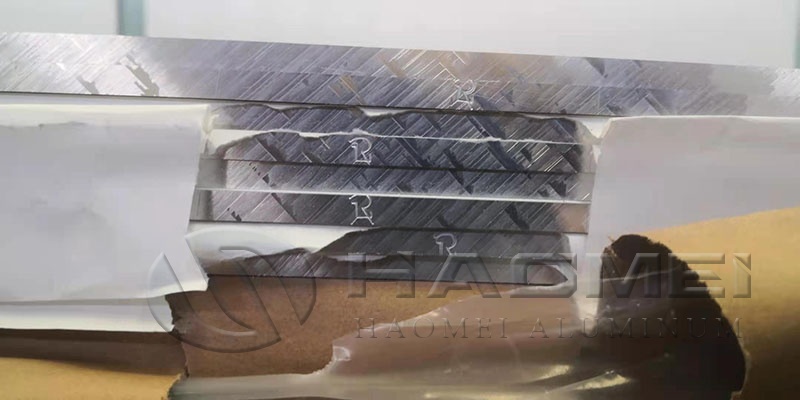
Identification: Heat number, plate number, temper, alloy, and certificate reference marked on each piece or securely attached tag.
ASTM B928 covers high-magnesium aluminum-alloy sheet and plate intended for marine service. Its requirements are more relevant to exposed marine plate than a general commercial sheet specification because corrosion-performance testing is incorporated into the standard.
Certification
Class certification must match the actual product, not merely the producer's general approval status. A mill may be approved for certain alloy forms, thickness ranges, or manufacturing locations while the offered plate falls outside that approval scope.
Verify these document fields before releasing production material:
| Document Check | What to Verify | Risk if Missing |
|---|---|---|
| Material certificate | Alloy, temper, heat number, dimensions, mechanical results | Plate cannot be reliably traced |
| Class certificate | Product form, thickness range, issuing office, order reference | Class acceptance may fail |
| Chemical analysis | Mg, Mn, Cr and impurity limits against the stated standard | Incorrect alloy or mixed inventory |
| Mechanical results | Yield strength, tensile strength, elongation, test direction | Design assumptions unsupported |
| Corrosion report | Test method, lot reference, acceptance result | Marine-service suitability unclear |
| Packing list | Plate IDs reconcile with certificates | Receiving errors and mixed heats |
Current class rules should always be checked against the project contract. IACS Unified Requirement W25 addresses approval and testing requirements for wrought aluminum alloy products used in ship construction, while individual classification societies publish their own current rule editions and approval procedures.
Cost Control
Plate quotations should be compared on delivered, documented cost rather than price per tonne alone. Aluminum plate costs generally include the metal benchmark, regional premium, rolling conversion, scrap and yield allowance, certification, testing, packing, inland transport, ocean freight, insurance, and currency exposure.
A practical mass check is:
Plate weight (kg) = length (m) × width (m) × thickness (mm) × 2.66
The 2.66 factor is based on the approximate density of 5083 aluminum, about 2,660 kg/m³. Final invoicing should follow actual certified weight and contractual tolerance rules.
| Cost Lever | Practical Action |
|---|---|
| Width and length | Use mill-friendly dimensions where nesting permits |
| Thickness mix | Consolidate thicknesses without compromising scantlings |
| Documentation | State certificate and class requirements before quotation |
| Freight | Compare port delivery with project-site delivery on equal Incoterms |
| Cutting | Evaluate mill cut-to-length against local handling and scrap cost |
| Currency | Define metal-price date and exchange-rate basis in the contract |
Do not compare a general-purpose 5083 sheet quote against class-certified marine plate without normalizing testing, certificate level, tolerances, and delivery terms.
Supply Risk
The most common supply disruptions are not alloy shortages alone. They are limited rolling slots for wide heavy plate, delayed class witness activity, restricted availability of H116 or H321 tempers, port congestion, and incomplete documentation discovered after arrival.
Reduce exposure through staged controls:
Confirm the rolling mill, country of melt, country of rolling, and certificate issuer before order release.
Reserve production capacity for non-standard widths, heavy gauges, or class-certified material.
Require pre-shipment scans of certificates matched to plate identification.
Set a defined substitution prohibition for alloy, temper, origin, or mill.
Arrange independent dimensional and visual inspection for high-value releases.
When 5083 plate is installed near stainless piping, prevent galvanic coupling. Use suitable isolation materials, control stagnant seawater exposure, and avoid direct aluminum-to-stainless contact where the assembly can remain wet. For pipe systems requiring corrosion resistance and high pressure capability, specification teams may also evaluate Alu 5086 for compatible fabricated aluminum components, while retaining stainless seamless pipe where process conditions require it.
Receiving Checks
Perform receiving inspection before cutting or issuing plate to production:
Match each plate mark to the certificate and packing list.
Measure thickness at multiple locations away from edges.
Check width, length, flatness, edge damage, dents, scratches, and moisture staining.
Confirm temper and alloy are marked as ordered.
Review tensile, chemical, and corrosion-test results against the purchase specification.
Segregate unidentified plate until documentation is reconciled.
Preserve offcut traceability when plates are divided for fabrication.
A controlled specification, verifiable certification package, and plate-level traceability provide the strongest protection against costly marine fabrication delays.
Original Source:https://www.marinealu.com/a/5083-aluminum-plate-supplier.html
Tags: 5083 aluminum plate , marine aluminum certification ,
Prev:Best Welding Practices for Marine Aluminum Rectangular Tubing