Which Kind of Aluminum Weld Wire Is Right for Ship Welding
The unique characteristics of the marine environment place far more stringent demands on aluminum weld wire than in ordinary scenarios: First, corrosion resistance is crucial. Seawater, with its high salt content, easily causes corrosion in the weld and heat-affected zone, potentially leading to structural failure over time.
Second, mechanical properties are critical. Ships endure wave impacts and load variations during navigation, requiring welds to possess high strength and good toughness to ensure joint strength close to that of the base material. Finally, process adaptability is essential. Ship welding involves various scenarios, including thin plates and complex structures, demanding stable welding processes, aesthetically pleasing weld formations, and reduced defects such as porosity and cracks.
Common aluminum welding wire for shipbuilding
Currently, commonly used aluminum welding wires in shipbuilding include 4043, 5356, and 5183, each with different strengths in composition and performance, and suitable for different scenarios:
4043 aluminum-silicon welding wire is a versatile type, with a silicon content of approximately 4.5%-6.0%. It offers good welding fluidity and excellent resistance to hot cracking, making it suitable for welding cast aluminum and some aluminum alloy structures. However, its shortcomings are also obvious: its tensile strength is only about 200 MPa, and its resistance to seawater corrosion is only average, making it more suitable for secondary welding of non-load-bearing parts of ships.
5183 aluminum-magnesium welding wire has a higher magnesium content, resulting in superior tensile strength compared to 5356. It also exhibits excellent resistance to seawater corrosion, making it suitable for ship structures requiring high strength. However, its cost is relatively high, and it requires stricter control of process parameters during welding, leading to lower adoption rates in small and medium-sized shipyards.
5356 aluminum-magnesium welding wire, on the other hand, has become the mainstream choice for ship welding due to its "balanced performance and outstanding cost-effectiveness." It conforms to the AWS A5.10 standard, corresponding to AlMg5 in ISO 18273. Its core component contains 4.5%-5.5% magnesium, supplemented with small amounts of manganese, chromium, and other elements. It balances high strength and corrosion resistance while possessing good process adaptability, perfectly matching the core requirements of ship welding.
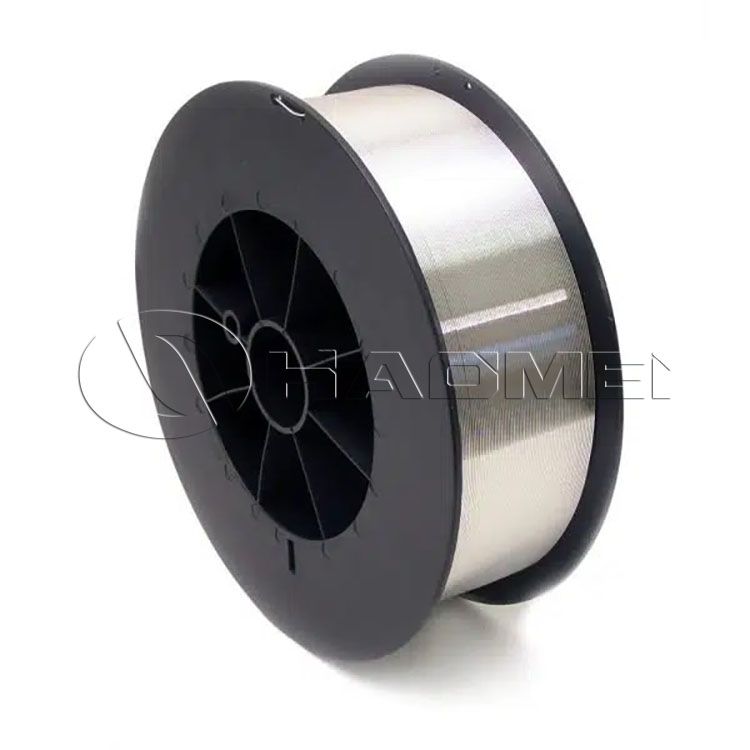
5356 aluminum welding wire
The key to aluminum 5356 wire's superior performance in marine welding lies in its three core advantages, precisely meeting the demands of marine working conditions:
1. Outstanding corrosion resistance
Magnesium is the core element ensuring the corrosion resistance of 5356 welding wire. The appropriate addition of magnesium significantly improves the weld's resistance to seawater and salt spray corrosion, effectively resisting chloride ion erosion in the marine environment and reducing problems such as pitting corrosion and intergranular corrosion.
Compared to aluminum-silicon welding wires such as 4043, the service life of 5356 welding wire joints in marine environments can be significantly extended, providing a solid defense for ship structural safety. A well-known shipyard reported that after using 5356 welding wire, the corrosion failure rate of welded parts on ships decreased by more than 60%.
2. Excellent mechanical properties
Welding of load-bearing components in ships requires extremely high strength. The tensile strength of the weld seam made with 5356 welding wire can reach 220-270 MPa, with an elongation of approximately 10%-20%. The joint strength is close to that of the 5xxx series base materials (such as 5083, 5052, and other commonly used marine aluminum alloys), effectively withstanding dynamic stresses such as wave impact and load changes.
Simultaneously, its low crack sensitivity reduces welding defects and avoids structural hazards caused by insufficient weld strength, making it particularly suitable for welding critical load-bearing components such as ship decks and hull frames.
3. Stable processability
5356 welding wire has extremely high adaptability to welding processes, compatible with both MIG (Metal Inert Gas) and TIG (Tungsten Inert Gas) welding processes. During welding, the arc is stable, spatter is minimal, the molten pool has moderate fluidity, and the weld formation is aesthetically pleasing. Whether welding thin plates or assembling complex structures, it allows for precise control of weld quality, reducing the cost of subsequent grinding and other processes.
Pure argon gas protection is sufficient for welding, requiring no complex process adjustments and making it more user-friendly for small and medium-sized shipyards' equipment and operators. Furthermore, its melting point range of 570-640℃ matches the melting point of commonly used marine aluminum alloy base materials, effectively reducing base material deformation caused by excessive heat input.
Application and precautions for 5356 welding wire in shipbuilding
In shipbuilding, 5356 welding wire has a wide range of applications. Besides critical load-bearing components such as hull frames and decks, it can also be used for repair welding of aluminum-magnesium alloy castings and welding of aluminum-magnesium-manganese alloy structures.
Especially in the lightweight structural welding of aluminum alloy cruise ships and transport vessels, it can fully leverage its synergistic advantages of "high strength + lightweight," helping to improve navigation efficiency and reduce fuel consumption.
When using 5356 welding wire, two points should be noted: First, the oxide film and oil stains on the edges of the workpiece and the surface of the welding wire must be strictly removed before welding to avoid the formation of porosity; second, the humidity of the welding environment should be controlled (dew point ≤ -40℃), and if necessary, the base material should be preheated to 80-150℃ to further improve the welding quality.
Original Source:https://www.marinealu.com/a/which-kind-of-aluminum-weld-wire-is-right-for-ship-welding.html
Tags: aluminum welding wire ,