5083 Marine Aluminum Alloy for Boat Hull
5083 aluminum plate has exceptional adaptability, finding its way into a wide range of applications, from recreational boats to large commercial vessels, and from conventional transport ships to vessels operating in extreme environments.
In the recreational and small vessel sector, it's a primary material for yachts, fishing boats, and workboats, commonly used in decks, bulwarks, and wheelhouses. This reduces hull weight, increasing speed, while also providing durability against seawater corrosion.
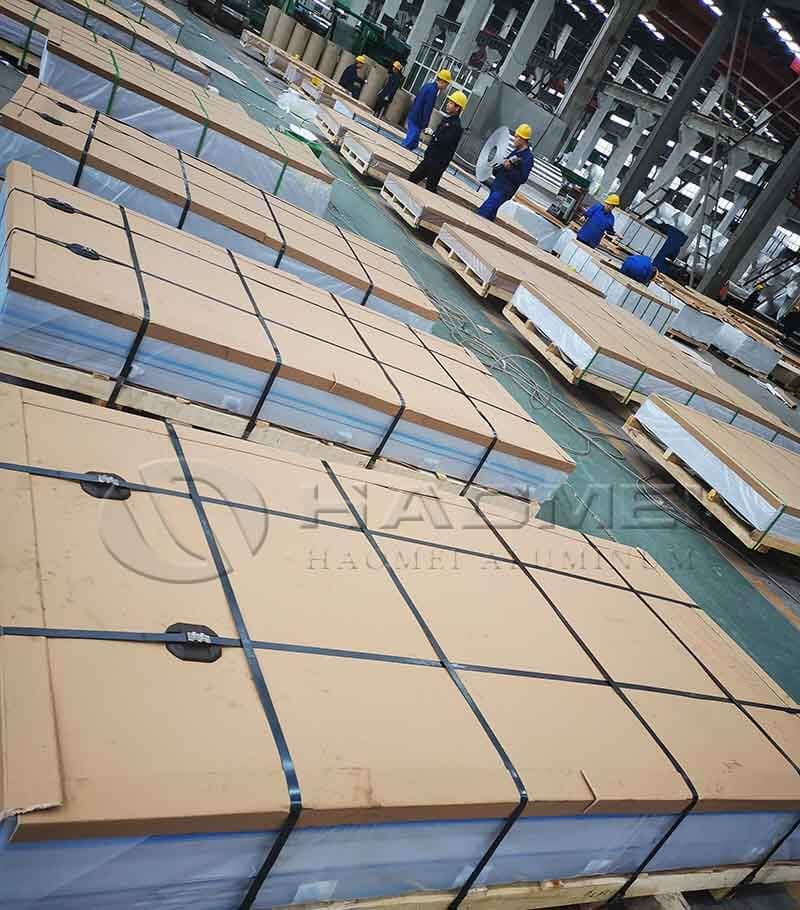
In commercial vessels, 5083 marine aluminum plate is widely used in key structures such as the sides, hull plating, and engine mounts of grain carriers, sand carriers, and high-speed passenger ships. Its high strength and corrosion resistance effectively withstand the dual challenges of cargo loading and the marine environment.
More importantly, 5083 aluminum alloy performs exceptionally well in vessels operating under extreme conditions. A Norwegian icebreaker, using it for its hull, successfully withstood the continuous impact of 1.5-meter-thick ice at -30°C.
Furthermore, load-bearing components such as keels, ribs, and rib plates in vessels like patrol boats, car ferries, and sailboats also heavily rely on the structural support capabilities of 5083 aluminum sheets.
Tempers Analysis
1. 5083 O temper
The core advantage of Al 5083 o lies in its exceptional plasticity and low-temperature stability, meeting the demands of complex curved surface forming and extreme low-temperature environments.
In terms of mechanical properties, 5083-O aluminum sheets have a tensile strength of 270-310 MPa and an elongation exceeding 16%. This high plasticity makes it easy to process through stamping, bending, and welding, making it particularly suitable for integrally formed components in ship hulls.
Typical applications include LNG carrier cargo containment systems and curved window frames on high-speed passenger ships. The 192,000 cubic meter LNG carrier built by Jiangnan Shipyard utilizes 5083-O aluminum plates in its containment system.
Under long-term exposure to liquefied natural gas at -162℃, its impact toughness remains at 25 J/cm², decreasing by only 15% compared to room temperature. Furthermore, its strength increases by approximately 10% at low temperatures, perfectly resisting the risks of cold shocks and cargo sloshing.
In addition, 5083-O temper aluminum plates are frequently used for components requiring complex bending, such as the ship's smokestacks and porthole frames, effectively reducing the number of parts and improving overall structural integrity.
2.5083 H321 temper
A5083 h3211, while retaining a certain degree of ductility, significantly improves strength and structural stability, making it the preferred temper for load-bearing parts of the hull. Its yield strength can be increased to over 215 MPa, and its fatigue strength reaches 120 MPa (10^7 cycles), 25% higher than marine steel, while still maintaining a 10% elongation, achieving a balance between strength and ductility.
In shipbuilding applications, 5083 H321 aluminum plates are primarily used in critical load-bearing and stress-bearing components, such as the hull plating, sides, decks, keel, and ribs.
Southeast Asian shipyards use 3-20mm thick 5083-H321 aluminum plates for hull plating and deck construction due to their excellent seawater corrosion resistance (corrosion rate in 3.5% NaCl solution is only 0.02mm/year) and high strength, effectively resisting wave impact, seawater erosion, and cargo pressure, thus extending the hull's service life.
Furthermore, engine mounts, as core components in the hull that bear vibration and loads, are manufactured using H321 temper 5083 aluminum plates. Their excellent structural stability reduces vibration transmission, ensuring the normal operation of the propulsion system.
Original Source:https://www.marinealu.com/a/5083-marine-aluminum-alloy-for-boat-hull.html
Tags: 5083 aluminum plate ,
Prev:Which Kind of Aluminum Weld Wire Is Right for Ship Welding
Next:Which Kind Of Marine Aluminum Is for High-Speed Patrol Boat