What Tests Have Our Marine Aluminum Plates Undergone
Marine aluminum plates, with their core advantages of lightweight, corrosion resistance, and high strength, have become a key material for critical components such as hull structures, decks, and cabins. Among them, the 5083, 5052, and 5086 series aluminum plates are widely used in various shipbuilding processes due to their excellent comprehensive performance.
During voyages, ships face multiple challenges, including seawater corrosion, wave impact, and temperature fluctuations. Any material defect can potentially lead to safety hazards. Therefore, our marine aluminum plates undergo the following key tests from production to delivery to comprehensively ensure product quality.
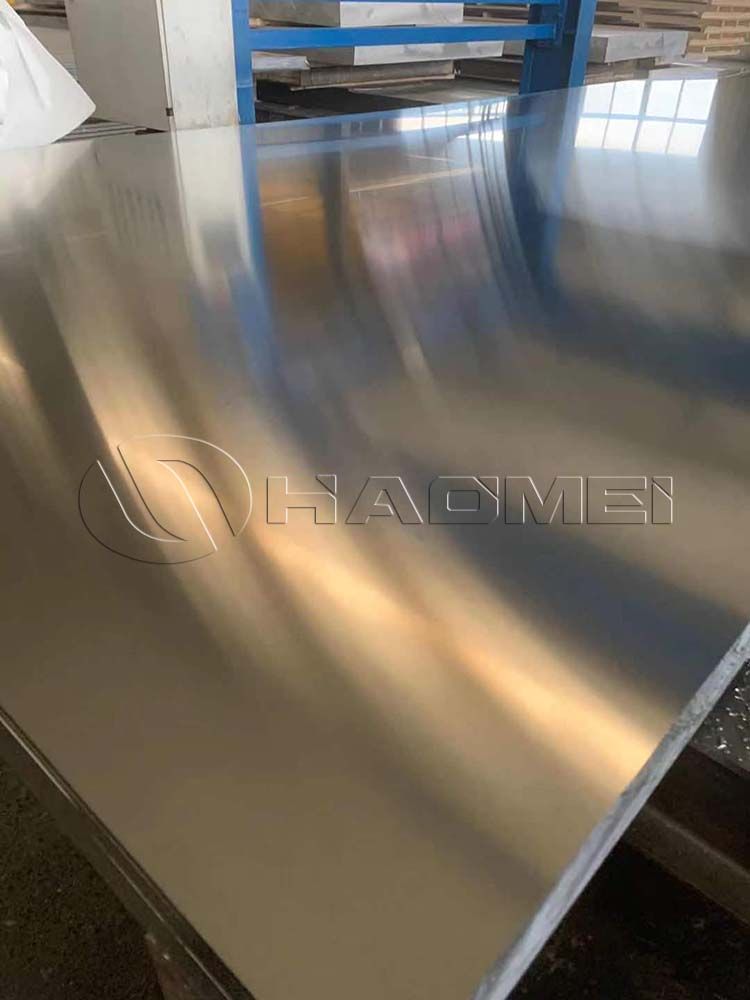
Intergranular Corrosion Test
Seawater, as a highly corrosive medium, will cause aluminum to corrode with prolonged contact. Intergranular corrosion is one of the most insidious and dangerous forms of corrosion in aluminum-magnesium alloys—corrosion occurs along the grain boundaries of the material. The surface may appear intact, but the internal structure gradually weakens and fails, ultimately potentially leading to hull structural fracture and serious safety accidents.
Our grade 5052 aluminum, 5083 and 5086 marine aluminum plates undergo strict intergranular corrosion testing in accordance with national standards and shipbuilding industry specifications. During testing, aluminum plate samples are immersed in a specific corrosive solution to simulate the long-term immersion environment of seawater. After a certain period, metallographic analysis and tensile tests are used to detect whether the samples exhibit intergranular corrosion cracks, strength reduction, or other problems.
Only after testing confirms that the material can maintain its structural integrity under extreme corrosive conditions can it proceed to the next process. This test eliminates the threat of "hidden corrosion" to ship safety at its source.
Flaw Detection
During the rolling and welding processes of marine aluminum plates, microscopic defects invisible to the naked eye may occur, such as internal porosity, cracks, and inclusions. These tiny defects gradually expand under the long-term impact of wind, waves, and load changes, ultimately affecting the load-bearing capacity of the hull structure.
To eliminate these "hidden dangers," our marine aluminum plates undergo comprehensive flaw detection. Advanced testing technologies such as ultrasonic testing and radiographic testing are used to scan the interior and surface of the aluminum plates from all angles, accurately identifying defects with minute diameters and quantitatively analyzing their location and size.
For aluminum plates such as 5083 used in the core structure of the hull, the flaw detection standards are even more stringent, requiring zero fatal defects and zero major defects to ensure that every aluminum plate can withstand the extreme loads during navigation.
Tolerance Control
Shipbuilding is a precise systems engineering project, and the dimensional accuracy of each aluminum plate directly affects the subsequent assembly quality. If the dimensional tolerances of the aluminum plate, such as thickness, width, and flatness, exceed the standard range, it will lead to problems such as excessive assembly gaps and weak connections, which will not only affect the hull's sealing and stability but may also increase drag during navigation, raising operating costs.
Our tolerance control for marine aluminum plates is implemented throughout the entire production process: starting from raw material rolling, high-precision rolling equipment is used to monitor the thickness changes of the aluminum plates in real time; in the finished product stage, precision instruments such as laser thickness gauges and flatness detectors are used to comprehensively inspect the dimensions of each batch of aluminum plates to ensure that indicators such as thickness tolerance and flatness strictly comply with shipbuilding industry standards. Taking the 5083-h116 aluminum plate as examples, their thickness tolerance can be controlled within ±0.05mm, and flatness error does not exceed 0.5mm/m, providing precise assurance for subsequent ship assembly.
International Certification
The quality of marine materials not only requires strict control by the company itself but also certification from international authoritative organizations to gain recognition from global shipbuilding companies. The International Maritime Organization (IMO) and various national classification societies (such as ABS, BV, and DNV) have established stringent standards for marine materials. Only aluminum plates that have passed these certifications can be used in high-end projects such as ocean-going vessels and offshore platforms.
Our 5083, 5052, and 5086 marine aluminum plates have fully passed multiple international certifications, including ABS (American Bureau of Shipping), BV (British Detachment of Shipping), and DNV (Det Norske Veritas).
During the certification process, in addition to submitting product test reports and production process documents, companies must also undergo on-site audits by certification bodies to ensure that their production processes and quality control systems comply with international standards. These certifications are not only strong proof of our product quality, but also a global guarantee of quality for our customers.
The Significance of Testing
Some customers may ask, "Aren't so many tests unnecessary?" The answer is clearly no. The marine environment is complex, and the consequences of material defects are unimaginable—intergranular corrosion can lead to hull leaks, undetected cracks during flaw detection can cause structural fractures, and exceeding tolerance limits can affect hull sealing and stability. Products lacking international certification cannot meet the compliance requirements for ocean voyages.
For us, every test is a responsibility to our customers' safety and a guarantee of the long-term value of our products. High-quality marine aluminum plates must not only resist seawater corrosion and withstand extreme loads, but also reduce ship maintenance costs and extend the hull's service life. Only marine aluminum plates that have passed a series of tests can truly become a "reliable partner" in shipbuilding, building a solid safety barrier for every voyage.
Original Source:https://www.marinealu.com/a/what-tests-have-our-marine-aluminum-plates-undergone.html
Tags: marine grade aluminum plate ,
Prev:5052 Aluminum Sheet for Marine Deck
Next:What Is The Most Widely Used Marine Structural Aluminum Alloy Worldwide