The Use of Aluminum Steel Sheet in Canada Ships
As a major maritime power, Canada's ship types are highly adapted to the characteristics of its maritime environment and industrial needs: Firstly, military vessels, represented by the Halifax-class frigates and Harry de Wolf-class offshore patrol vessels, undertake anti-submarine warfare, escort, and coastal defense missions. Traditionally, they are primarily constructed of high-strength steel to ensure structural stability and impact resistance.
Secondly, icebreakers are a distinctive feature of Canadian vessels, such as the Canadian Coast Guard's CCGS Amundsen research icebreaker, which must cope with the thick ice environment of the Arctic region. Early versions often used wear-resistant alloy steel, balancing icebreaking capability with low-temperature toughness.
Thirdly, commercial vessels encompass bulk carriers, container ships, and inland waterway transport vessels. Fednav Group's ice-class bulk carriers have long operated on the Great Lakes and Arctic routes, traditionally using carbon steel to meet the load requirements of transporting large quantities of cargo. In addition, there are small coastal patrol vessels used for near-shore monitoring and search and rescue, which initially employed a combination of steel and fiberglass.
While traditional materials can meet basic navigation requirements, they also have significant drawbacks: pure steel is heavy, leading to higher fuel consumption and increasing fuel costs by 10%-15% annually; seawater salt spray and immersion easily cause steel corrosion, requiring frequent rust removal and painting every 3-5 years, resulting in high maintenance costs; while the marine grade aluminum sheet, although lightweight and corrosion-resistant, has a tensile strength only one-third that of low-carbon steel, making it unable to bear the loads of core structures. Against this backdrop, aluminum-steel composite plates perfectly compensate for the shortcomings of single materials, becoming a "new choice" in Canadian shipbuilding.
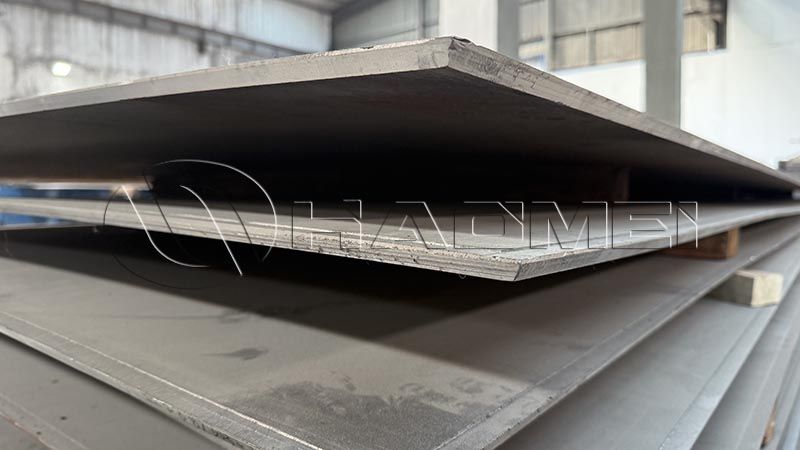
The application of aluminum steel sheet in Canadian ships covers many key areas, particularly excelling in the upgrading and retrofitting of naval vessels and icebreakers. This material achieves a metallurgical bond between aluminum and steel through processes such as explosive bonding and rolling bonding, forming a double-layer structure of "steel base load-bearing, aluminum layer protection," retaining the high strength of steel while possessing the corrosion resistance of aluminum, and weighing 30%-40% less than steel of the same volume.
In the superstructure refit of Halifax-class frigates, aluminum-steel composite panels replaced traditional steel in non-core load-bearing areas such as the bridge and crew quarters. This not only lowered the ship's center of gravity, reducing roll angle by 8%-12% and improving navigational stability, but also extended maintenance intervals from 1-2 years to 5-8 years through the dense oxide film of the aluminum layer's insulation against seawater corrosion.
In the deck and cargo hold areas of Arctic research icebreakers, aluminum-steel composite panels demonstrate even greater advantages: the steel layer resists ice impact and cargo friction, while the aluminum layer resists seawater corrosion in the low polar temperatures. Simultaneously, their lightweight properties reduce the ship's weight, improving the icebreaker's endurance.
Notably, aluminum clad steel sheets eliminate the galvanic corrosion problems caused by direct welding of aluminum and steel through metallurgical bonding technology, eliminating the need for additional insulating gaskets and further reducing construction and maintenance costs.
Complementing the aluminum-steel composite panels, aluminum pipe fittings have become a "core component" of the piping system on Canadian ships. Marine piping plays a crucial role in fuel delivery, seawater cooling, and compressed air circulation, demanding extremely high standards for the sealing, corrosion resistance, and spatial adaptability of fittings. Aluminum pipe fittings (such as 90° elbows, flanges, and tees) are widely used in the piping systems of various types of Canadian ships due to their lightweight, corrosion resistance, and suitability for low-temperature environments.
In practical applications, the advantages of aluminum pipe fittings are fully realized: In seawater cooling systems, aluminum alloy elbows replace traditional carbon steel elbows, extending their service life from 5-8 years to over 20 years. Furthermore, the integral casting process eliminates welding defects, avoiding the risk of leakage due to weld corrosion.
In cryogenic pipelines on LNG carriers and polar research vessels, special aluminum alloy fittings such as 5083-H321 can maintain a tensile strength of ≥200MPa in ultra-low temperatures of -162℃. Seamless sealing is achieved through vacuum brazing technology, perfectly adapting to the needs of cryogenic media transportation. In the confined compartments of small coastal patrol vessels, aluminum elbows and flanges, with their lightweight and flexible adaptability, allow for pipe turning and connection within limited space, optimizing space layout while reducing the vessel's weight.
Moreover, all aluminum pipe fittings used by Canadian marine vessels are certified by international classification societies such as DNV GL and LR, strictly meeting standards in terms of precision tolerances (matching error ≤ ±0.1mm) and fatigue resistance design, ensuring the long-term stable operation of the pipeline system.
From an industry trend perspective, the application of aluminum-steel composite panels and aluminum pipe fittings in Canadian ships is continuously deepening. With the development of Arctic shipping routes and the advancement of green shipping concepts, the demand for lightweight, low-energy, and long-life vessels is becoming increasingly urgent.
The application ratio of aluminum-steel composite panels in ship superstructures and cargo hold linings continues to increase, while aluminum pipe fittings are developing towards "intelligent integration," achieving real-time monitoring of pipeline corrosion and leaks through integration with IoT sensors.
Original Source:https://www.marinealu.com/a/the-use-of-aluminum-steel-sheet-in-canada-ships.html
Tags: marine grade aluminum sheet ,