Marine Grade Aluminum Sheet 5083 VS 5052
In the shipbuilding industry, lightweight, corrosion resistance, and high strength are the core requirements for material selection, and 5-series marine grade aluminum sheet, with their excellent comprehensive performance, have become the mainstream choice for marine aluminum plates. Among them, 5083 and 5052 aluminum plates are the most frequently mentioned. What are the differences between them?
Core Differences
The essential difference between 5083 and 5052 aluminum plates stems from their magnesium content and trace element ratios, which is also the root of all performance differences between them. For marine material selection, this point must be clearly understood:
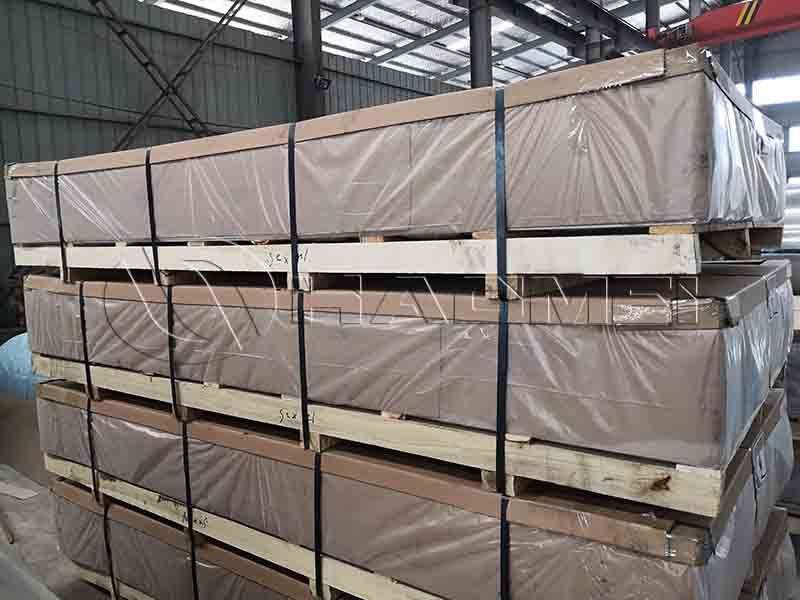
5052 aluminum sheet is a low-magnesium content aluminum-magnesium alloy, with magnesium content controlled at 2.2%-2.8%, and also contains a small amount of chromium (0.15%-0.35%), with no significant manganese addition. The impurity content is moderately controlled, and its core advantages revolve around "plasticity + corrosion resistance," emphasizing ease of processing.
5083 aluminum plate is a high-magnesium aluminum-magnesium alloy, with a magnesium content as high as 4.0%-4.9%, and 0.4%-1.0% manganese added, while the chromium content is controlled at 0.05%-0.25%, with stricter impurity control. The synergistic effect of high magnesium and manganese significantly improves its strength and resistance to seawater corrosion, making it more suitable for high-stress, harsh marine environments.
Simply put, 5052 is a "versatile, easy-to-process material," while 5083 is a "high-strength, tough material." All the differences in their applications are based on this core positioning.
Key Performance Comparison
Ships are constantly exposed to complex environments of seawater immersion, salt spray corrosion, and wave impact. Tensile strength, corrosion resistance, processing performance, and weldability directly determine the applicable parts of aluminum plates. Below is a direct comparison based on marine requirements to help you quickly distinguish between them:
1. Mechanical Strength
Strength is a core requirement for marine structural components, especially decks and hull load-bearing parts, which need to withstand wave impact and cargo loads. In terms of key indicators, 5052 aluminum sheet (H32 temper) has a tensile strength of 230-260 MPa, a yield strength of 190-220 MPa, and a hardness of approximately 60 HB, classifying it as medium strength and suitable for low-load applications.
In contrast, 5083 aluminum sheet (H116 marine temper) boasts a tensile strength of 310-420 MPa, a yield strength exceeding 270 MPa, and a hardness of approximately 85-95 HB. Its strength is over 35% higher than 5052, effectively resisting permanent deformation and less prone to dents and warping, making it the preferred choice for load-bearing structures.
It is worth noting that 5052 has a higher elongation (12%-18%) than 5083 (10%-15%), meaning it has better plasticity and is less prone to fracture under stress, making it more suitable for applications requiring deformation processing.
2. Corrosion Resistance
Salt spray and seawater immersion in marine environments are the "natural enemies" of metallic materials. The rust-resistant properties of 5-series aluminum plates mainly stem from the dense oxide layer formed by magnesium.
5052 aluminum plates exhibit excellent corrosion resistance. Real-world marine exposure tests show a corrosion rate of only 0.02 mm/year, far below the standard requirement of 0.05 mm/year. This makes them suitable for non-load-bearing parts that are in long-term contact with seawater. However, in extreme environments with high salinity and strong corrosion, their resistance is not as good as 5083.
5083 aluminum plates are considered the "benchmark" for seawater corrosion resistance. Specifically designed for marine environments, they can withstand long-term erosion from seawater and salt spray. Even under harsh marine conditions, they maintain stable performance and possess excellent resistance to stress corrosion cracking. They are an ideal choice for core components such as ship hulls and decks, and can pass certifications from major classification societies such as CCS and ABS, meeting the stringent standards of shipbuilding.
3. Machining and Welding Performance
In shipbuilding, aluminum sheets undergo multiple processes including stamping, bending, deep drawing, and welding. Machining performance directly impacts production efficiency and manufacturing costs:
5052 aluminum sheet has excellent plasticity and outstanding cold working performance, easily completing complex forming processes such as stamping, deep drawing, and bending without the need for special equipment. It exhibits low cutting resistance and slow tool wear, making it suitable for manufacturing complex-shaped parts. Simultaneously, it boasts excellent weldability, with weld strength reaching 90%-95% of the base metal's strength, meeting conventional welding requirements.
5083 aluminum plate, due to its high strength, is slightly more difficult to form and requires greater external force during cold working. Higher hardness tools (such as tungsten carbide tools) are needed for cutting. However, it still retains a degree of machining flexibility, enabling the fabrication of complex deck shapes. Its weldability is good, but due to its special composition, specialized welding processes are required to avoid weld cracks. It is suitable for structural components requiring high-strength welding.
Marine Application Segmentation
Based on the performance differences mentioned above, the application scenarios for the two types of aluminum sheets in shipbuilding are clearly defined. There's no need to blindly pursue high strength; adapting to specific needs is the optimal choice. See the following segmentation for details:
5052 Aluminum Sheet: The First Choice for Non-Load-Bearing + Complex Forming Parts
Due to its excellent plasticity, corrosion resistance, and ease of processing, 5052 aluminum sheet is more suitable for non-load-bearing parts of ships, especially components requiring complex forming. Common applications include: ship sheet metal parts, interior cabin trim panels, ventilation ducts, fuel tanks, oil pipes, ship railings, and non-load-bearing hulls of small yachts.
For example, ship fuel tanks require deep drawing processes, and 5052 aluminum sheet perfectly meets the high-precision forming requirements. Its excellent corrosion resistance prevents fuel corrosion and extends the service life of the fuel tank. Interior cabin trim panels can be easily processed to create various shapes, balancing aesthetics and practicality.
5083 Aluminum Plate: Essential for Load-Bearing and Core Strength Components
With its high strength, excellent resistance to seawater corrosion, and impact resistance, 5083 aluminum plate is the "mainstay" of core load-bearing components in ships. It is widely used in key structures of various types of vessels, commonly including: ship decks (usually 8-30mm thick), hull shells, keels, ship cabin load-bearing frames, offshore platform structural components, icebreaker decks, and load-bearing components of large cargo ships.
Original Source:https://www.marinealu.com/a/marine-grade-aluminum-sheet-5083-vs-5052.html
Tags: marine grade aluminum sheet ,