Is Aluminium Alloy 5754 Used for Marine Applications Boat Building
Shipbuilding professionals often ask: Can 5754 aluminum alloy be used in shipbuilding? The answer is yes. Classified as a national standard marine-grade aluminum-magnesium alloy, 5754 is perfectly suited for shipbuilding and offers excellent cost-effectiveness for maritime applications; however, it is not as widely adopted in mainstream shipbuilding as the classic 5083 and 5086 alloys.
Currently, the 5754 aluminum alloys available for marine applications primarily come in O, H22, H32, and H111 tempers. These various tempers meet the specific strength and forming requirements of different ship components. Widely used in small-to-medium vessels and marine auxiliary projects, 5754 is a compliant and reliable shipbuilding material.
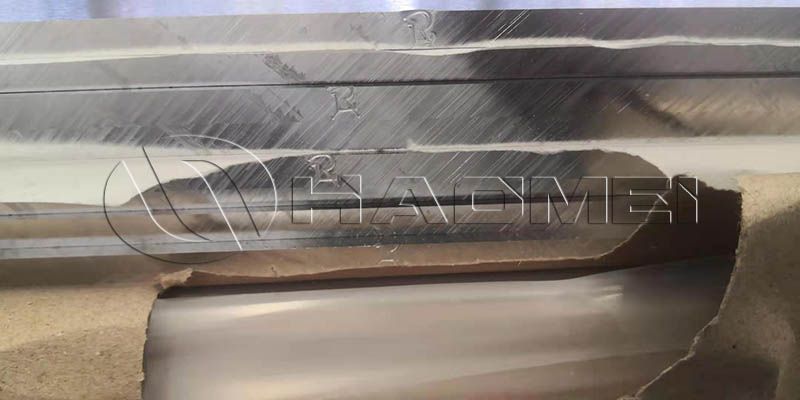
Specific Applications of 5754 Aluminum Alloy in Shipbuilding
With its balanced performance and outstanding cost-effectiveness, 5754 aluminum alloy is primarily used for small-to-medium vessels, freshwater craft, and non-critical load-bearing structures. Its applications span components such as hulls, decks, and auxiliary facilities, with clearly defined use cases:
1. Ship Superstructures and Interior Structures
This is the primary application area for 5754. It is used for components such as upper bulkheads, deck plating, bulwarks, walkways, and cabin partitions on yachts, recreational fishing boats, and small passenger vessels. These areas do not bear direct wave impact or the vessel's primary structural loads; while strength requirements are moderate, there is a high demand for aesthetic forming, lightweight properties, and corrosion resistance. The alloy's excellent bending and stamping capabilities make it ideal for processing complex shapes while keeping costs under control.
2. Complete Construction of Small Vessels
For fishing boats, small recreational craft, and workboats operating in inland freshwater lakes and rivers, 5754 is suitable for major structural components such as bottom plating, hull plating, and bilge structures. Given the lower corrosivity of freshwater environments, the alloy's corrosion resistance and moderate strength fully meet long-term operational needs. Compared to high-strength marine aluminum alloys, it significantly reduces shipbuilding costs, offering a distinct advantage in cost-effectiveness.
3. Functional marine components
These include auxiliary parts such as hatch covers, seawater piping, small fuel storage tanks, ship ladders, and decorative protective panels. Such components do not require ultra-high structural strength but demand corrosion resistance, ease of processing, and resistance to deformation. The material properties of 5754 align perfectly with these requirements, making it a common choice for ship retrofitting and maintenance.
4. Lightweight near-shore marine facilities
Beyond the main ship structure, 5754 is suitable for auxiliary marine engineering structures—such as lightweight near-shore platforms, floating docks, and marine protective facilities—where low-load capacity and high corrosion resistance are required.
Why is 5754 far less popular than 5083 and 5086 marine aluminum alloys?
Given that 5754 is suitable for shipbuilding—offering good formability, low cost, and excellent corrosion resistance—why do mainstream ocean-going, large-scale, and commercial vessels favor 5083 and 5086, while 5754 remains a secondary choice rather than a mainstream standard? The core differences lie in three key areas: structural strength, suitability for deep-sea environments, and industry certification/universality.
1. Significant strength limitations
5754 is classified as a low-to-medium strength marine aluminum alloy; its tensile strength and yield strength are significantly lower than those of 5083 and 5086. 5083 serves as the benchmark for high-strength marine aluminum alloys; it features higher magnesium content, retains nearly 90% of its strength in the heat-affected zone after welding, and offers exceptional impact and deformation resistance. 5083-h112 aluminium plate is its popular temper.
It can withstand the impact of massive deep-sea waves and the heavy structural loads of the hull, making it ideal for ocean-going vessels, large cargo ships, and critical load-bearing structures at the ship's bottom.
While 5086 has slightly lower strength than 5083, it offers superior formability and welding stability, making it well-suited for complex hull structures and liquid tank components. In contrast, 5754 meets the needs of only inland and lightweight near-shore vessels; it cannot satisfy the rigorous standards required for ocean-going, heavy-load, or large-scale ships, severely limiting its range of applications.
2. Insufficient stability regarding deep-sea corrosion resistance
Although 5754 possesses basic seawater corrosion resistance, its resistance to electrochemical corrosion and pitting is inferior to that of 5083 and 5086 in deep-sea environments characterized by high salinity, strong currents, and prolonged immersion. Commercial ocean-going vessels demand exceptional hull longevity and safety; consequently, 5083 and 5086—with their superior corrosion resistance and longer service lives—are the preferred choices. In contrast, 5754 is suitable only for milder environments such as freshwater or near-shore shallow waters; this limited scope of application results in lower widespread adoption.
3. Significant gaps in industry standardization and certification
5083 and aa 5086 aluminum are globally recognized standard marine alloys, backed by comprehensive classification society certifications, mature fabrication processes, and established industry standards. Shipbuilders and designers can select these materials without the need for repeated performance validation, offering a high margin of safety and reliability. Conversely, 5754 serves primarily as a cost-effective alternative; it lacks comprehensive marine-specific certification. To mitigate safety risks, large-scale and commercial shipbuilding projects generally avoid it, limiting its bulk usage to niche small-to-medium civil vessels and non-standard marine engineering projects.
The core advantages of 5754 are low cost and ease of processing, targeting the market for low-end, lightweight, and inland vessels. In contrast, 5083 and 5086 dominate the mainstream shipbuilding sector, covering the mid-to-high-end, large-scale, and ocean-going vessel markets. Material selection preferences in mainstream shipbuilding projects have established 5083 and 5086 as the most well-known marine aluminum alloys, whereas 5754 remains a niche material, naturally resulting in lower market visibility and adoption rates.
Original Source:https://www.marinealu.com/a/is-aluminium-alloy-5754-used-for-marine-applications-boat-building.html
Tags: 5083 aluminum plate ,
Prev:Marine Aluminum Piping for Yacht and High-Speed Craft Construction