Bulb Flat Bar for Shipbuilding
Bulb flat bar is used as a longitudinal or transverse stiffener in decks, bulkheads, side shells, and secondary structures. In steel shipbuilding, the profile is commonly hot rolled. In aluminum shipbuilding, the same function is usually achieved with extruded profiles, flat bars, T-bars, or custom stiffeners because marine aluminum is shaped mainly by extrusion and rolling rather than hot rolling into traditional steel bulb sections.
The main concern for large-volume sourcing teams is dimensional control. A stiffener that is slightly twisted, out of straightness, or inconsistent at the bulb can slow panel assembly, increase weld correction, and create class inspection risk.
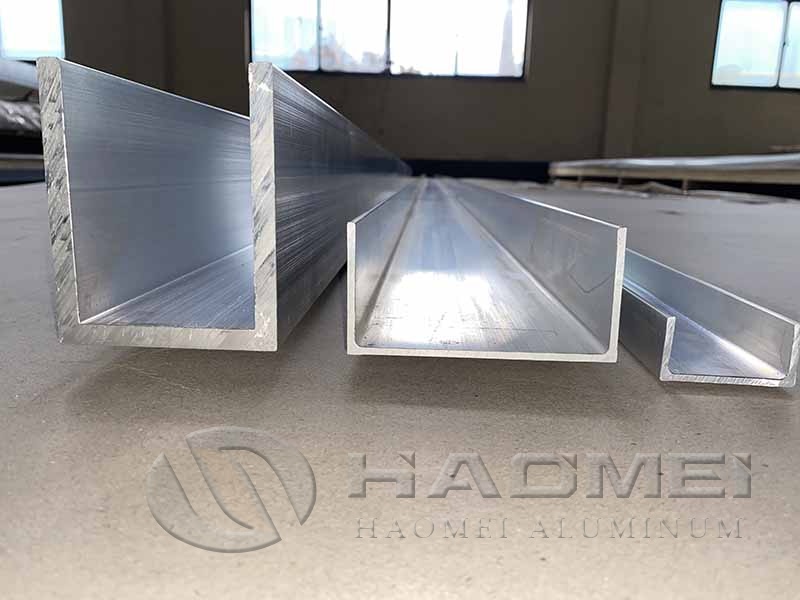
Profile Choice
Use a bulb flat only when the ship design, nesting plan, and class-approved drawings specify it. For aluminum vessels, confirm whether the drawing really requires a bulb profile or simply needs an equivalent section modulus with lower weight.
| Option | Typical use | Advantage | Watch point |
|---|---|---|---|
| Steel bulb flat | Merchant ships, offshore structures | Mature rolling supply | Coating and corrosion control needed |
| Aluminum flat bar | Small stiffeners, brackets | Simple cutting and welding | Lower stiffness than shaped profiles |
| Aluminum T-bar | Deck and bulkhead stiffeners | Good section efficiency | Weld access must be checked |
| Custom extrusion | Ferries, patrol craft, workboats | Weight saving and repeatability | Die cost and MOQ planning |
For aluminum projects, related Boat Extrusions can replace several welded components with one profile when the design office accepts the section properties.
Alloy Fit
Marine aluminum selection depends on corrosion exposure, welding, forming, and required strength. For welded hull structures, 5xxx alloys are widely used because they are non-heat-treatable and have strong seawater resistance. For extruded stiffeners, 6xxx alloys are common because they extrude well and provide stable geometry.
| Alloy family | Common grades | Main role | Notes |
|---|---|---|---|
| 5xxx | 5083, 5086, 5754 | Hull plate, welded structures | Excellent marine corrosion resistance |
| 6xxx | 6061, 6082, 6063 | Extrusions, frames, fittings | Good extrudability and machinability |
| Stainless pipe | 304L, 316L | Fluid lines, exhaust, handrails | Verify chloride exposure and weld procedure |
ABS Rules for Materials and Welding, DNV rules, and other classification society requirements should be checked against the vessel class notation. For aluminum extrusions, ASTM B221/B221M and EN 755 are commonly referenced product standards. For plate, EN 485 and ASTM B928 are often relevant, depending on the project specification.
Where higher strength extruded members are required, Alu 6082 is often reviewed because 6082-T6 is widely used in structural extrusions in Europe. Confirm class approval, temper, and weld design allowables before substitution.
Tolerance Control
Dimensional control is the feature that deserves the most attention. A bulb or shaped stiffener must sit correctly on the panel before tack welding. If not, workers may force-fit the profile, creating residual stress and inconsistent weld gaps.
Check these items before placing an order:
- Straightness over full length and per meter.
- Twist tolerance after extrusion, stretching, or heat treatment.
- Bulb radius or head geometry, if a bulb-type shape is specified.
- Foot flatness for automated panel-line welding.
- Cut length tolerance and bundle identification.
- Surface defects, dents, die lines, and handling marks.
- MTC traceability from billet or slab to finished profile.
For aluminum extrusions, request tolerances according to ASTM B221/B221M or EN 755-9 where applicable. If the shipyard needs tighter tolerances than the standard, state them on the purchase specification, not only on the drawing.
Class Evidence
Classification approval is not a formality. It affects material acceptance, welding procedure qualification, and final vessel documentation.
| Document | What it proves | Practical check |
|---|---|---|
| EN 10204 3.1 certificate | Chemical and mechanical results | Heat number must match bundles |
| Class approval | Accepted mill or product route | Verify current approval scope |
| Dimensional report | Profile compliance | Match drawing revision |
| PMI report | Alloy confirmation | Useful for mixed aluminum and stainless shipments |
| Welding data | Procedure compatibility | Check filler alloy and heat input |
For seamless stainless steel pipe supplied with aluminum packages, common references include ASTM A312/A312M for austenitic stainless pipe and ASME SA312 for pressure applications. Keep aluminum and stainless documentation separated to avoid receiving delays at the yard.
Cost Drivers
Pricing for marine aluminum profiles is usually built from three parts: aluminum base, regional premium, and conversion cost. The aluminum base is commonly referenced to LME official prices, while macro price checks can be made against public datasets such as the World Bank Commodity Markets Pink Sheet.
| Cost item | What changes it | Control action |
|---|---|---|
| Base metal | LME aluminum movement | Use agreed quotation date or average period |
| Premium | Region, duty, freight | Compare bonded and local supply |
| Conversion | Profile complexity, tolerance, temper | Reduce unnecessary tight tolerances |
| Die charge | New extrusion shape | Reuse approved sections where possible |
| Inspection | Class survey, testing | Plan inspection before production |
| Packing | Seaworthy bundles, length | Specify lifting points and moisture control |
Avoid comparing only price per tonne. A cheaper profile with poor straightness can cost more after rework, delayed panel lines, and weld repair.
Supply Chain
Marine aluminum supply is cycle-sensitive. Lead times lengthen when shipyard activity rises, energy prices increase, or extrusion capacity is booked by transport, solar, and construction sectors.
Use a supply plan in this order:
- Freeze drawing revision and profile list.
- Confirm alloy, temper, class society, and standard.
- Approve trial sample or first article for custom extrusion.
- Lock packing method for long bars and profiles.
- Arrange third-party inspection before shipment.
- Check export controls, duties, and port handling limits.
- Match bundle marks with MTC and packing list.
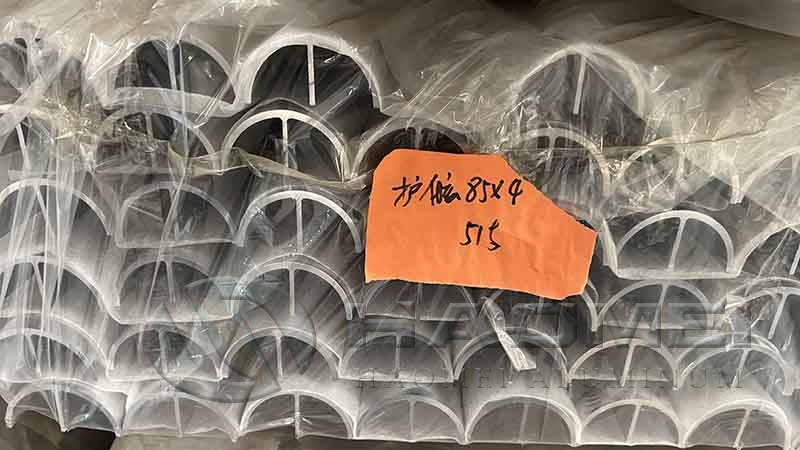
Aluminum fenders, grooves, frames, and stiffeners are often shipped together. Separate soft-contact surfaces with dry wooden spacers or plastic pads. Do not allow stainless pipe bundles to rub against aluminum profiles during ocean transport; galvanic contamination and surface scoring can create rejection claims.
Buying Checklist
Use this specification checklist for bulb flat or equivalent aluminum stiffener orders:
| Item | Requirement to state |
|---|---|
| Vessel project | Hull number, class society, drawing revision |
| Product form | Bulb flat, flat bar, T-bar, or extrusion |
| Alloy and temper | Example: 5083-H111 plate, 6082-T6 extrusion |
| Standard | ASTM, EN, or class rule reference |
| Dimensions | Width, thickness, bulb geometry, length |
| Tolerances | Straightness, twist, flatness, cut length |
| Testing | Tensile, hardness if required, PMI if needed |
| Certificate | EN 10204 3.1 or class certificate |
| Surface | Mill finish, anodized, painted, or protected |
| Packing | Seaworthy bundles, lifting marks, moisture barrier |
Inspection Points
Before release from the mill or service center, inspect at least one bundle from each heat or batch:
- Measure width, thickness, and section height with calibrated tools.
- Check straightness on a flat inspection bed or by laser line.
- Review chemical composition against alloy limits.
- Confirm tensile results meet temper requirements.
- Verify bundle tags, heat numbers, and certificate numbers.
- Inspect ends for deformation caused by sawing or handling.
- Photograph packing before container loading.
If the profile is used on an automated welding line, request a trial fit on a representative panel. This single step often finds twist, foot flatness, and weld-gap problems before full production begins.
Original Source:https://www.marinealu.com/a/bulb-flat-bar-for-shipbuilding.html
Tags: Bulb Flat Bar for Shipbuilding , Marine Aluminum Alloy , Shipbuilding Profiles , Aluminum Extrusions , Class Approved Materials ,
Prev:What Is Aluminum Clad Stainless Steel
Next:Why Are Marine Aluminum Sheet 5083 5086 More Expensive Than Regular Aluminum Plates