What Are 6082 Aluminium Properties
6082 aluminum alloy belongs to the Al-Mg-Si system of heat-treatable aluminum alloys. The addition of magnesium enhances its strength and corrosion resistance, while silicon provides the foundation for heat treatment strengthening. This compositional characteristic is a core prerequisite for its suitability for the marine environment.
In shipbuilding, the 6082 t6 aluminium alloy is the most commonly used state for 6082 aluminum alloy—after solution treatment and artificial aging, the alloy's mechanical properties reach their peak, perfectly meeting the core structural strength requirements of ships.
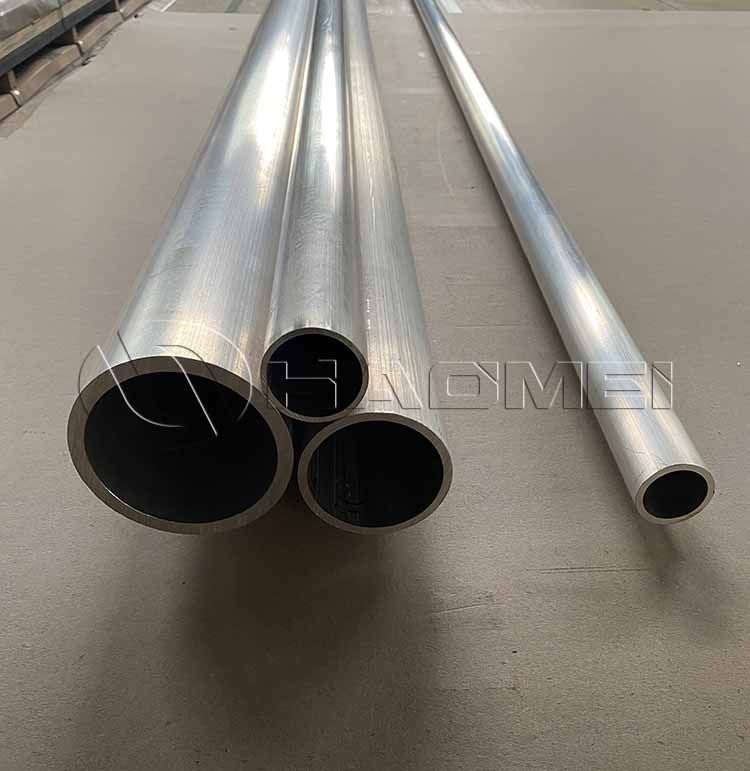
Ships must withstand the impact of wind and waves, cargo loads, and long-term corrosion from seawater during navigation. The first key advantage of 6082 aluminum plate and profiles is its excellent mechanical strength. In the T6 temper, its tensile strength can reach over 380 MPa, and its yield strength exceeds 310 MPa. This strength is sufficient to support critical structures such as the ship's hull frame and deck supports, resisting dynamic loads during navigation.
Compared to ordinary 1000 series pure aluminum, 6082-t6 alloy has 3-4 times the strength. Even compared to the same series 6061 aluminum alloy, its strength is approximately 15% higher, offering a significant advantage in ship components requiring high strength and lightweight construction.
For shipbuilding materials, "lightweight" is just as important as "high strength," directly impacting a vessel's load-bearing capacity and fuel economy. 6082 aluminum alloy has a density of only 2.71 g/cm³, less than one-third that of steel. Using it to manufacture ship components can significantly reduce hull weight while maintaining structural strength.
Data shows that small yachts constructed with 6082 aluminum alloy can be over 50% lighter than those with steel hulls. Reduced weight translates to a smaller draft, lower drag, and consequently, reduced fuel consumption—a highly attractive advantage for shipping companies seeking cost control and yacht owners prioritizing range.
Ships are constantly submerged in seawater, where high salinity and corrosiveness are the primary enemies of materials. 6082 aluminum alloy, however, possesses excellent resistance to marine corrosion. The magnesium in its composition forms a dense oxide film on the alloy surface, preventing further erosion of the substrate by seawater. Furthermore, its corrosion resistance can be further enhanced through appropriate surface treatments (such as anodizing and applying anti-corrosion coatings).
In practical applications, ship hull sides, bulkheads, and other components made from 6082-t6 aluminum alloy maintain a good surface condition even after years of immersion in seawater, requiring minimal maintenance and reducing ship upkeep costs.
Besides its core advantages of strength, lightweight, and corrosion resistance, the good machinability of 6082 aluminum alloy also facilitates shipbuilding. Ship components often have complex and diverse shapes, such as curved hulls and irregularly shaped supports. While 6082 t6 aluminum alloy boasts high strength, it still retains good machinability and weldability.
It can be manufactured into profiles of various cross-sections through processes such as extrusion and forging, and can also achieve reliable connections through methods such as argon arc welding. The strength of the welded joint can reach more than 80% of the base material, meeting the requirements for component splicing in shipbuilding. Compared with some high-strength steels, 6082 aluminium properties make itself easier to process and more efficient, shortening the shipbuilding production cycle.
In practical shipbuilding applications, 6082 aluminum alloy is ubiquitous: the superstructure framework of large container ships and the hatch coamings of bulk carriers utilize 6082 t6 aluminum alloy, ensuring structural stability while reducing superstructure weight. The hull of small high-speed passenger ships leverages its lightweight and high-strength characteristics to achieve faster speeds; even auxiliary components such as railings and handrails are widely used due to their corrosion resistance and aesthetic appeal.
Furthermore, in some specialized vessels such as research vessels and fishing boats, 6082 aluminum alloy is often used to manufacture instrument brackets, fishing net frames, and other components, adapting to various complex working environments.
Of course, 6082 aluminum alloy is not without its flaws. Its strength stability at high temperatures is relatively weak, therefore it is generally not used in high-temperature components such as marine propulsion systems. However, in most structural and non-high-temperature components of ships, its performance advantages are sufficient to meet the requirements.
With the continuous development of shipbuilding technology, the application of 6082 aluminum alloy is also expanding. For example, its performance is optimized by adjusting heat treatment processes, or it is used in combination with other materials to further improve the overall performance of ships.
Original Source:https://www.marinealu.com/a/what-are-6082-aluminium-properties.html
Tags: 6082 aluminum plate ,